

 English
 中文简体
 русский
 Français
 Español
 Deutsch

Warp Knitting vs Weft Knitting: Key Differences, Machines, and Buying Guide
2026-09-30
Content
- 1 The Core Difference: Yarn Direction and Loop Formation
- 2 Fabric Properties: Stability, Elasticity, and Edge Behavior
- 3 Machine Types, Speed, and Production Economics
- 4 Yarn Selection and Material Compatibility
- 5 Applications and End-Use Markets
- 6 Cost, Lead Time, and Buying Risks
- 7 How to Choose: A Practical Decision Framework
A fabric engineer compares two swatches on a cutting table. One is a lightweight mesh that holds its shape, resists runs, and stretches very little. The other is a soft jersey that curls at the edges and recovers easily after being pulled. Both are knitted, yet they behave differently because one is warp knitted and the other is weft knitted. The short answer: warp knitting feeds parallel yarns lengthwise and forms loops across many needles at once, while weft knitting feeds a single yarn crosswise and forms loops in a continuous horizontal path. That single difference in yarn direction changes machine design, fabric stability, elasticity, production speed, and the end products each process can make.
The Core Difference: Yarn Direction and Loop Formation
In warp knitting, hundreds or even thousands of yarns are fed from a beam in parallel, running vertically down the machine. Each yarn has its own guide and needle, and all yarns are looped simultaneously in a single cycle. The resulting fabric has loops that interlock in the lengthwise direction, giving it a flat, stable structure. In weft knitting, one or a few yarns are fed horizontally across the needle bed. The yarn travels back and forth, forming loops row by row. The fabric is built from a continuous yarn path, which makes it more stretchable and often more prone to unraveling.
| Feature | Warp Knitting | Weft Knitting |
|---|---|---|
| Yarn feed direction | Lengthwise (warp direction), parallel yarns | Crosswise (weft direction), single or few yarns |
| Loop formation | All needles loop simultaneously in one cycle | Loops formed sequentially along the yarn path |
| Yarn supply | Warp beam with many yarn ends | Yarn package or cones feeding one or more ends |
| Fabric stability | High dimensional stability, low elasticity | High elasticity, moderate to low stability |
| Edge behavior | Resists runs and fraying | Can curl and unravel easily |
| Typical machines | Tricot, raschel, biaxial and multiaxial warp knitting machines | Circular knitting, flat knitting, sock knitting machines |
| Common products | Lace, mesh, geotextiles, sportswear, composite reinforcement | T-shirts, sweaters, socks, upholstery, medical textiles |
The practical consequence is that warp knitted fabrics tend to keep their shape under load, while weft knitted fabrics conform to the body or object they cover. Neither is universally better; the choice depends on the performance requirement. A geogrid must not stretch, so warp knitting is the natural route. A sock must stretch and recover, so weft knitting dominates.
Fabric Properties: Stability, Elasticity, and Edge Behavior
Warp knitted fabrics are typically less elastic in the lengthwise direction because the loops are interlocked across many parallel yarns. They resist distortion, hold flat edges, and do not run easily when cut. This makes them suitable for technical textiles where dimensional stability is critical, such as geotextiles, automotive composites, and reinforcement fabrics. Weft knitted fabrics are built from a continuous yarn that can shift and stretch. They offer excellent recovery and drape, which is why they dominate apparel such as T-shirts, sweaters, and hosiery. However, they can curl at the edges and may unravel if a stitch is broken.
- Stability: Warp knits resist stretching and deformation; weft knits stretch and recover.
- Edge behavior: Warp knits hold clean edges; weft knits often curl and run.
- Porosity: Warp knitting can create controlled mesh openings; weft knitting produces denser or more random pore structures.
- Drape: Weft knits drape softly; warp knits are usually firmer and more structured.
- Weight range: Warp knitting covers very light to heavy technical fabrics; weft knitting spans fine apparel to bulky knits.
These differences also affect downstream processing. Warp knitted fabrics are easier to coat, laminate, and cut with clean edges, which is valuable in composite manufacturing. Weft knitted fabrics require careful handling to prevent curling and stitch loss, but they can be formed into shaped garments with minimal cutting.
Machine Types, Speed, and Production Economics
Warp knitting machines include tricot and raschel types, as well as specialized biaxial and multiaxial machines for technical textiles. They run at high speeds with wide working widths, often producing fabrics at rates that weft knitting cannot match for comparable widths. However, warp knitting requires careful yarn preparation because hundreds of yarns must be wound onto a warp beam with uniform tension. Weft knitting machines, including circular and flat bed types, are simpler in yarn supply and can change yarns quickly. Circular knitting machines achieve high production rates for tubular fabrics, while flat knitting machines offer versatility and shaping capabilities.
Warp Knitting Machines
Tricot machines produce fine, lightweight fabrics for apparel and home textiles. Raschel machines handle coarser yarns and complex structures, including lace, net, and technical fabrics. For advanced applications, biaxial and multiaxial warp knitting machines insert yarns at angles to create composite reinforcement fabrics with tailored mechanical properties. These machines are essential for fiberglass, carbon fiber, and high-performance textile production.
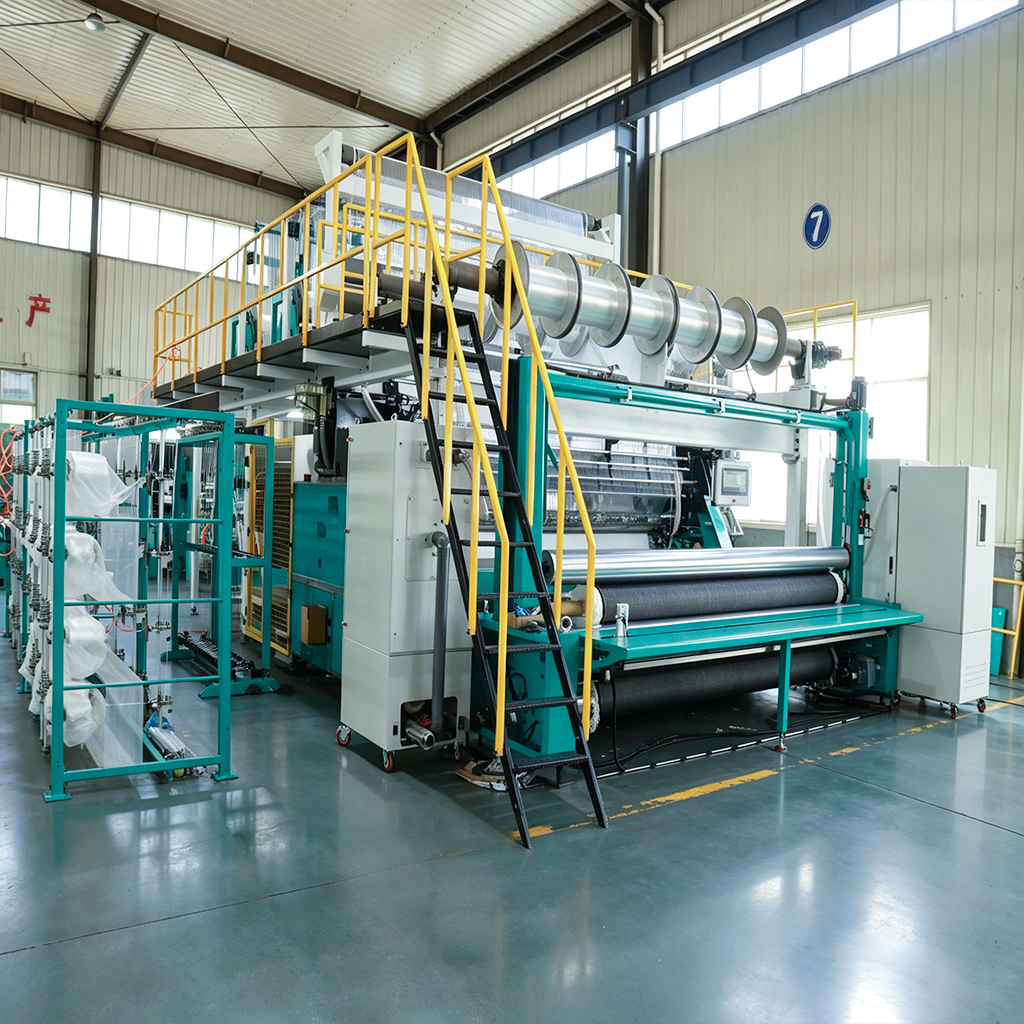
 YXKS2-M Biaxial Warp Knitting Machine for Chemical Fiber FabricsHigh-speed tricot-type biaxial warp knitting machine with full-width weft insertion, suited to garment interlining, crepe fabric, and polyester filament production.View Product →
For chemical fiber applications such as biaxial fabrics, a dedicated biaxial warp knitting machine can be specified to match the required width and speed. Capital investment is higher than for many weft knitting machines, but the output per hour and the technical capability often justify the cost in industrial markets.
Weft Knitting Machines
Circular knitting machines are the workhorses for T-shirts, underwear, and technical tubular fabrics. Flat knitting machines produce shaped panels and fully fashioned garments, reducing waste in apparel manufacturing. Sock knitting machines are highly specialized for tubular, shaped products. Weft knitting machines generally have lower yarn preparation complexity and faster style changes, but they may not achieve the same fabric stability as warp knitted structures.
Yarn Selection and Material Compatibility
The choice between warp and weft knitting also influences which fibers and yarn counts can be used efficiently. Warp knitting demands yarns with consistent strength and elongation because all yarns are stressed simultaneously. It works well with filament yarns, including polyester, nylon, glass fiber, and carbon fiber. Weft knitting is more forgiving and can handle spun yarns, elastic yarns, and blends, making it suitable for natural fibers and stretch fabrics.
Fibers Suited to Warp Knitting
Warp knitting is widely used for technical textiles that require high strength and dimensional stability. Fiberglass, chemical fiber, and carbon fiber are common inputs for biaxial and multiaxial warp knitted fabrics. These materials are used in composites, geotextiles, and construction reinforcement. For fiberglass biaxial fabrics, multiaxial warp knitting machines such as the YRS33M can produce reinforcement structures with defined yarn orientations. For carbon fiber applications, the YRS33MC carbon fiber multiaxial warp knitting machine is designed to handle the specific processing requirements of carbon tow, including gentle yarn guidance and controlled tension.
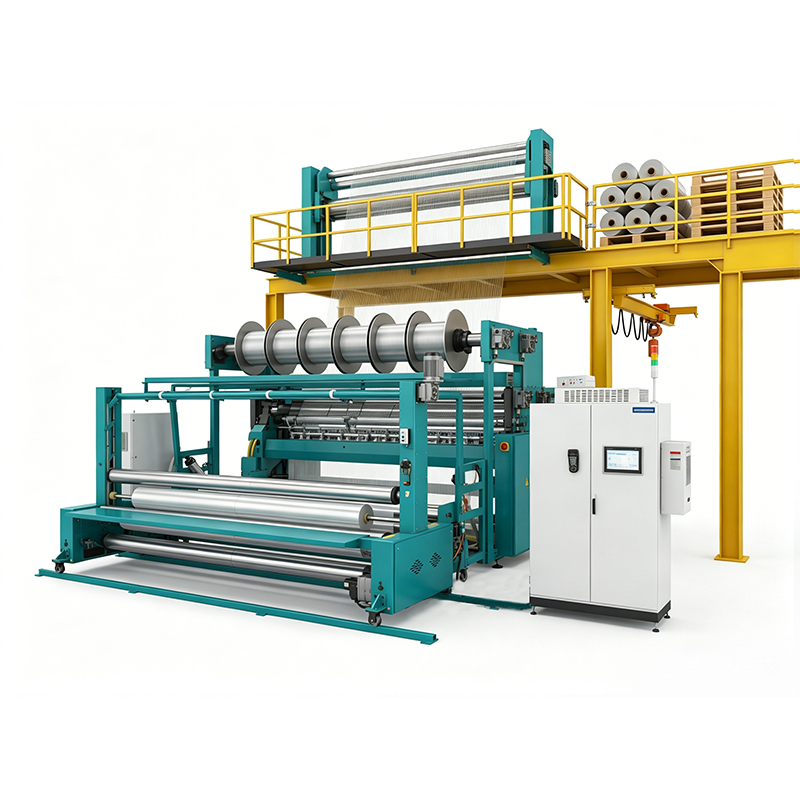
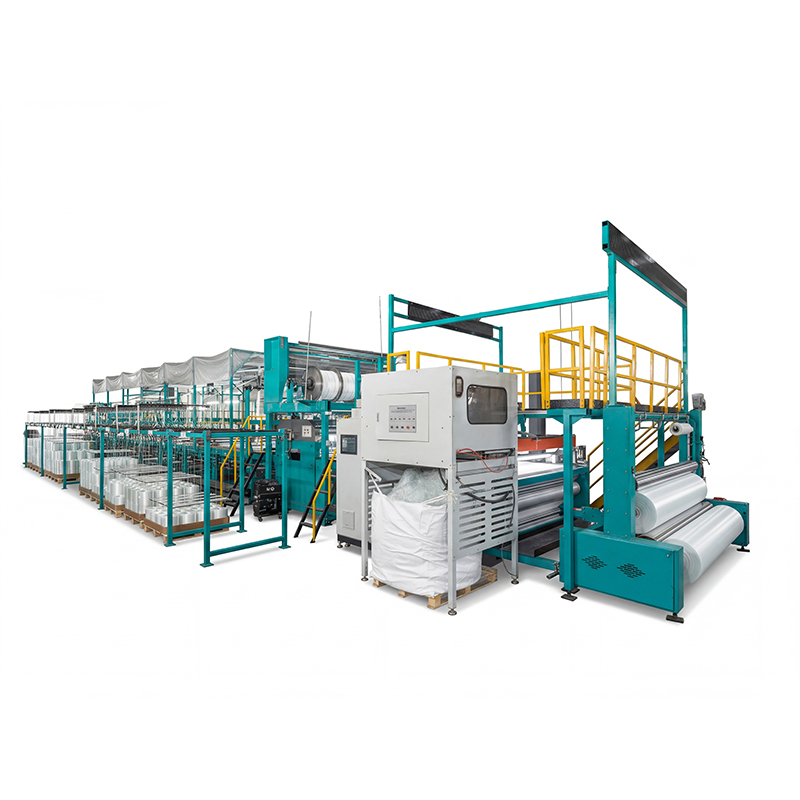 YRS3-3M Multi-Axial Warp Knitting Machine for Fiberglass Reinforcement FabricsProduces multi-axial glass and basalt fiber reinforcement fabrics with servo-controlled weft laying, adjustable angles, and configurable chopped or nonwoven layers.View Product →
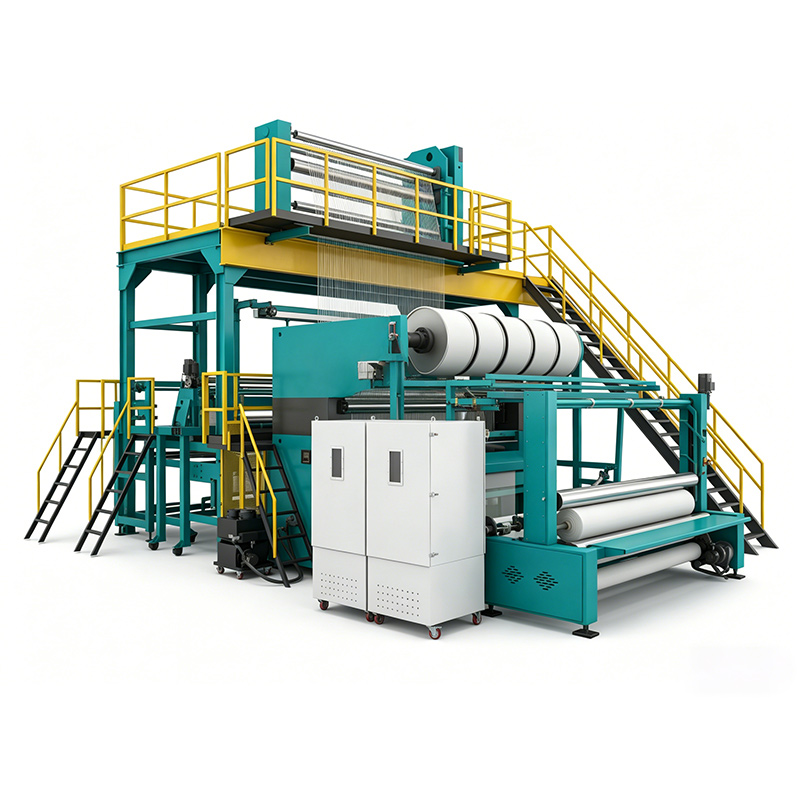
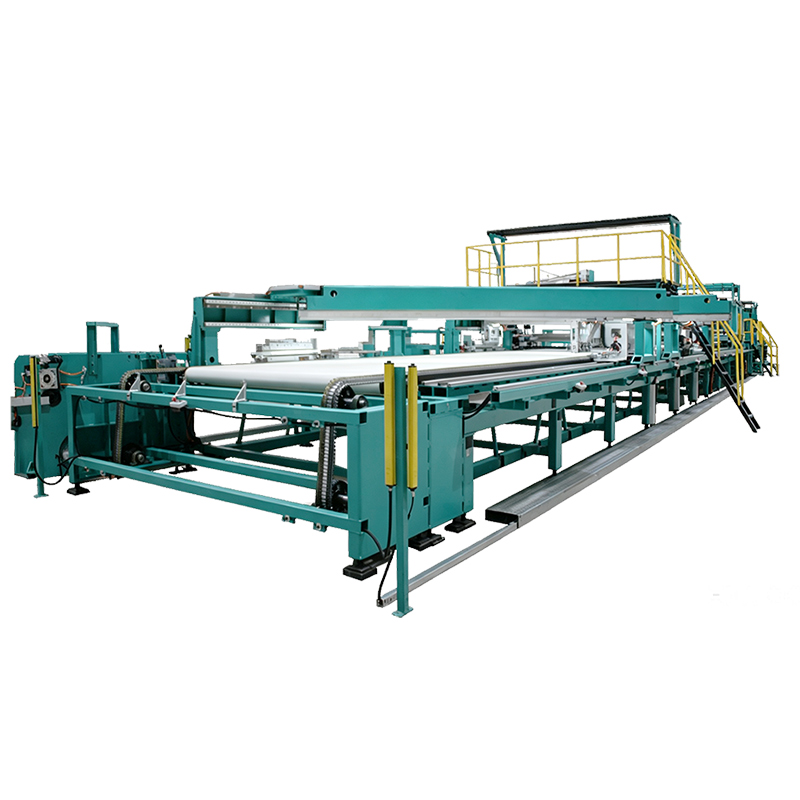 YRS3-3M-C Carbon Fiber Multi-Axial Warp Knitting Machine for Structural ComponentsHandles carbon fiber with automated multi-angle weft laying, producing multi-layer warp-knitted fabrics for high-strength structures such as yachts and automobiles.View Product →
These machines are part of a broader family of machines for fiberglass, chemical fiber, and carbon textiles, where yarn tension and alignment directly affect composite performance. Weft knitting is rarely used for these high-modulus fibers because the loop structure does not provide the same dimensional stability and load transfer.
Fibers Suited to Weft Knitting
Weft knitting excels with cotton, wool, acrylic, and elastane blends. It can accommodate yarns with higher friction and lower tenacity, and it allows rapid changes in color and texture. This flexibility makes weft knitting the preferred process for fashion apparel, home textiles, and many medical textiles where softness and stretch are more important than structural rigidity.
Applications and End-Use Markets
The differences between warp and weft knitting translate directly into distinct end-use markets. Warp knitting dominates technical textiles, industrial fabrics, and applications where stability and strength are critical. Weft knitting dominates apparel, hosiery, and soft home furnishings, where stretch, drape, and comfort are paramount.
- Warp knitting applications: lace, mesh, swimwear, sportswear, geotextiles, geogrids, automotive composites, wind turbine reinforcement, carbon fiber fabrics, fiberglass scrims, and medical implants.
- Weft knitting applications: T-shirts, polo shirts, sweaters, socks, leggings, underwear, upholstery, blankets, and medical bandages.
In technical textiles, warp knitting is often the only viable route for creating open, dimensionally stable structures with high strength-to-weight ratios. In apparel, weft knitting provides the stretch and recovery that consumers expect. Some products combine both processes, such as laminated fabrics where a warp knitted reinforcement is bonded to a weft knitted or nonwoven layer. When evaluating warp knitting machinery for a new production line, it is important to match machine capability with the intended fiber and fabric architecture.
Cost, Lead Time, and Buying Risks
Choosing between warp and weft knitting involves commercial as well as technical considerations. Warp knitting machines typically have a higher capital cost, especially multiaxial and carbon fiber models. They also require more floor space, stronger foundations, and more complex yarn preparation equipment. However, for high-volume industrial fabrics, the cost per square meter can be lower because of high production speeds and wide working widths. Weft knitting machines are generally less expensive and faster to install, but they may not achieve the same performance in technical applications.
- Define performance requirements first: Determine the required tensile strength, elongation, tear resistance, and dimensional stability before selecting a process.
- Verify fiber compatibility: Confirm that the chosen machine can handle the fiber type, yarn count, and surface finish without excessive breakage.
- Evaluate total cost of ownership: Include yarn preparation, energy consumption, maintenance, and spare parts in the calculation.
- Check production flexibility: Consider how often patterns or yarns will change and whether quick changeover is needed.
- Assess supplier support: Look for engineering assistance, training, and responsive after-sales service, especially for technical textiles.
- Request sample trials: Always test the actual fiber and fabric structure on the target machine before committing to a purchase.
One common buying risk is selecting a weft knitting machine for a fabric that requires warp knitted stability, or vice versa. This mistake can lead to poor product performance, high waste, and costly retrofits. Another risk is underestimating yarn preparation for warp knitting; inconsistent tension on the warp beam can cause defects that are difficult to correct downstream.
How to Choose: A Practical Decision Framework
To decide between warp and weft knitting, start with the fabric performance profile rather than the machine. The following framework can help engineering and procurement teams make a defensible choice.
- Map the load path: If the fabric must carry load primarily in the length direction and resist stretching, warp knitting is likely the better fit. If it must stretch and recover in multiple directions, consider weft knitting.
- Check edge and run resistance: For applications where cut edges must not fray or run, warp knitting offers a clear advantage. For garments where curling can be controlled during sewing, weft knitting is acceptable.
- Match fiber to process: High-modulus fibers such as glass and carbon are almost always warp knitted. Elastic and spun yarns are more compatible with weft knitting.
- Estimate production volume: Warp knitting shines in long runs of wide, stable fabrics. Weft knitting is more flexible for short runs, frequent style changes, and shaped products.
- Consider finishing and lamination: Warp knitted fabrics are easier to coat, laminate, and cut cleanly. Weft knitted fabrics may require additional stabilization before finishing.
- Validate with a pilot run: Produce a sample under realistic conditions and test for the key performance criteria before scaling up.
No single rule covers every case, but the direction of yarn feed and loop formation remains the most reliable predictor of fabric behavior. When the application demands stability, strength, and technical performance, warp knitting is usually the answer. When comfort, stretch, and drape are the priorities, weft knitting is the natural choice.
Warp knitting and weft knitting differ at the most fundamental level: warp knitting feeds many parallel yarns lengthwise and forms loops simultaneously, while weft knitting feeds one or a few yarns crosswise in a continuous path. This difference shapes fabric stability, elasticity, edge behavior, machine design, and end-use suitability. Warp knitting excels in technical textiles, composites, geotextiles, and applications requiring dimensional stability and strength. Weft knitting dominates apparel, hosiery, and soft home textiles where stretch and comfort matter most. For buyers, the practical takeaway is to specify the fabric performance first, then select the process and machine that can deliver it reliably. Understanding the trade-offs between these two knitting methods reduces procurement risk, improves product performance, and helps align machinery investment with market demand.
News
-
Two quotations land on the same desk. Both offer a multiaxial warp knitting line, both list the same working width, both promise high output. One buyer signs and discovers six months later that the f...
READ MORE -
Warp knitting is a combination of weaving methods in which the yarns meander along the length of the fabric; that is, they follow adjacent columns or wales, rather than a single row or course. For com...
READ MORE -
What Is a Tricot Warp Knitting Machine A tricot warp knitting machine is a textile production machine that forms fabric by looping many parallel yarns fed from a warp beam, with each needle working i...
READ MORE -
Warp Knitting Machines: Machine Architecture, Yarn Control and Industrial Fabric Output Inside a warp knitting machine, every single yarn has its own itinerary. A thousand or more ends leave their be...
READ MORE
-
Contact Info.
+86-198 5534 1617
+86-134 0158 3002yuanyang@yywarpknitting.com 699#, Shengzhi West Rd, Lvcheng Town, Danyang City, Zhenjiang City, Jiangsu Province, China

-
QR Code
-
Quick Links
Home About Products Manufacturing Customization News Contact -
Product List
Machine for Chemical Fiber Textile Machine for Fiberglass Textile Machine for Carbon Fiber Textile -
About Us
Company Profile Factory Gallery Value-added Service
Copyright © 2026 Changzhou Yuanyang Electromechanical Technology Co., Ltd. All Rights Reserved.
Custom Warp Knitting Machine Manufacturers
