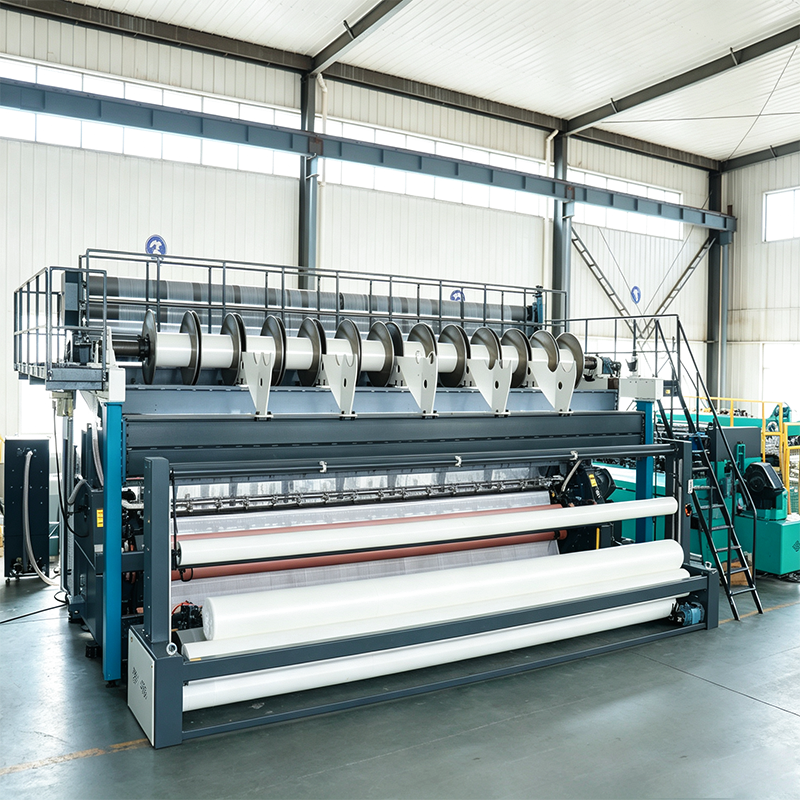
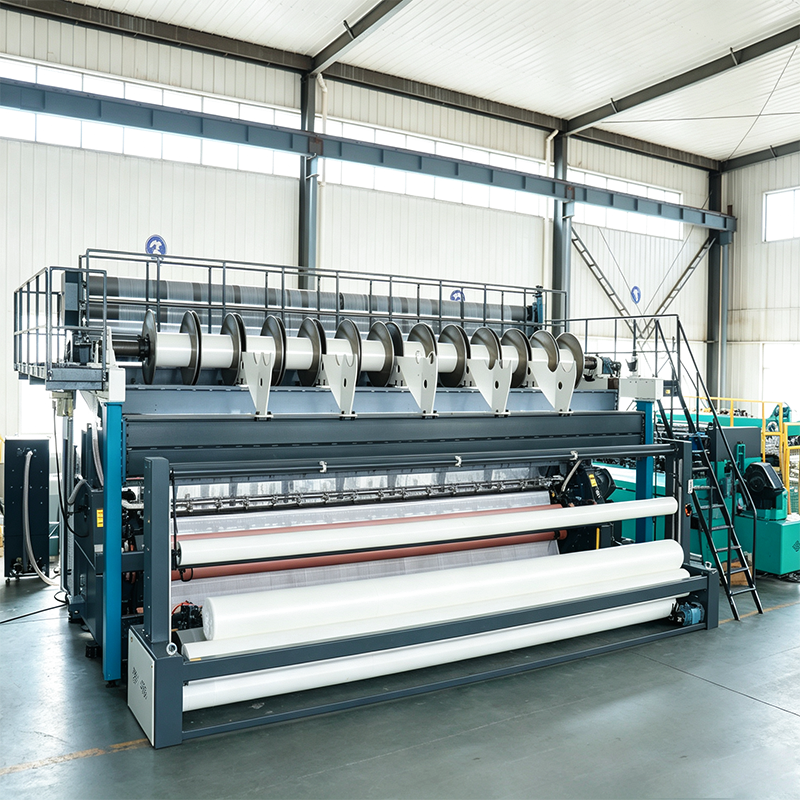
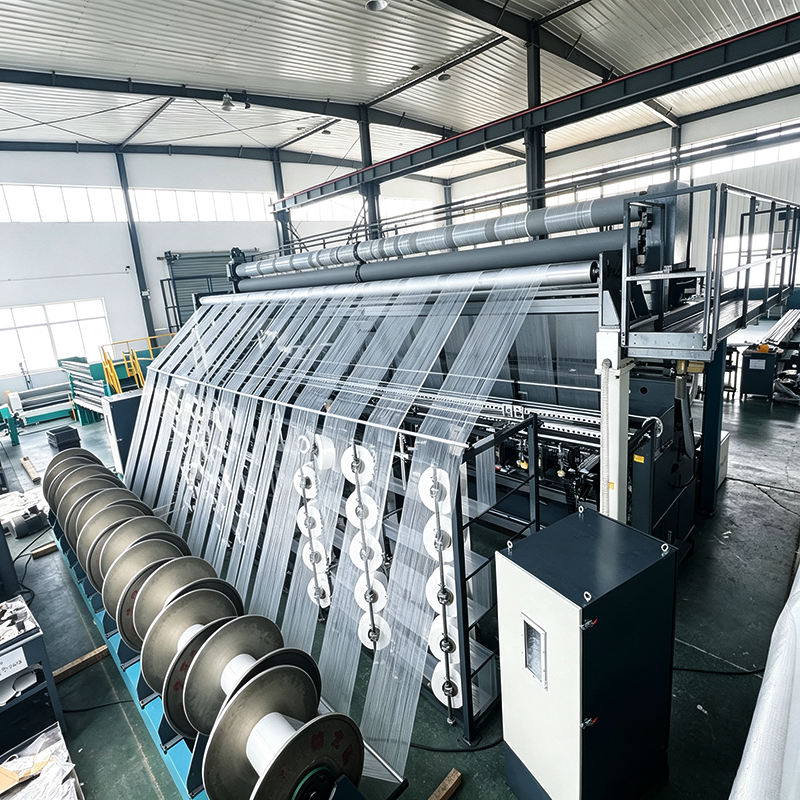
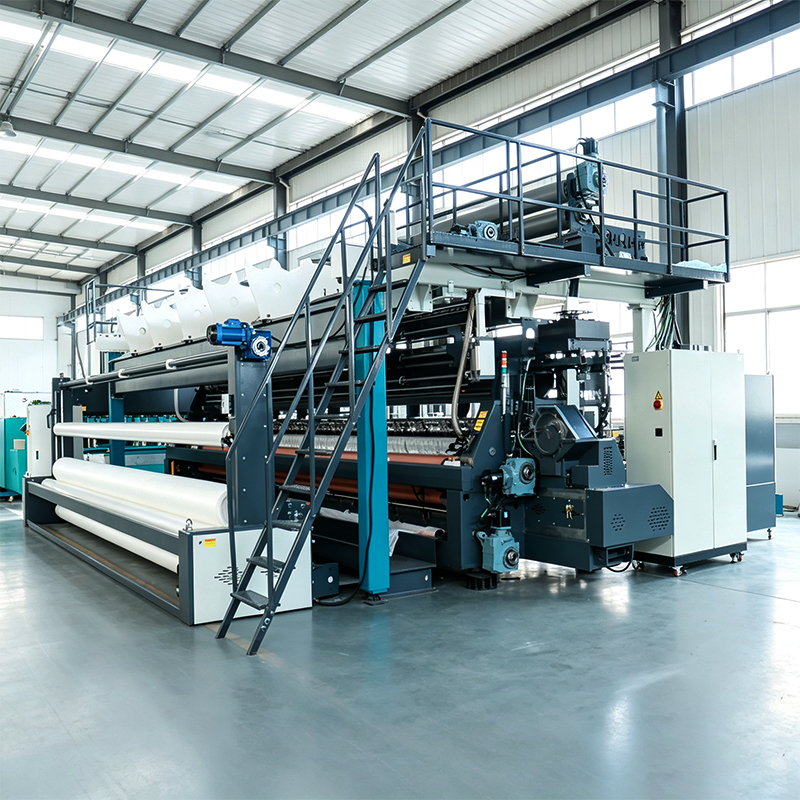
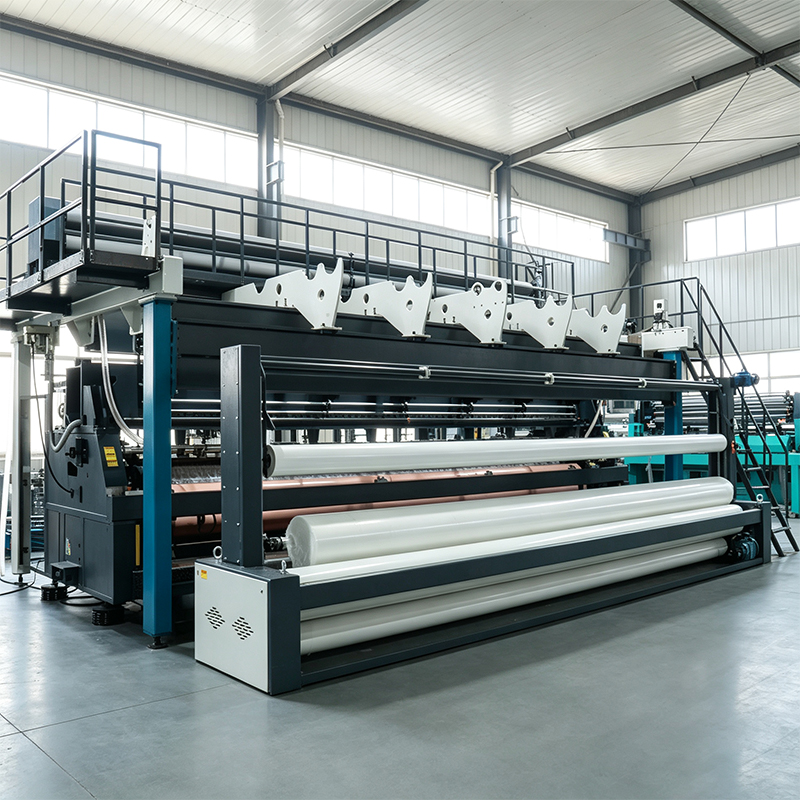
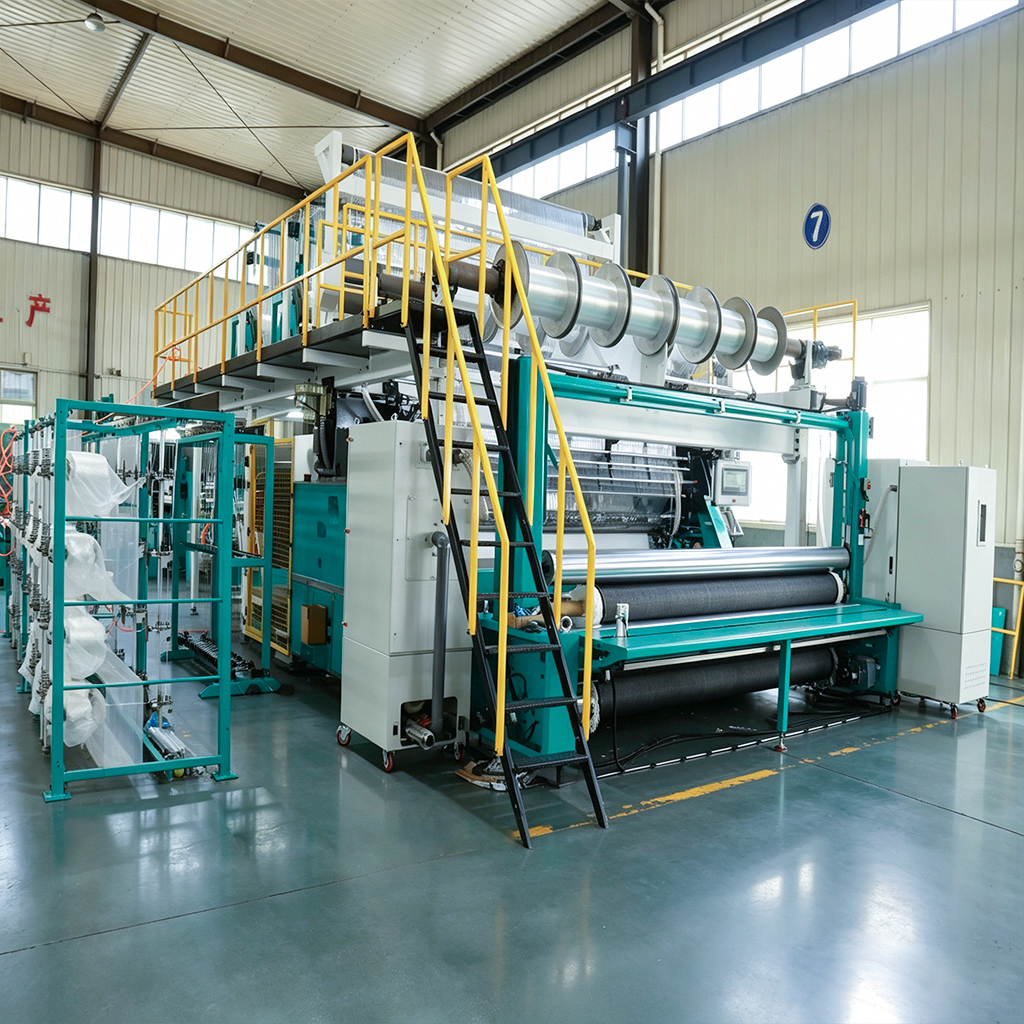
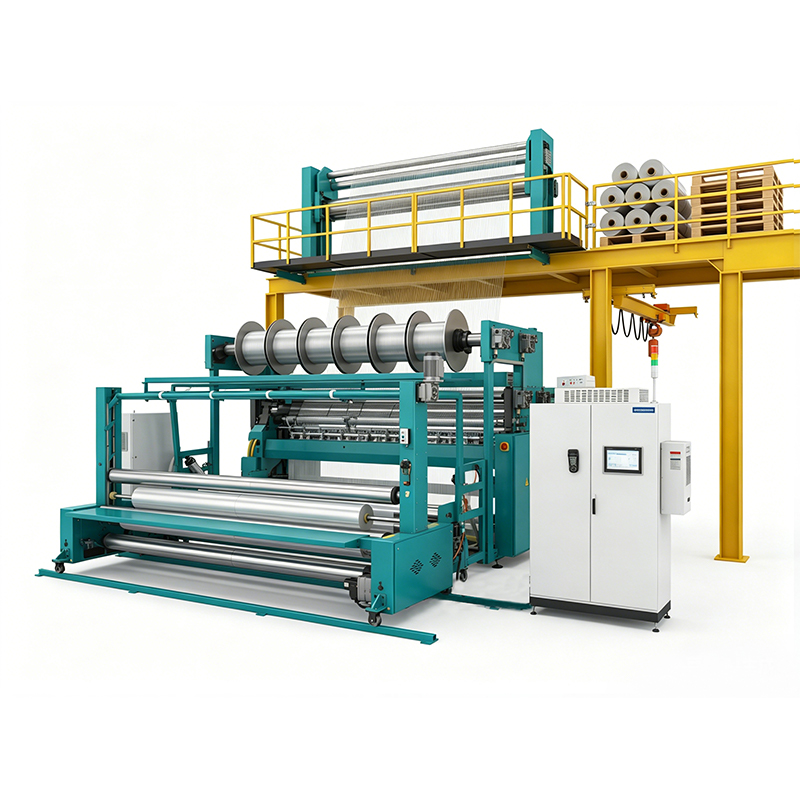
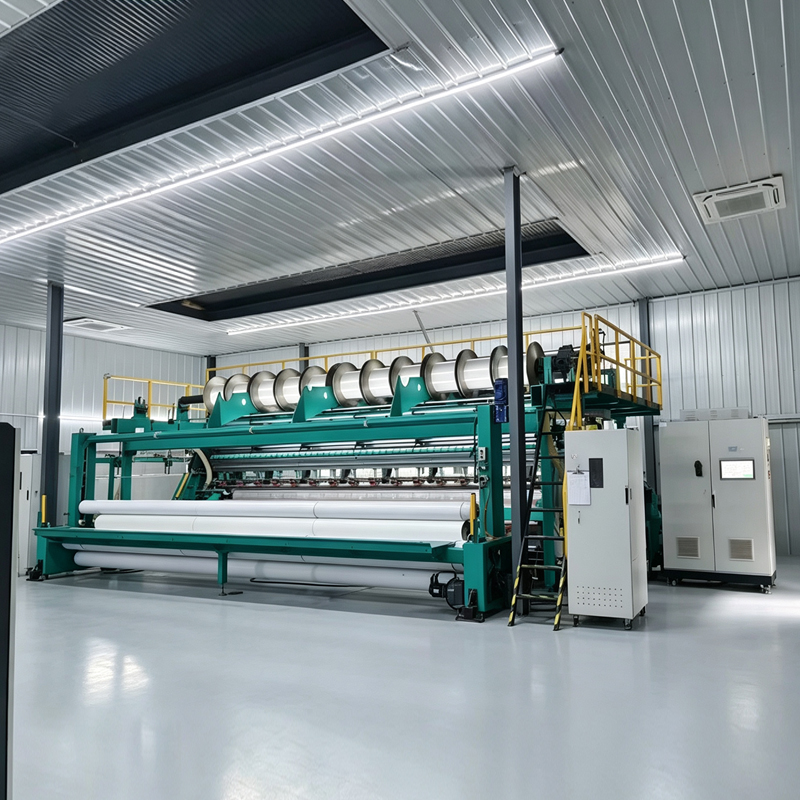
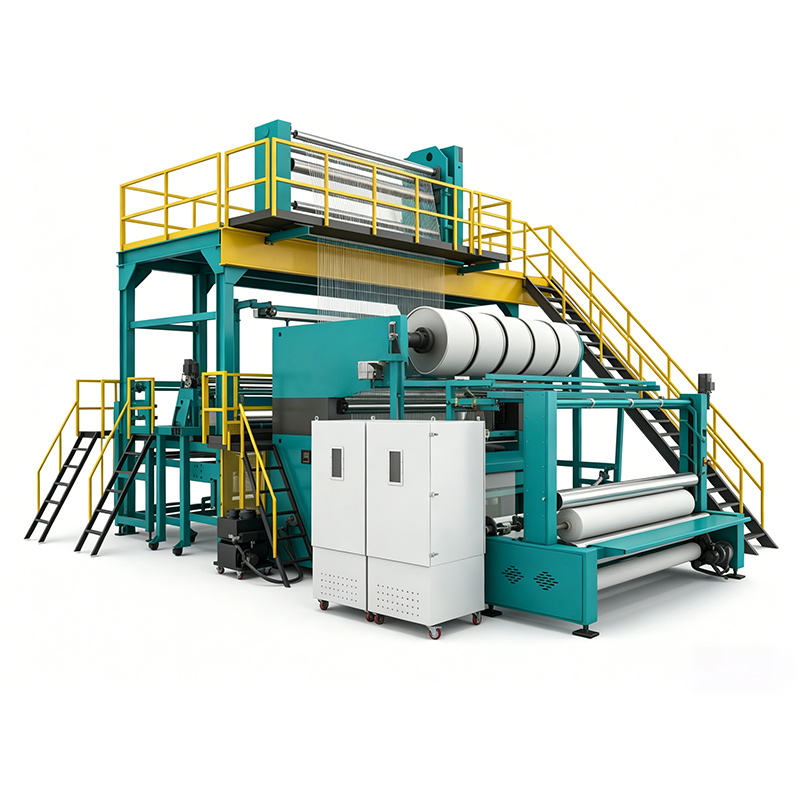
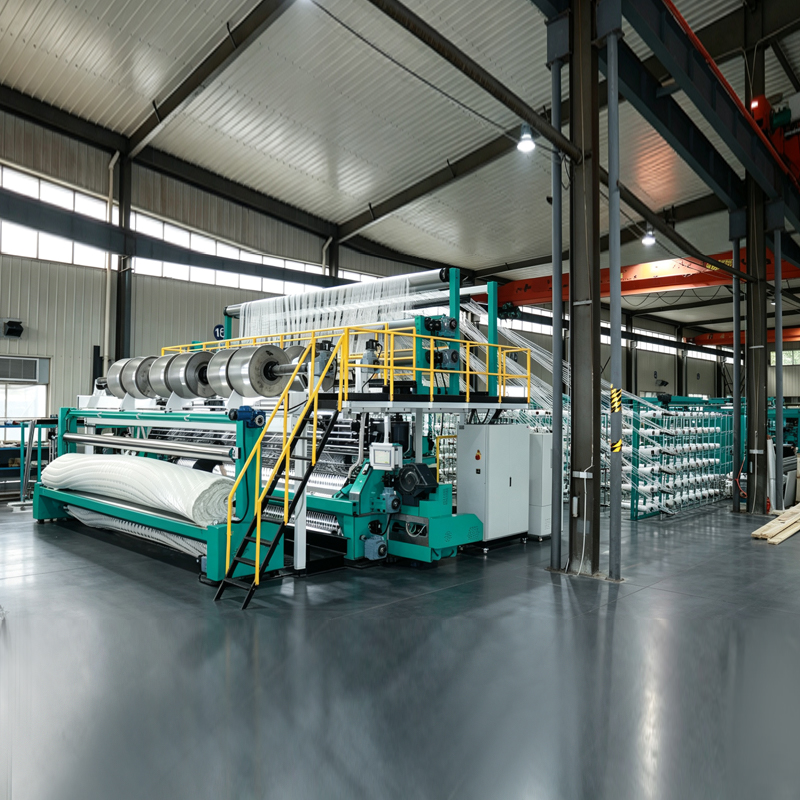
Changzhou Yuanyang Electromechanical Technology Co., Ltd. builds the YRS3-M-B Raschel Banner Biaxial Warp Knitting Machine for producers of PVC-coated flex banner and truck tarpaulin fabric. The machine lays high-tenacity polyester warp and weft yarns into a square mesh structure that is subsequently coated, giving the base fabric its dimensional stability and tear resistance.
We manufacture this model at our Danyang production base as part of the Machine for Chemical Fiber Textile range, alongside stitch-bonding, multiaxial and laid-scrim equipment. Configuration is set around your yarn count, mesh density, coating line and required daily output.
What the YRS3-M-B Produces
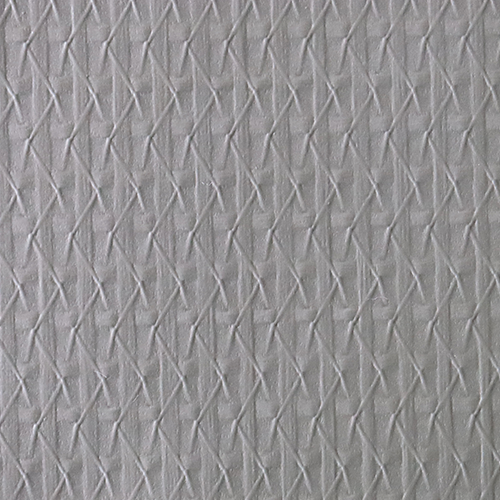
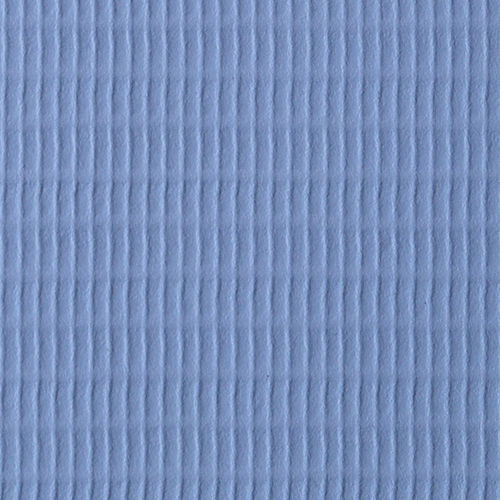
The YRS3-M-B is a biaxial Raschel machine: two yarn systems are fed at right angles and knitted together, so the reinforcing warp and weft are locked into the fabric rather than merely laid on top of it. The result is a square-mesh scrim with consistent aperture geometry, which is what allows the downstream PVC coating to bond evenly and the finished banner to hold shape under wind load and repeated rolling.
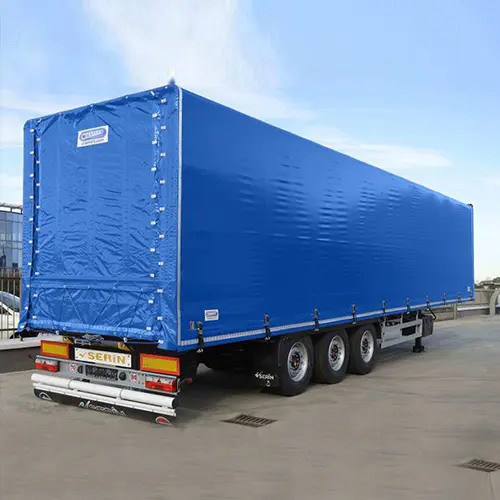
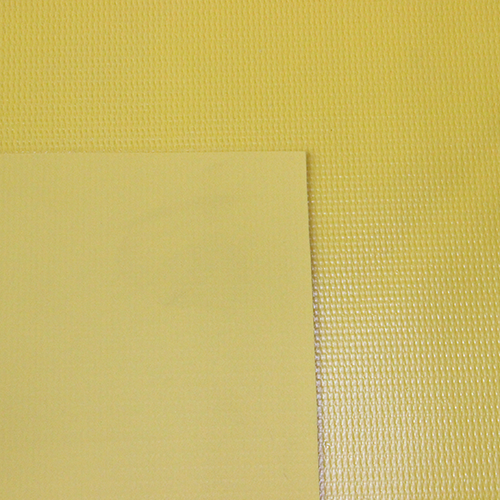
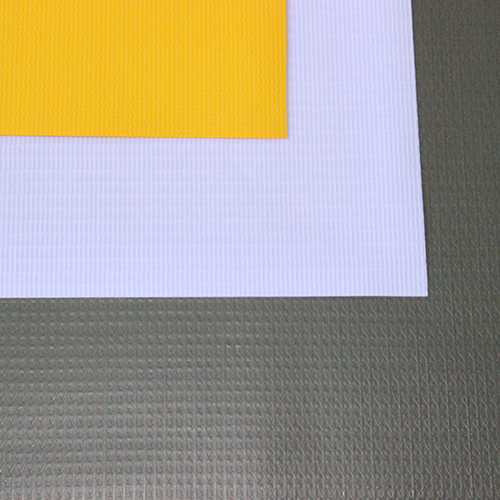
Typical output goes into lightbox advertising fabric, truck side curtains and tarpaulin sheeting. Because the mesh is the load-bearing skeleton of the coated product, aperture regularity and yarn tension control matter more than raw speed alone.
Confirmed Machine Specifications
| Parameter |
Specification |
Engineering Note |
| Applicable fibers |
High-tenacity polyester (coarse yarn), polyester |
Coarse reinforcing yarns need matched guide and tension settings |
| Machine speed |
20–1300 r/min |
Usable speed is set by yarn count and mesh construction |
| Working width |
268" |
Wide format suits coating lines producing full banner rolls |
| Advertising cloth output |
20,000 ㎡/day (reference) |
Actual output varies with fabric construction and process |
| Fabric structure |
Square mesh, PVC-coated |
Aperture geometry drives coating adhesion and print quality |
Why Biaxial Construction Suits Banner Fabric
Flex banner fails in service for predictable reasons: the base scrim stretches, the mesh skews, or the coating delaminates at the yarn crossover. A biaxial Raschel structure addresses the first two directly, because warp and weft are tied into the same loop system and cannot shift independently during coating, tentering or finishing.
- Square mesh regularity — even apertures give the coating a uniform anchor pattern across the full 268" width.
- High productivity at speed — the machine holds optimal rotational speed and motion sequence even at high running speed, so output does not come at the cost of stitch consistency.
- Coarse yarn capability — high-tenacity polyester in the reinforcing directions delivers the tensile and tear performance that outdoor advertising and truck tarpaulin demand.
- Coating compatibility — the open mesh accepts PVC paste evenly, which supports consistent opacity and print surface on the finished banner.
Configuration Options We Build Around
Two banner producers rarely run the same working point. Before we release drawings, we set the machine configuration against your yarn specification, target mesh count, roll width and downstream coating equipment.
Yarn and gauge setup
Warp and weft yarn counts, guide bar arrangement and stitch density matched to the required mesh opening and fabric weight.
Width and beam handling
Working width and warp beam positions aligned with your coating line width and roll handling equipment.
Drive and control
Speed and motion sequencing set for stable running across the production shift, with parameters stored per fabric article.
Line integration
Take-off, batching and material flow coordinated with the coating, drying and tentering stages that follow.
Where a standard frame does not fit the fabric or the workshop, our customization work covers structure and layout redesign, functional module development, and adaptation for special materials — the same engineering route we apply across the warp knitting machinery range.
Installation, Utilities and Commissioning
The YRS3-M-B is delivered as a complete machine with its control system, and installation is planned around your building rather than assumed. Floor loading, machine orientation relative to the warp beam creel and the coating line, power supply, and access for beam trolleys are all settled before shipment.
- Site preparation review — foundation and leveling requirements, clearances and service access.
- Mechanical installation and alignment — frame leveling, beam positioning, yarn path threading.
- Electrical and control commissioning — drive parameters, safety interlocks, operator interface setup.
- Fabric trials — running your target article to confirm mesh geometry, width and running stability.
- Operator and maintainer handover — running the machine to production condition before sign-off.
Our engineers attend the customer's factory for on-site installation, commissioning and training until the equipment is running to the agreed condition. Training can also be delivered at our fabrication workshop, where knitters, maintainers and workshop management staff work alongside our own production team for one to two months.
Quality Control and Pre-Delivery Testing
Yuanyang operates a refined control regime from component procurement through production, assembly, testing and debugging. Every machine is tested before it leaves the factory, and inspection records support the acceptance process at the customer's site.
- Incoming component and material control before assembly
- In-process checks during frame build, drive installation and yarn path assembly
- No-load and loaded running tests covering speed range and motion sequence
- Fabric trial verification against the agreed construction
- Pre-shipment inspection with customer participation where required
Our production base covers more than 12,000 ㎡ with standardized workshops, dedicated customization zones and design trial workstations, supported by an intelligent warehouse that manages receiving, storage, picking and dispatch.
Maintenance, Spares and Long-Term Support
Banner machines run long shifts, so serviceability is designed in: accessible guide bars, clearly identified wear components and a lubrication schedule tied to running hours. We hold a rapid-response service mechanism and maintain after-sales engineers in textile-concentrated regions to shorten downtime when a fault occurs.
Spare parts supply, wear-part replacement guidance and process troubleshooting continue after handover. Where a customer's fabric range expands, we support parameter development for new mesh constructions rather than treating the original article as fixed.
Related Equipment in Our Range
Banner production is one working point in a wider industrial textile chain. Where a project spans more than one fabric type, we supply the adjacent machines from the same engineering platform.
| Machine |
Application Fit |
| YXKS2-M Biaxial Warp Knitting Machine |
Biaxial reinforcement fabrics for chemical fiber textile applications |
| YHS High Speed Stitch Bonding Machine |
High-throughput bonding of fiber webs for nonwoven and industrial fabrics |
| YRS3-M-H High Strength Biaxial Warp Knitting Machine |
Higher-strength reinforcement fabrics where load demands exceed standard banner scrim |
Information We Use to Configure Your Solution
Our proposal is built from the working point, not from a catalogue number. The following inputs let us confirm the machine configuration, quote accurately and plan delivery.
- Fabric specification — target mesh count, aperture size, fabric weight and finished roll width
- Yarn data — warp and weft yarn type, linear density and supplier, including high-tenacity polyester grades
- Output target — required daily or annual square meters and shift pattern
- Downstream process — coating method, line width, tentering and finishing conditions
- Site conditions — available floor area, power supply, building height and material handling
- Sample or drawing — a fabric sample or construction drawing shortens configuration confirmation
Send these details with your enquiry and we will return a configuration proposal with the machine specification, scope of supply and the commissioning plan for your site.
Frequently Asked Questions
What fabric does the YRS3-M-B produce?
It produces biaxial square-mesh fabric from high-tenacity polyester warp and weft yarns, used as the base scrim for PVC-coated lightbox advertising fabric and truck tarpaulin. The mesh is coated after knitting.
What is the working width and speed range?
The confirmed working width is 268" and the machine speed range is 20–1300 r/min. The practical production speed for your article depends on yarn count, mesh construction and the process window you set.
What daily output can we expect?
For advertising cloth the reference figure is 20,000 ㎡ per day. Actual output varies with fabric construction and process conditions, so we confirm the expected figure against your specific article during configuration.
Can the machine be adapted to our yarn or mesh design?
Yes. Customization covers machine structure and layout redesign, functional module development or integration, and adaptation for special materials. We work from your sample or drawing through 3D confirmation, quoting, trial sample and production.
How is installation and training handled?
Our engineer attends your factory for on-site installation, commissioning and training until the machine runs correctly. Operator, maintainer and workshop management training is also available at our fabrication workshop for one to two months.
What support continues after handover?
We provide a rapid-response service mechanism, spare parts supply, process troubleshooting and long-term assistance with production problems. System documentation support is available to help customers establish quality control records.


 English
 中文简体
中文简体 русский
 Français
 Español
 Deutsch