

 English
 中文简体
中文简体 русский
 Français
 Español
 Deutsch
What Is a Tricot Warp Knitting Machine and How Does It Work?
2026-09-16
Content
- 1 What Is a Tricot Warp Knitting Machine
- 2 How the Machine Forms Fabric
- 3 Key Components of the Machine
- 4 Materials Commonly Processed
- 5 Typical Applications and Use Cases
- 6 Tricot Versus Other Knitting Methods
- 7 Maintenance and Operating Considerations
- 8 Biaxial and Multiaxial Machines Built on the Same Principle
- 9 Where This Equipment Is Made and Supplied
What Is a Tricot Warp Knitting Machine
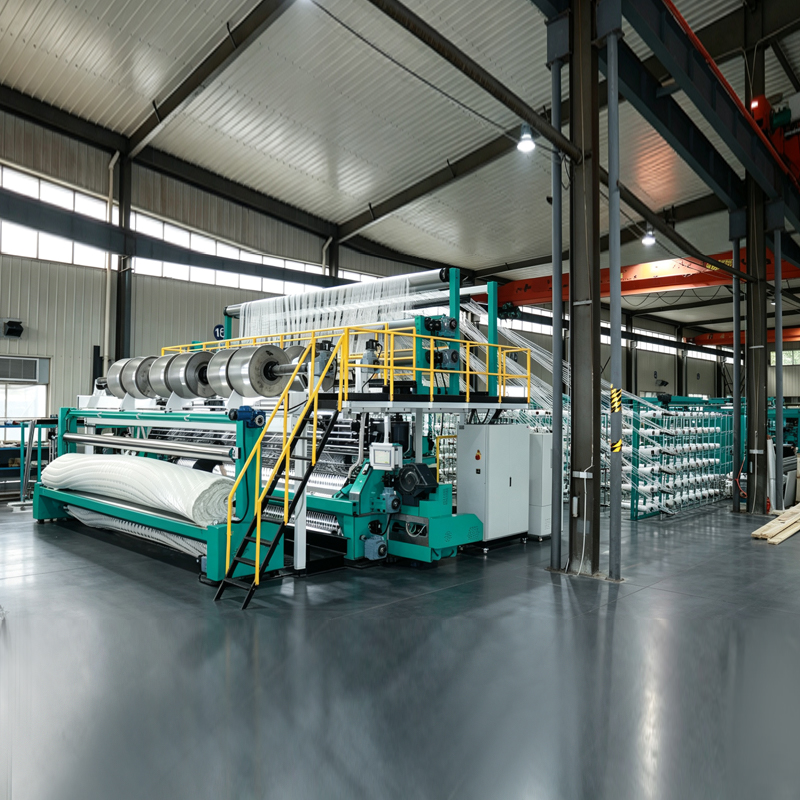
A tricot warp knitting machine is a textile production machine that forms fabric by looping many parallel yarns fed from a warp beam, with each needle working its own yarn at the same time rather than a single yarn traveling across the width of the fabric. This is the defining difference from weft knitting, where one thread moves horizontally row by row. In a tricot machine, guide bars carry hundreds or thousands of yarns simultaneously, and the needles form loops that interlock vertically along the length of the cloth, which is why the resulting fabric has fine, closely spaced vertical ribs on the technical face and a smoother, slightly diagonal pattern on the back. The output is a run-resistant, stable, and often lightweight fabric that is widely used in apparel linings, sportswear, mosquito netting, automotive interiors, and technical textiles.
The word "tricot" comes from the French term for knitting, and it now refers both to the machine type and to the fabric structure it produces. A typical tricot machine can operate at working widths of several meters and run at speeds that allow the production of hundreds of courses per minute, which makes it a preferred choice for continuous, high-volume fabric manufacturing where consistent quality across long fabric rolls is required.
How the Machine Forms Fabric
The process begins with a warp beam, a large cylindrical spool that holds thousands of individual yarn ends wound in parallel. These yarns are threaded through guide bars positioned in front of a row of needles that span the full width of the machine. As the machine cycles, the needles rise and fall while the guide bars shift laterally, wrapping yarn around each needle in a controlled sequence. This lateral shifting, known as the underlap and overlap motion, is what links adjacent loops together and gives tricot fabric its horizontal stability alongside its vertical loop structure.
Most tricot machines use two or more guide bars, and the relative movement between them determines the fabric pattern. A simple two-bar construction produces a plain, closely knit surface suitable for linings, while more complex bar arrangements with three, four, or more bars allow patterned, mesh-like, or textured surfaces to be produced on the same basic machine platform. The needle bed itself typically uses compound needles, which consist of two separate parts working together to open and close the loop, allowing the machine to run at higher speeds with fewer stitch defects compared to older needle designs.
| Guide Bar Count | Typical Structure | Common Use |
|---|---|---|
| 2 bars | Plain, dense surface | Garment linings, base fabrics |
| 3 to 4 bars | Patterned or textured | Decorative fabrics, mesh |
| Multi-bar (Raschel type) | Open, net-like structure | Netting, technical textiles |
Key Components of the Machine
A tricot machine relies on several coordinated parts that must move in precise timing with one another. The warp beams supply raw yarn under controlled tension, and many machines use multiple beams simultaneously so that different yarn types, colors, or elasticities can be combined in a single fabric. The guide bars, mounted on a shogging mechanism, swing side to side in fractions of a millimeter to place yarn exactly where the pattern requires. The needle bar holds the compound or bearded needles that actually form the loops, while the sinker bar helps hold down previously formed loops so new ones can be created cleanly.
Take-up and Batching System
Once loops are formed, the fabric is pulled downward by a take-up roller at a constant rate, which determines the course density of the finished cloth. The fabric then winds onto a batching roll, ready for later dyeing, finishing, or cutting operations. Consistent take-up tension is important because uneven pulling can distort loop shape and cause visible streaks in the finished roll.
Pattern Control System
Modern tricot machines use electronic pattern drives instead of the mechanical pattern chains found on older equipment. An electronic control unit sends signals to servo motors that move each guide bar according to a programmed sequence, which allows pattern changes to be made through software rather than by physically replacing chain links. This shift has made small-batch and custom fabric runs considerably more practical for manufacturers.
Materials Commonly Processed
Tricot machines can process a fairly wide range of yarn types, which is part of what makes the fabric structure so versatile. Polyester and nylon filament yarns are frequently used because their smoothness and consistent diameter allow the fine, closely spaced loops typical of tricot fabric to form without excessive friction on the needles. Spandex or elastane yarns are often combined with polyester or nylon in a second guide bar to produce stretch fabrics used in swimwear and activewear, since the elastane strand can be laid in without disrupting the main loop structure. Cotton and cotton-blend yarns are also processed on some tricot lines, particularly for lining fabrics where breathability matters more than extreme stretch.
Yarn count and filament fineness directly affect fabric weight and hand feel. Finer filament yarns, sometimes measured below 50 denier, produce lightweight, almost sheer tricot fabric suitable for delicate linings, while heavier yarns in the 100 to 300 denier range are used for more durable applications such as automotive seat covers or outdoor equipment liners.
Typical Applications and Use Cases
Tricot fabric produced on these machines appears in a broad set of everyday and industrial products. In apparel, it serves as jacket and coat linings because it resists fraying at cut edges and drapes smoothly against the body. In sportswear and swimwear, tricot fabric blended with elastane provides four-way stretch while keeping a smooth surface that does not snag easily. Mosquito nets and window screening fabrics are often produced on multi-bar tricot or Raschel-type machines, where the open, net-like structure allows airflow while blocking insects.
Beyond apparel, tricot fabric is used in automotive interiors as headliner backing and seat cover lining, in furniture upholstery as a backing layer, and in medical textiles such as compression garments and wound care products where a stable, run-resistant surface is needed against the skin. Industrial filtration fabrics and geotextiles also draw on tricot or warp-knit structures because the interlocking loop pattern provides tear resistance along multiple directions rather than only along a single thread path, which matters when the fabric is stretched or subjected to repeated stress in outdoor or mechanical settings.
Tricot Versus Other Knitting Methods
Compared with weft knitting machines, such as circular knitting equipment used for t-shirts, a tricot warp knitting machine forms fabric across its entire width at once rather than building it row by row from a single yarn feed. This gives tricot fabric a structure that generally does not run or ladder the way a dropped stitch in weft-knit fabric can, since each loop is anchored by a separate yarn rather than the same continuous thread. On the other hand, weft knitting typically allows greater elasticity and easier shaping for garments knitted directly to size, while tricot production is oriented toward continuous flat fabric that is later cut and sewn.
Within warp knitting itself, tricot machines are often distinguished from Raschel machines by needle type and gauge. Tricot machines commonly use compound needles at finer gauges, which suit smooth, dense fabrics, while Raschel machines traditionally use latch needles and are associated with coarser, more open constructions such as lace and net fabrics, though modern equipment in both categories has increasingly overlapping capabilities.
Maintenance and Operating Considerations
Because a tricot machine may hold several thousand individual yarn ends under tension at once, yarn breakage detection is a routine part of daily operation. Most machines include stop-motion sensors along the warp sheet that halt production immediately when a yarn breaks, since a missed break can create a visible flaw running the length of an entire fabric roll. Needle wear is another ongoing concern, as fine-gauge needles operating at high cycle counts gradually lose sharpness and must be inspected and replaced on a scheduled basis to avoid snagging or loop distortion.
Lubrication of the needle bar and guide bar mechanisms also affects fabric quality, since dry friction points can cause uneven tension across the working width. Facilities running these machines typically follow a maintenance schedule that includes daily visual checks, periodic needle replacement, and calibration of the electronic pattern drive to keep loop dimensions consistent from the beginning to the end of a production run.
Biaxial and Multiaxial Machines Built on the Same Principle
While a standard tricot machine loops yarn primarily in the lengthwise direction, a related family of equipment known as biaxial and multiaxial warp knitting machines lays yarn straight across the width, along the length, or at an angle, and then binds these laid-in yarns together with a fine stitching loop rather than forming a conventional knit structure throughout. This approach keeps the reinforcing fibers perfectly straight instead of crimped into loops, which preserves tensile strength along whichever direction the yarn is oriented, and it is why this category of machine is closely associated with heavy-duty industrial fabrics rather than apparel.
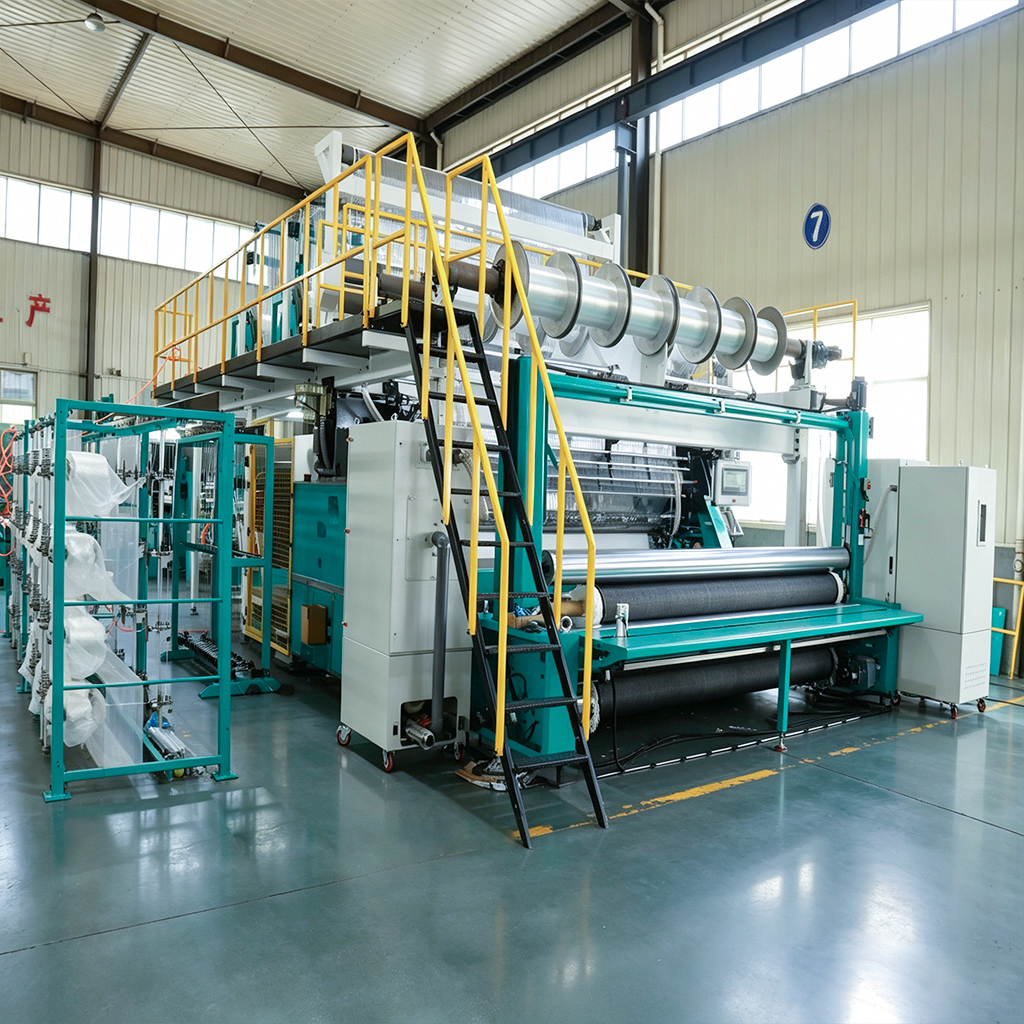
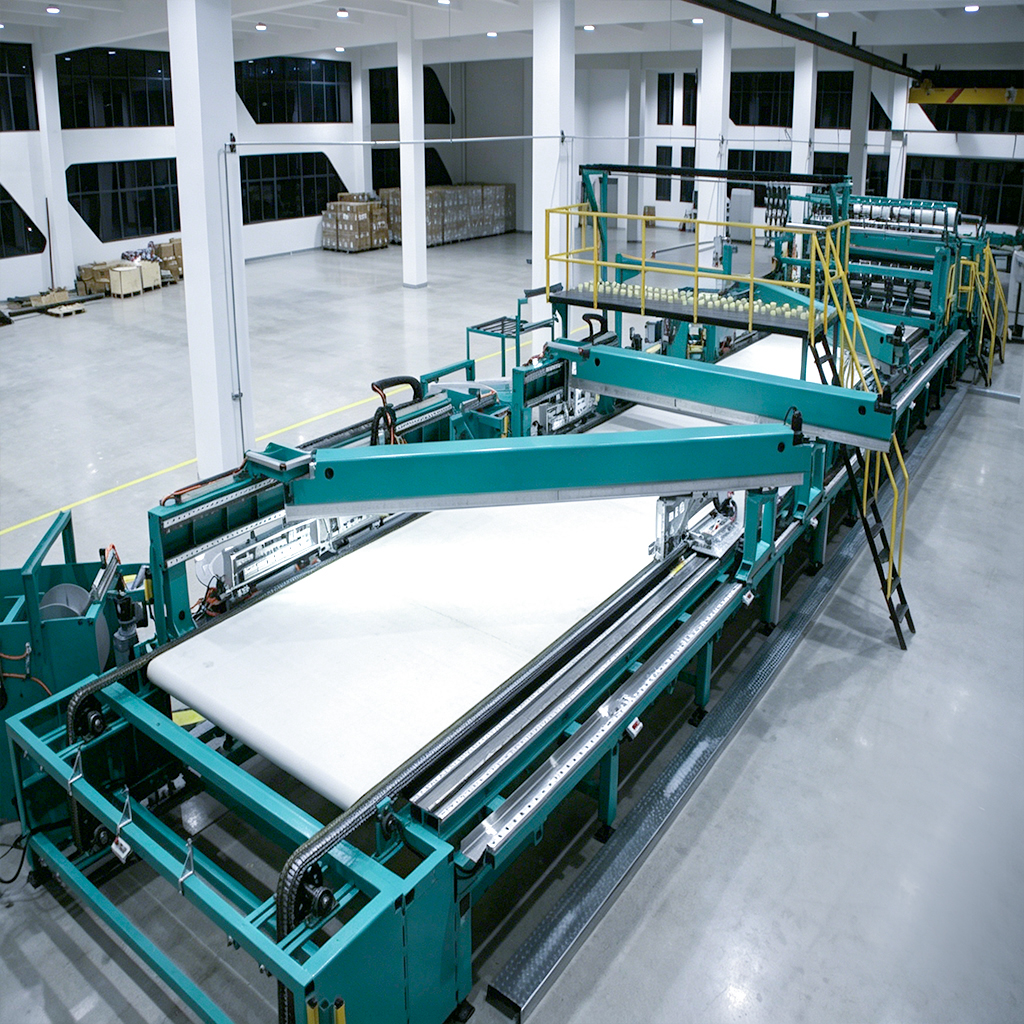
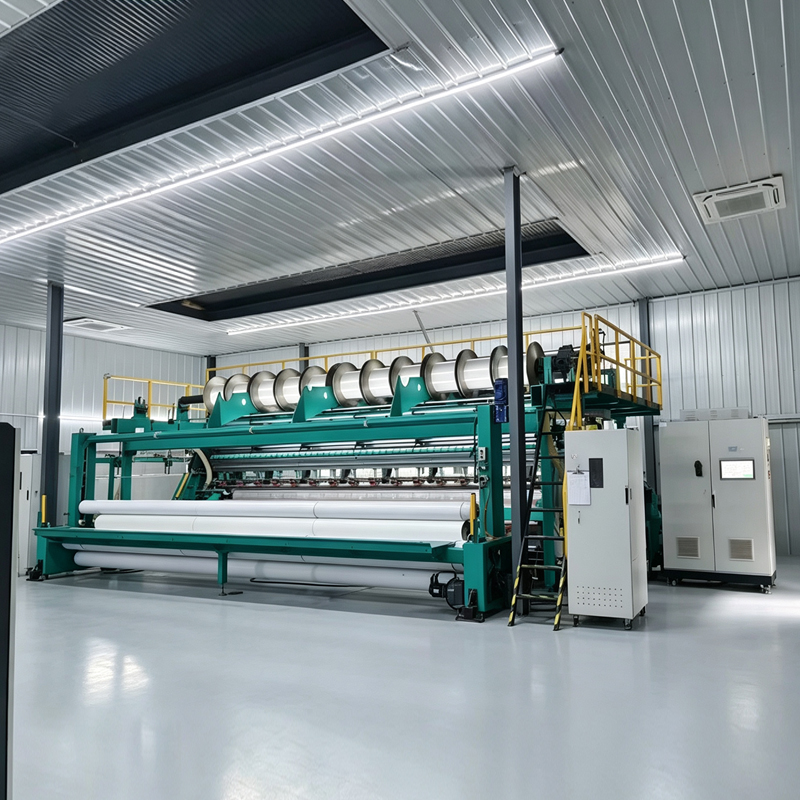
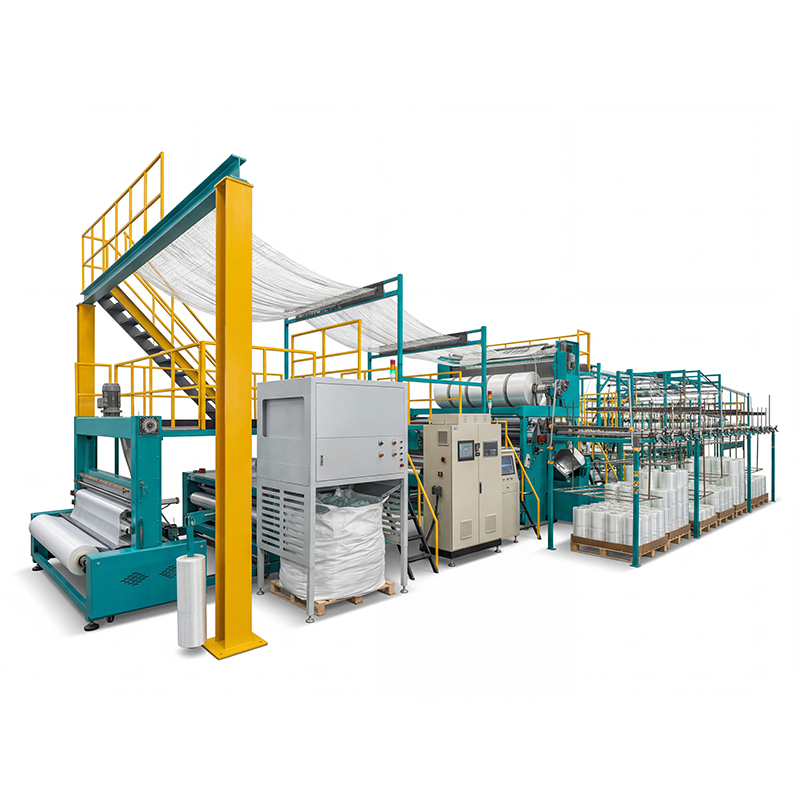
A Raschel-type banner and tarpaulin machine, for example, works with high-tenacity polyester yarn to produce the base cloth used in lightbox advertising panels and truck tarpaulin covers, running at speeds that can reach roughly 1300 revolutions per minute across a working width near 268 inches, with daily throughput commonly cited around 20,000 square meters under standard operating conditions. A separate biaxial machine format is instead tuned for finer chemical or polyester fiber and is used to make garment interlining and warp-knit crepe fabric, working at a somewhat narrower width near 247 inches with daily output figures closer to 150 kilograms, reflecting the lighter, more tightly structured fabric this machine is designed to produce.
A further variant, sometimes described as a chopped fiber biaxial warp knitting machine, is built to process glass fiber together with polyester and is applied in wind power components such as nacelle covers, where full-width weft-inserted chopped mats and composite reinforcement fabrics are required. On this type of equipment the weight ratio between the 0 degree and 90 degree yarn directions can be adjusted to match structural requirements, and an optional chopped fiber layer weighing between 50 and 500 grams per square meter, or a compatible nonwoven layer, can be added beneath the main yarns, resulting in finished greige fabric that typically falls between 300 and 2000 grams per square meter depending on the intended composite application.
| Machine Type | Fiber Used | Working Width | Typical Output |
|---|---|---|---|
| Raschel banner/tarpaulin machine | High-tenacity polyester | 268 inches | Around 20,000 m² per day |
| Biaxial interlining machine | Chemical fiber, polyester | 247 inches | Around 150 kg per day |
| Chopped fiber biaxial machine | Glass fiber, polyester | 103 inches | Around 3,000 kg per day |
Where This Equipment Is Made and Supplied
Warp knitting and biaxial machine manufacturing is concentrated in a handful of regions with long-standing textile machinery expertise, and Changzhou in Jiangsu Province, China, is recognized as one of these hubs. Enterprises based there, such as Changzhou Yuanyang Electromechanical Technology Co., Ltd., combine research and development with manufacturing, sales, and after-sale service under one roof, offering a product range that spans stitch-bonding machines, biaxial warp knitting machines, multiaxial warp knitting machines, carbon fiber multiaxial warp knitting machines, powder scattering machines, and web laying equipment. This kind of integrated setup allows customized configurations, including adjustable yarn ratios and optional chopped fiber or nonwoven layers, to be engineered for specific end uses such as wind power composite reinforcement or advertising and tarpaulin fabric production, alongside tailored accessories for existing production lines.
News
-
Warp Knitting Machines: Machine Architecture, Yarn Control and Industrial Fabric Output Inside a warp knitting machine, every single yarn has its own itinerary. A thousand or more ends leave their be...
READ MORE -
Which Machine Category Matches Each Technical Fiber and Fabric Goal A warp knitting machine is the primary production platform for technical fiber textiles across fiberglass, chemical fiber, and carbo...
READ MORE -
Have you ever wondered why some weaving looms operate flawlessly for decades, while others seem to suffer from constant breakdowns and quality issues? The secret isn’t luck; it’s a disciplined and str...
READ MORE -
Warp knitting is a combination of weaving methods in which the yarns meander along the length of the fabric; that is, they follow adjacent columns or wales, rather than a single row or course. For com...
READ MORE
-
Contact Info.
+86-198 5534 1617
+86-134 0158 3002yuanyang@yywarpknitting.com 699#, Shengzhi West Rd, Lvcheng Town, Danyang City, Zhenjiang City, Jiangsu Province, China
-
QR Code
-
Quick Links
Home About Products Manufacturing Customization News Contact -
Product List
Machine for Chemical Fiber Textile Machine for Fiberglass Textile Machine for Carbon Fiber Textile -
About Us
Company Profile Factory Gallery Value-added Service
Copyright © 2026 Changzhou Yuanyang Electromechanical Technology Co., Ltd. All Rights Reserved.
Custom Warp Knitting Machine Manufacturers
