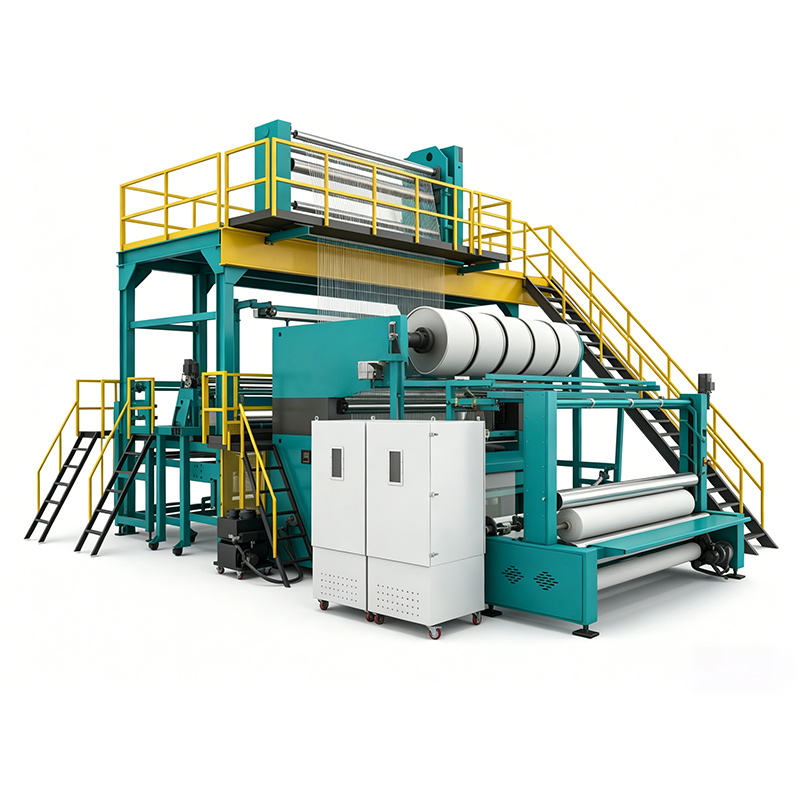
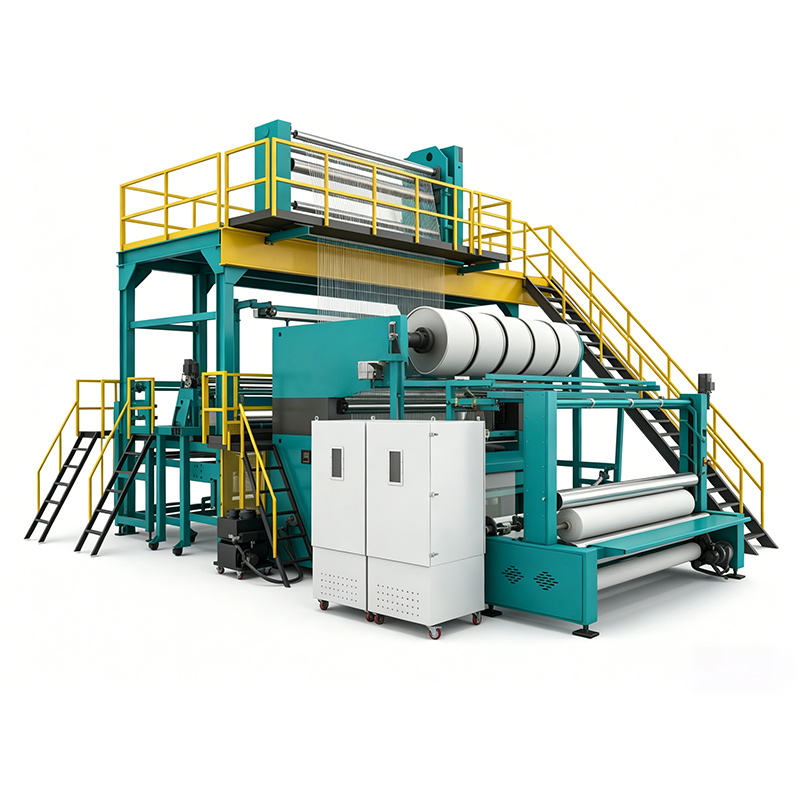
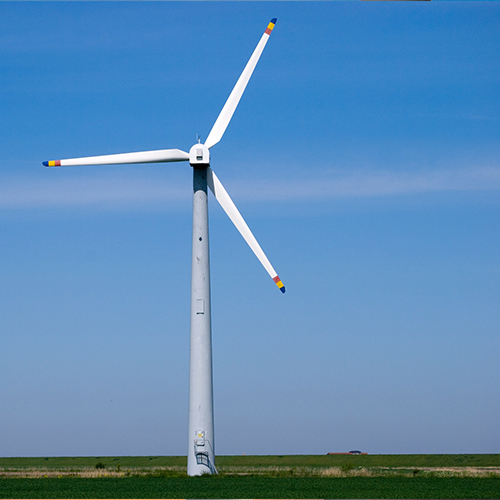
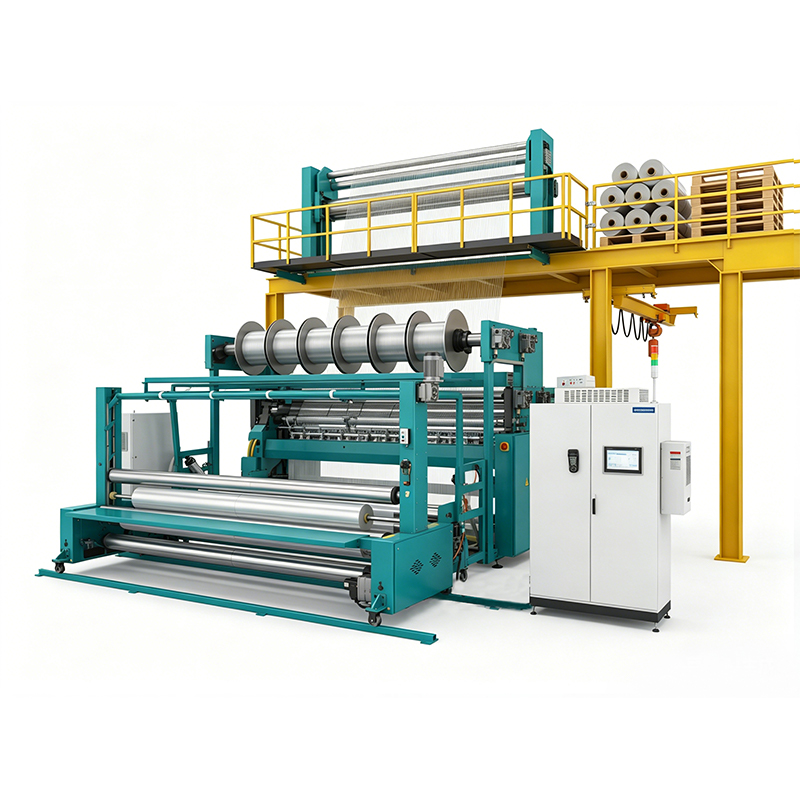
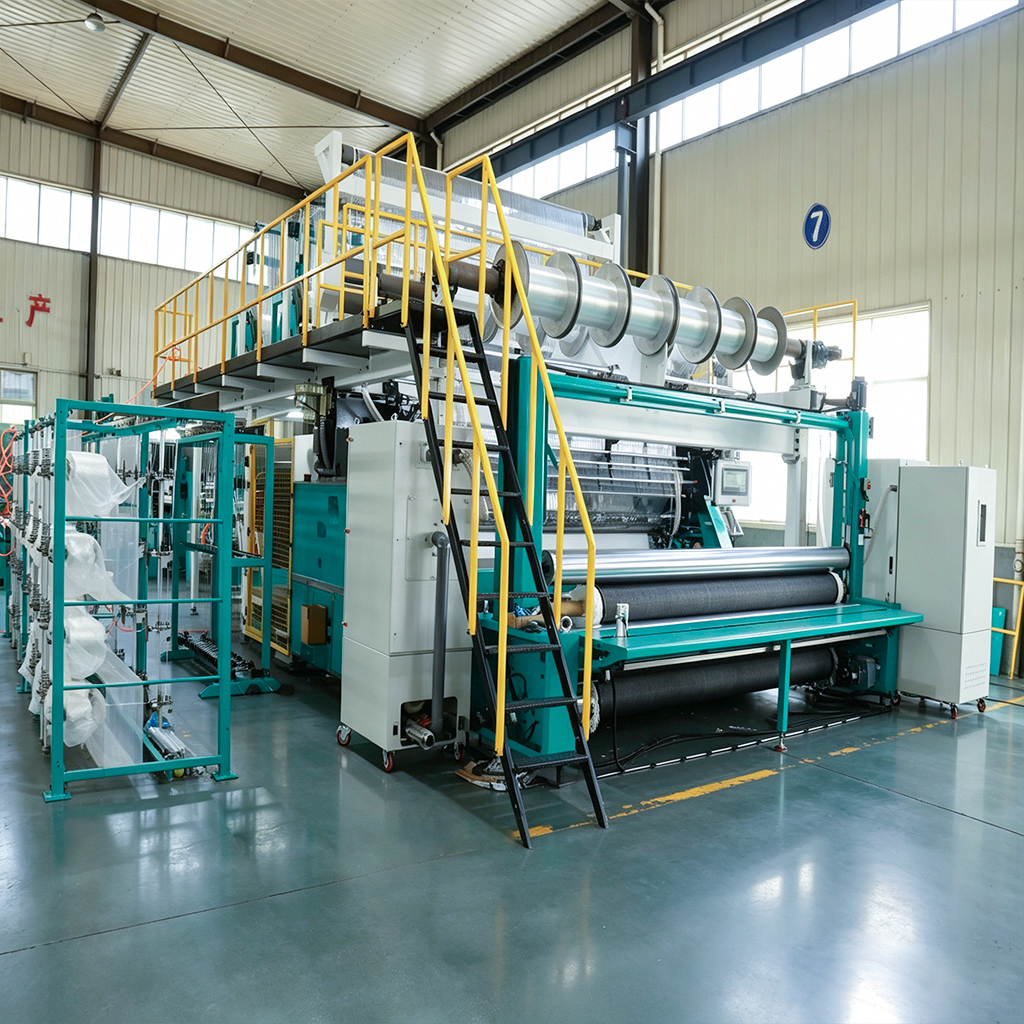
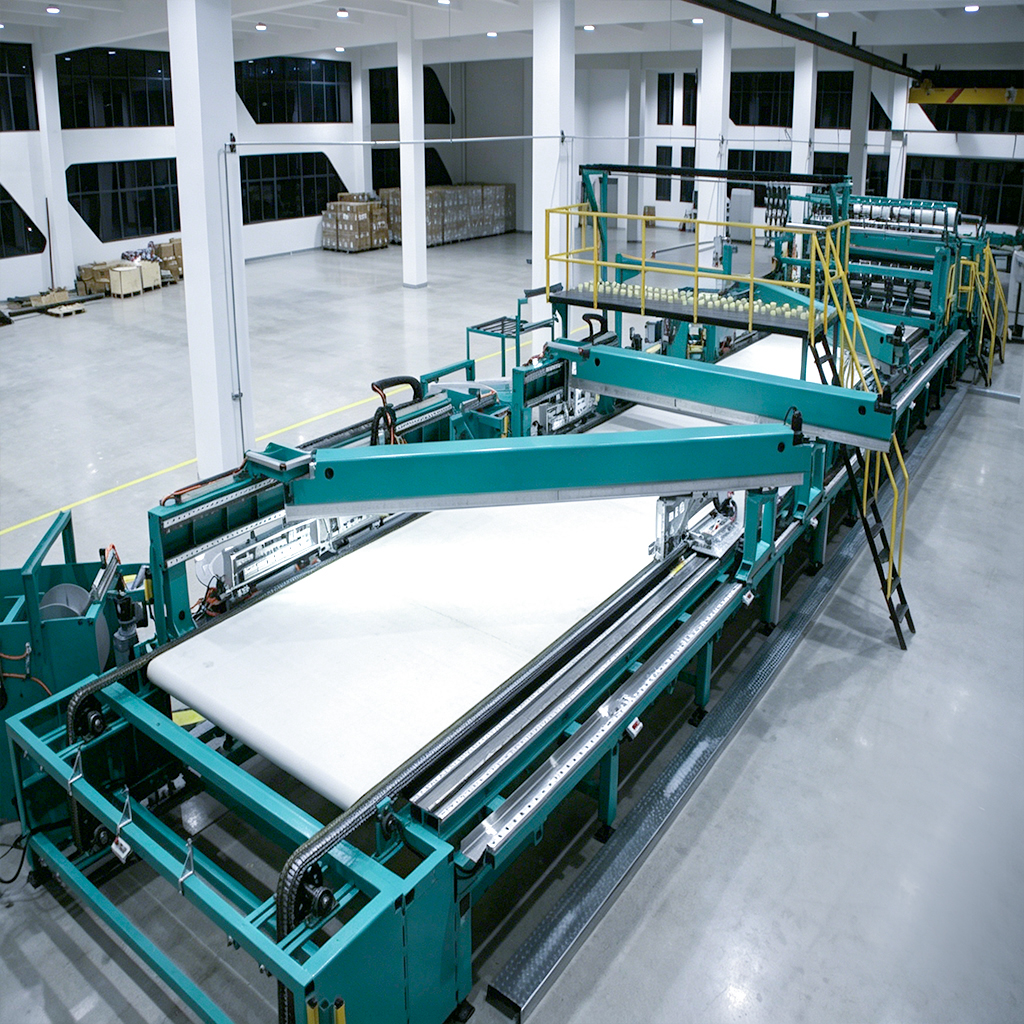
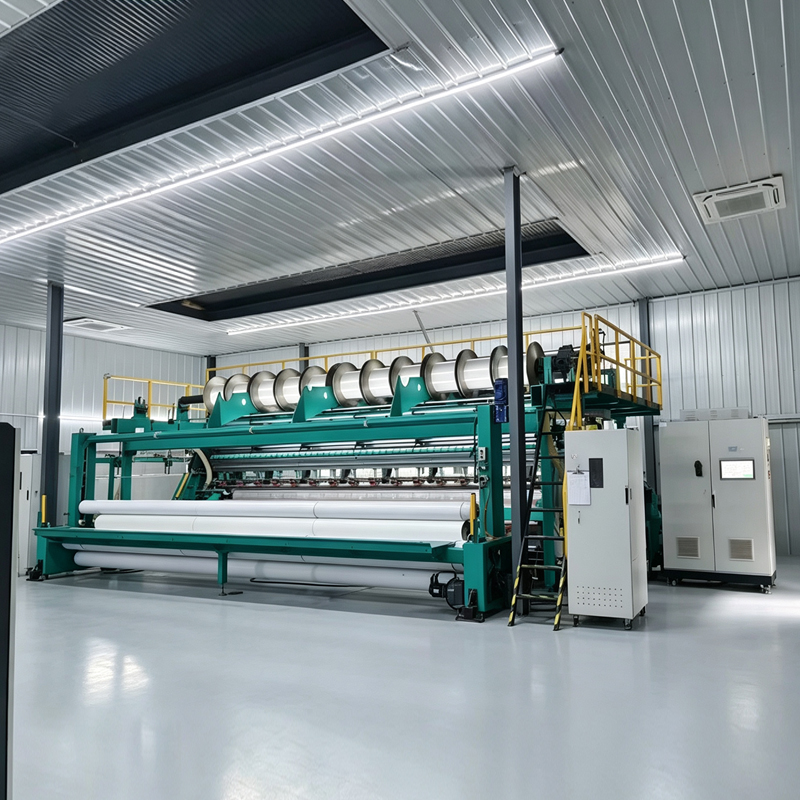
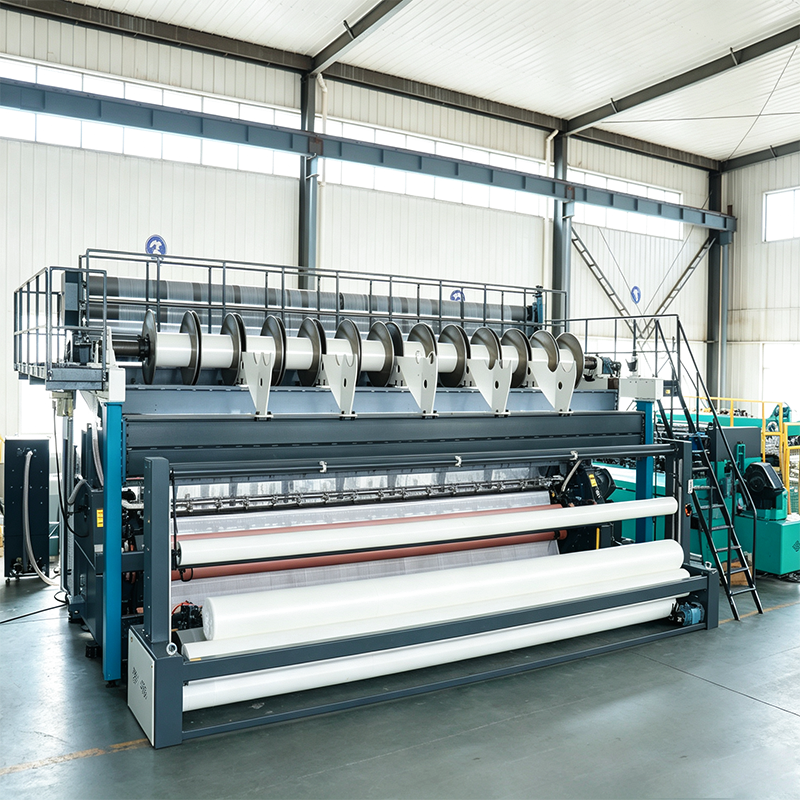
Changzhou Yuanyang Electromechanical Technology Co., Ltd. manufactures the YRS3-M-F-II Raschel Chopped Fiber Biaxial Warp Knitting Machine(HS) as part of our fiberglass textile equipment range. The machine combines a chopping unit with 0°/90° weft-inserted biaxial laying to produce ordered, directionally parallel reinforcement fabrics for wind power, nacelle covers and composite structures.
We build this model for plants that need controllable areal weight, a defined 0°/90° ratio and an optional chopped or nonwoven layer beneath the yarns — all on one warp knitting platform.
What the YRS3-M-F-II Produces
As a Yrs3mfii Raschel Chopped Fiber Biaxial Warp Knitting Machine Hs manufacturer, we match product configuration to the application, operating limits, interfaces and acceptance criteria defined for each project.
The YRS3-M-F-II is a biaxial warp knitting machine fitted with an integrated chopping unit. Warp yarns run in the machine direction while weft yarns are inserted across the full working width, then chopped fiber is deposited and bound into the structure. The result is a stitched reinforcement mat with orderly, directionally parallel weft laying rather than a randomly oriented chopped strand mat.
Applicable fibers are glass fiber and polyester. The weight ratio between the 0° and 90° directions is customizable, so the same machine can serve structural laminates, flow-guiding layers and hybrid stacks.
Fabric Construction Options
- Full-width weft-inserted chopped mats and composite fabrics
- Customizable 0°/90° weight ratio
- Optional chopped layer of 50–500 g/m² beneath the yarns
- Optional suitable nonwoven fabric beneath the yarns
- Greige fabric weight typically 300–2000 g/m²
Core Specifications
| Parameter |
Value |
Notes |
| Applicable fibers |
Glass fiber, polyester |
Other fibers reviewed per project |
| Machine speed |
50–1000 r/min |
Set to fabric construction |
| Working width |
103" |
Confirmed against trim width |
| Lay direction |
0°/90° |
Ratio customizable |
| Chopped layer |
50–500 g/m² |
Optional |
| Greige fabric weight |
300–2000 g/m² |
Typical range |
| Daily output |
3000 kg |
Reference; varies with construction |
Where This Model Fits in Our Fiberglass Range
Our fiberglass textile program covers biaxial, chopped and laid-scrim platforms. The YRS3-M-F-II sits between the HX variant and the high-strength biaxial model, and is chosen when a chopped or nonwoven layer must be integrated in the same pass as the 0°/90° yarns.
Configuration Choices We Confirm With You
Because the 0°/90° ratio, chopped layer and nonwoven option all change the mechanical layout, we treat each YRS3-M-F-II order as a configured machine rather than a catalogue item. The following variables are fixed before release to production.
- Fiber and yarn count — glass fiber or polyester, with tex and package format
- Areal weight target — greige weight within the 300–2000 g/m² band
- Directional ratio — 0° versus 90° weight split
- Chopped layer — on/off, and target weight between 50 and 500 g/m²
- Nonwoven feed — whether a nonwoven layer is stitched beneath the yarns
- Working width and trim — 103" nominal, matched to downstream cutting
- Control and line interface — speed profile, tension settings and upstream/downstream signals
Installation, Commissioning and Acceptance
Our engineers attend the customer plant for installation, commissioning and training until the line runs to the agreed fabric specification. Acceptance is based on the fabric produced: areal weight, direction ratio, chopped layer uniformity and running stability at the agreed working speed.
We also assist with quality system documentation and can train knitters, maintainers and workshop management staff, either on site or at our fabrication workshop over a one to two month program.
Maintenance and Serviceability
- Chopping unit and weft insertion elements are the primary wear points
- Yarn path, tension and stitch formation checked at each shift handover
- Spare parts and consumables supported through our after-sales network
- Long-term assistance for production problems after handover
Quality Control Through Manufacturing
Yuanyang operates a 12,000+ m² production base with standardized workshops, an intelligent warehouse and dedicated inspection rooms. Component procurement, machining, assembly, testing and debugging are controlled stage by stage, and every machine is tested before dispatch.
Our R&D team of senior industry engineers handles structural redesign, functional module integration and adaptation for difficult materials — the same capability that supports non-standard configurations of this chopped fiber biaxial platform.
Information We Use to Configure Your Solution
To prepare a firm configuration and quotation for the YRS3-M-F-II, we work from the following project inputs. Where a value is not yet fixed, we propose a starting point and confirm it during drawing review.
| Input |
Why We Need It |
| Target fabric construction and areal weight |
Sets yarn density, ratio and speed window |
| Fiber type, tex and package format |
Determines creel, tension and chopping setup |
| Required working width and trim |
Confirms 103" build and edge quality |
| Chopped layer and nonwoven requirement |
Adds or removes feed modules |
| Daily output target |
Sizes the machine and line balance |
| Workshop layout and utilities |
Drives layout, power and service access |
| Downstream process and line interface |
Defines control signals and roll handling |
Frequently Asked Questions
What is the difference between the HS and HX chopped fiber biaxial machines?
Both are Raschel chopped fiber biaxial warp knitting machines with 0°/90° weft insertion and an optional chopped layer. The HS configuration is the platform we position for wind power and nacelle cover fabrics, while the HX variant serves the same chopped mat and composite fabric family. We confirm the correct build against your fabric specification.
Can the 0°/90° weight ratio be customized?
Yes. The weight ratio between the 0° and 90° directions is customizable, and we set it from your target laminate properties rather than from a fixed catalogue value.
What chopped layer weights can be run?
The optional chopped layer beneath the yarns is specified between 50 and 500 g/m². A suitable nonwoven fabric can be substituted or added where the application calls for it.
What daily output can we expect?
Our reference figure is 3000 kg per day. Actual output depends on fabric construction, areal weight and the process window, so we confirm the realistic figure against your specific build during configuration.
Do you support installation and operator training?
Our engineers attend the customer factory for installation, commissioning and training until the equipment runs to specification. We also provide knitter, maintainer and workshop management training, and assist with quality system documentation.
Can the machine be adapted for a non-standard layout?
Yes. Customization can involve machine structure and layout redesign, functional module development or integration, and process-oriented optimization for stability and efficiency. Share your workshop layout and fabric target and we will confirm the adapted configuration.


 English
 中文简体
中文简体 русский
 Français
 Español
 Deutsch