

 English
 中文简体
中文简体 русский
 Français
 Español
 Deutsch
What Machines Are Used for Fiberglass, Chemical Fiber, and Carbon Fiber Textile Production?
2026-09-16
Content
- 1 Which Machine Category Matches Each Technical Fiber and Fabric Goal
- 2 Machine for Fiberglass Textile: Equipment Requirements and Process Adaptations
- 3 Machine for Chemical Fiber Textile: The Broadest Equipment Category
- 4 Machine for Carbon Fiber Textile: Zero-Damage Fiber Handling as the Core Requirement
- 5 Biaxial Warp Knitting Machine: How It Produces Non-Crimp Structural Fabrics
- 6 Warp Knitting Machine: Core Technology and Key Machine Variants
- 7 Crochet Warp Knitting Machine: Open-Structure Technical Fabrics for Industrial Applications
- 8 Machine Selection Guide: Matching the Machine to the Fiber and Application
- 9 Frequently Asked Questions
- 9.1 1. What is the key difference between a Machine for Fiberglass Textile and a Machine for Carbon Fiber Textile?
- 9.2 2. Can a standard warp knitting machine process both fiberglass and carbon fiber?
- 9.3 3. What does "biaxial" mean in the context of a Biaxial Warp Knitting Machine?
- 9.4 4. What is a crochet warp knitting machine used for?
- 9.5 5. How is a Biaxial Warp Knitting Machine different from a multiaxial warp knitting machine?
- 9.6 6. What machine speed is typical for a warp knitting machine processing technical fibers?
- 9.7 7. What binding yarn is used in a Biaxial Warp Knitting Machine for carbon fiber fabric?
- 9.8 8. Can a crochet warp knitting machine process carbon fiber?
- 9.9 9. What is the working width of a typical Biaxial Warp Knitting Machine for wind energy fabrics?
- 9.10 10. How do I select between a Machine for Chemical Fiber Textile in tricot versus raschel configuration?
Which Machine Category Matches Each Technical Fiber and Fabric Goal
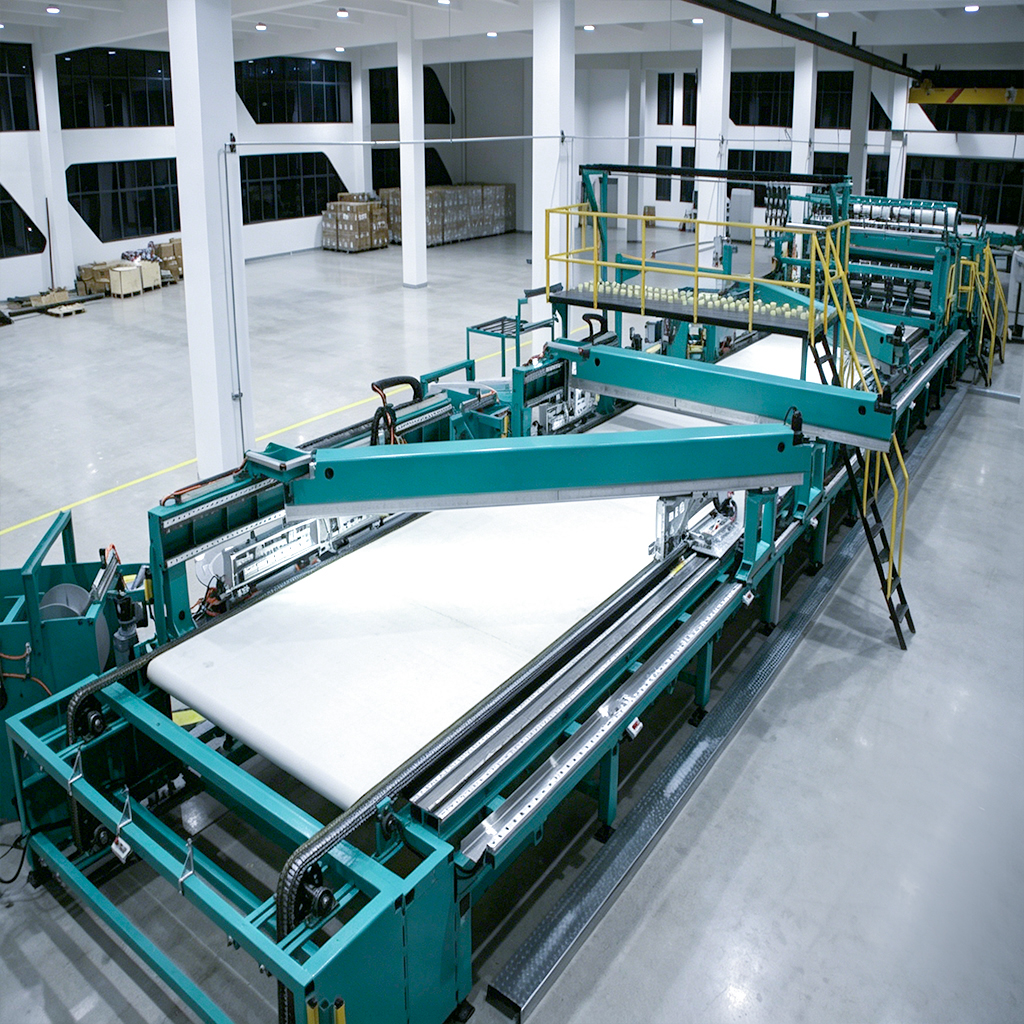
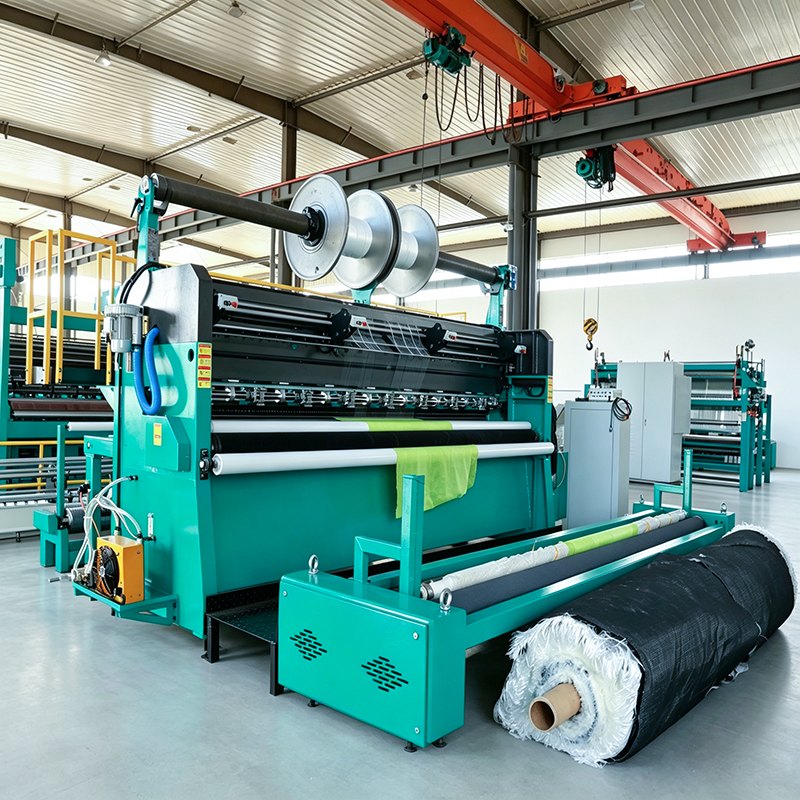
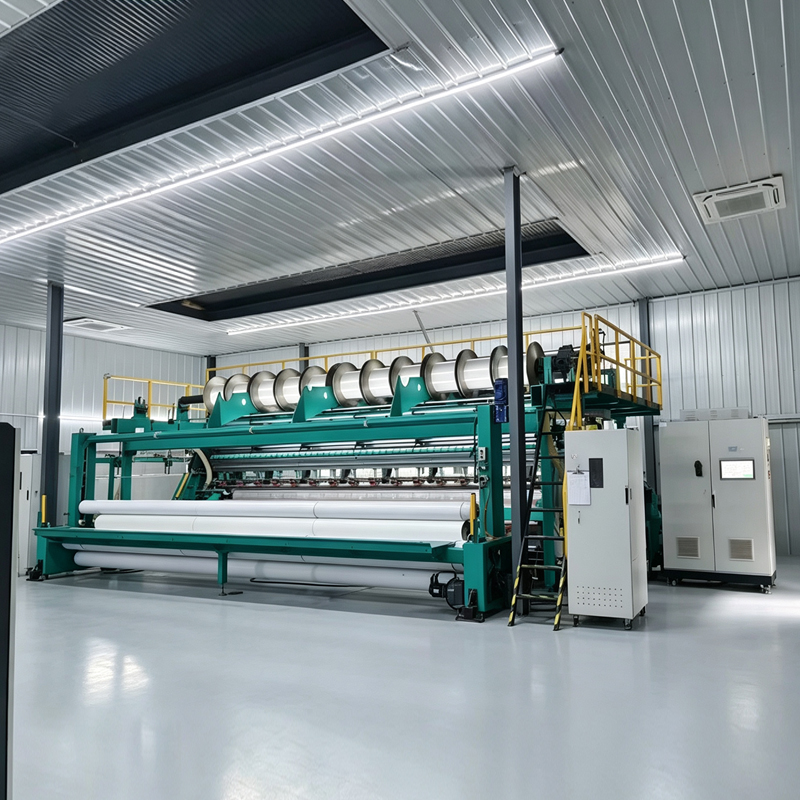
A warp knitting machine is the primary production platform for technical fiber textiles across fiberglass, chemical fiber, and carbon fiber applications, with the specific machine variant selected based on the fiber's sensitivity, the required fabric geometry, and the target mechanical performance of the finished textile. A Machine for Fiberglass Textile typically uses a modified warp knitting machine with ceramic-lined guides and rollers that prevent fiber abrasion. A Machine for Chemical Fiber Textile covers the widest equipment range because chemical fibers span aramid, polyester, nylon, and polypropylene, each with different tension and speed requirements. A Machine for Carbon Fiber Textile demands the most specialised hardware: zero-twist yarn handling, very low yarn tension, and often a biaxial or multiaxial knitting configuration that locks carbon fiber bundles without damaging their filaments.
The Biaxial Warp Knitting Machine is the most widely used equipment category for structural technical textiles because it lays two independent yarn systems at 0 degrees and 90 degrees simultaneously, then stitches them together with a binding yarn to create a dimensionally stable fabric without weaving. The standard warp knitting machine in tricot or raschel configuration serves broader technical textile applications where single-direction or loop-structure fabrics are required. The crochet warp knitting machine, also called a raschel-type crochet machine, produces open-structure fabrics with chain-linked loops used for industrial netting, geotextile reinforcement, and packaging mesh applications across fiberglass and chemical fiber categories.
Machine for Fiberglass Textile: Equipment Requirements and Process Adaptations
Fiberglass is one of the most demanding fibers for textile machinery because its inorganic silicate structure makes it brittle, prone to filament breakage under contact pressure, and highly abrasive to metal surfaces. A Machine for Fiberglass Textile must address all three of these material behaviors simultaneously to produce defect-free glass fiber fabrics at commercially viable production speeds.
Yarn Path Modifications Required for Fiberglass Processing
Standard metal guide bars, yarn tensioners, and deflection rollers that are used for polyester or nylon in a conventional warp knitting machine cause unacceptable filament breakage when processing fiberglass roving or direct draw fiberglass yarn. A Machine for Fiberglass Textile replaces these contact surfaces with the following modifications:
- Ceramic-coated or polished chrome guide bars: The yarn contact grooves are precision-polished to a surface roughness below Ra 0.2 micrometres, eliminating the microscale metal burrs that abrade glass filaments at conventional metal surfaces. Full ceramic guides are preferred in high-speed fiberglass applications because ceramic maintains its surface quality through 10 to 20 times more fiber contact hours than chrome-plated steel before requiring regrinding.
- Low-tension let-off systems: Fiberglass creel let-off systems on a dedicated Machine for Fiberglass Textile use a servo-controlled constant-tension system that maintains yarn tension within plus or minus 2% of the set point regardless of package diameter changes during unwinding. Conventional spring-loaded or magnetic tensioners produce tension peaks of 15% to 30% above set point as the package diameter changes, which is sufficient to cause filament breaks in glass fiber yarn with typical tensile elongation of only 3.0% to 4.8% at break.
- Positive let-off drives on all guide bar beams: Warp beams for fiberglass on a Machine for Fiberglass Textile use electronically synchronized positive let-off drives rather than the friction brake let-off systems used for conventional fibers. Positive drives maintain identical surface speed across all beams regardless of their current diameter, eliminating the differential tension between yarn ends at different radial positions on the beam that causes filament breaks in brittle glass fibers.
- Reduced machine operating speed: A Machine for Fiberglass Textile runs at 400 to 800 courses per minute compared to the 2,000 to 3,500 courses per minute achievable with polyester on the same frame. The lower speed reduces the inertia forces at each yarn reversal point and the air turbulence around the guide bars, both of which contribute to filament breakage in glass fiber processing at high speed.
Products Made on a Machine for Fiberglass Textile
The primary end products produced on a Machine for Fiberglass Textile are warp-knitted or multiaxial non-crimp fiberglass fabrics for composite reinforcement. These fabrics are the key structural component in glass fiber reinforced polymer (GFRP) composites used in wind turbine blades, marine hull construction, aerospace secondary structures, and civil engineering reinforcement panels. A standard production run on a 2,540 mm wide warp knitting machine configured as a Machine for Fiberglass Textile produces 60 to 120 square metres of biaxial fiberglass fabric per hour at the 400 to 600 gram per square metre areal weight range used for wind turbine blade main spar production.
Machine for Chemical Fiber Textile: The Broadest Equipment Category
Chemical fibers are man-made fibers produced from natural or synthetic polymers through extrusion and chemical processing, encompassing polyester, nylon, acrylic, polypropylene, aramid (Kevlar, Nomex), ultra-high-molecular-weight polyethylene (UHMWPE), and many specialty fibers used in medical, protective, and industrial applications. A Machine for Chemical Fiber Textile must be versatile enough to accommodate this range of fiber properties within a single machine platform or be configured specifically for the target fiber's processing requirements.
Chemical Fiber Processing Requirements by Fiber Category
| Chemical Fiber Type | Key Processing Challenge | Machine Adaptation Required | Typical Machine Speed | Primary Textile Applications |
|---|---|---|---|---|
| Polyester (PET) | Static charge buildup at high speed | Antistatic guide bars and ionization systems | 2,000 to 3,500 cpm | Sportswear, geotextile, filter media |
| Nylon (PA) | High elongation requires precise tension control | Closed-loop tension feedback on all beams | 1,800 to 3,000 cpm | Hosiery, automotive airbag fabric |
| Aramid (Kevlar, Nomex) | Very low elongation, UV sensitivity | Shaded creel area, ultra-low tension systems | 300 to 800 cpm | Ballistic protection, heat resistant workwear |
| Polypropylene (PP) | Low melting point, waxy surface reduces friction | Temperature-controlled guide bars | 800 to 2,000 cpm | Geotextile, agricultural netting |
| UHMWPE | Extreme slippage, very low surface energy | Textured rollers, high-grip tensioners | 200 to 500 cpm | Cut-resistant gloves, body armor |
Why the Machine for Chemical Fiber Textile Is a Platform Rather Than a Single Machine Type
Unlike fiberglass (which requires a consistent set of machine modifications across all applications) or carbon fiber (which demands a consistent ultra-low tension approach), the Machine for Chemical Fiber Textile category is better understood as a configurable platform whose specific hardware must be matched to the target fiber's elongation, surface friction, melting point, UV sensitivity, and static generation characteristics. The same warp knitting machine frame can serve as a Machine for Chemical Fiber Textile across polyester, nylon, and polypropylene with only guide bar material changes and tension system reconfiguration, but processing aramid or UHMWPE on the same frame requires more significant hardware investment in UV shading, creel redesign, and tension system capacity.
Machine for Carbon Fiber Textile: Zero-Damage Fiber Handling as the Core Requirement
Carbon fiber is produced by the controlled carbonisation of polyacrylonitrile (PAN) or pitch precursor fiber at temperatures above 1,000 degrees Celsius, producing a fiber with tensile strength of 3,500 to 7,000 MPa and tensile modulus of 230 to 900 GPa depending on the grade. The same structural anisotropy that gives carbon fiber these extraordinary mechanical properties also makes it fragile against transverse loading: a carbon fiber filament with diameter of 5 to 10 micrometres that can sustain axial stress of 4,000 MPa fractures from a lateral contact force equivalent to the self-weight of a small coin placed across the filament. A Machine for Carbon Fiber Textile must therefore minimise or entirely eliminate transverse contact between any machine surface and the carbon fiber bundle during processing.
Critical Machine Design Features for Carbon Fiber Processing
- Zero-twist yarn management: Carbon fiber rovings and tows are supplied as zero-twist or near-zero-twist bundles. Any twist introduced during machine processing causes the outer filaments to follow a helical path that generates transverse stress at each loop in the fabric structure, reducing the filament's contribution to fabric tensile strength. A Machine for Carbon Fiber Textile uses freely rotating creel packages that prevent twist insertion during unwinding, and the yarn path between creel and guide bars is designed to avoid any surface that would rotate the fiber bundle around its own axis.
- Spread-tow handling capability: Premium Machine for Carbon Fiber Textile systems include a spreading station where the carbon fiber tow (typically 3K to 50K filaments per tow, where K equals 1,000 filaments) is spread from its natural compact bundle width to a flat ribbon of 2 to 5 times the original width. Spread tow reduces filament waviness in the finished fabric, directly increasing the fabric's fiber volume fraction in a composite laminate and improving its translated mechanical properties. Spreading is achieved by passing the tow over a curved bar that causes controlled lateral divergence of the individual filament groups without transverse contact pressure.
- Very low and constant yarn tension: Carbon fiber tow on a Machine for Carbon Fiber Textile is processed at tensions of 0.02 to 0.10 cN per tex (centi-Newtons per unit linear density), which is 10 to 50 times lower than the tensions used for equivalent-weight polyester or nylon processing. At this ultra-low tension range, the carbon fiber bundle lies flat and spread rather than rounding into a compact cross-section under tension, maintaining the fiber volume fraction and thickness uniformity needed for consistent laminate quality.
- Stitch yarn selection and placement: In a warp-knitted carbon fiber fabric, the stitch yarn (typically polyester or glass fiber, not carbon fiber) that binds the carbon fiber layers together must be introduced without passing over the carbon fiber surface. Premium Machine for Carbon Fiber Textile designs route the stitch yarn through needle channels that are positioned between adjacent carbon fiber tow bands rather than crossing over them, eliminating the crimp in the structural carbon fiber layer that conventional stitch penetration creates.
Biaxial Warp Knitting Machine: How It Produces Non-Crimp Structural Fabrics
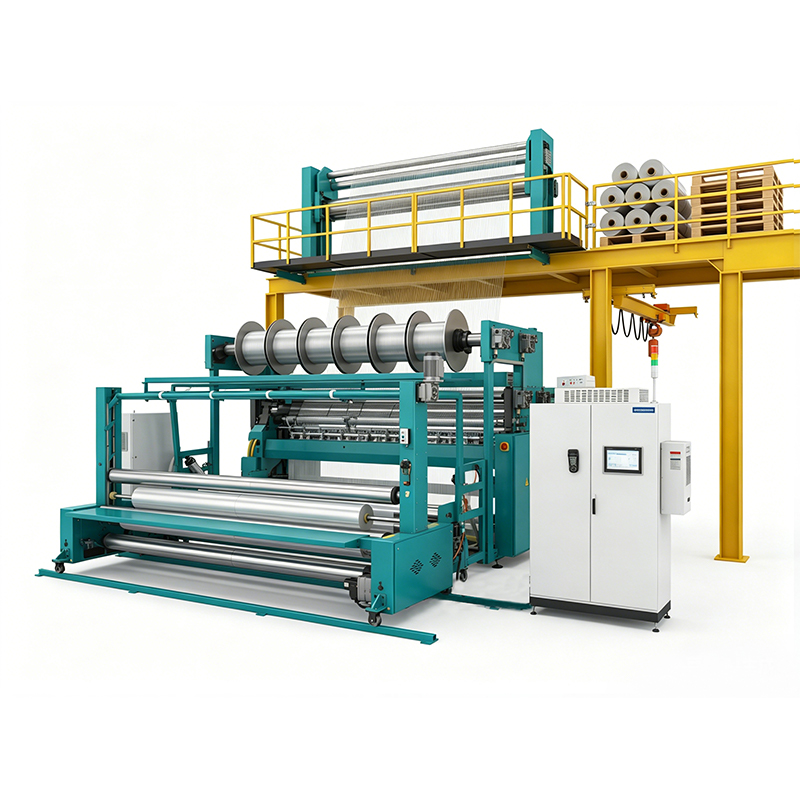
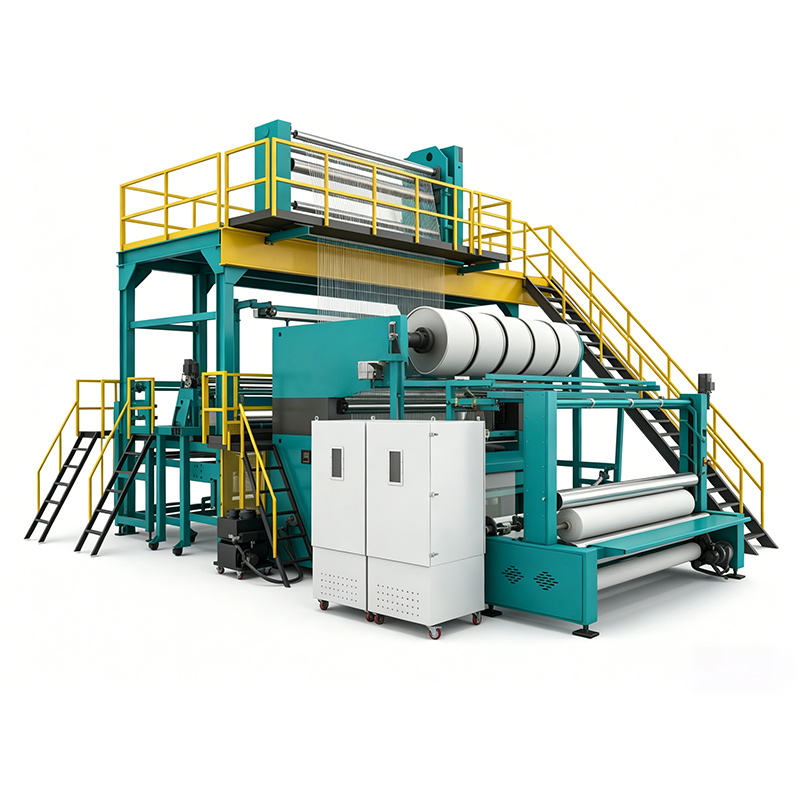
A Biaxial Warp Knitting Machine is a warp knitting platform that incorporates two independent yarn insertion systems operating at different orientation angles, combined with a through-thickness stitching mechanism that binds the two yarn layers together without weaving them over and under each other. The absence of weaving-induced crimp (the out-of-plane deviation of a yarn as it passes over and under crossing yarns) is the defining structural advantage of fabrics produced on a Biaxial Warp Knitting Machine — these fabrics are classified as non-crimp fabrics (NCF) in the composite materials industry.
The Two Yarn Insertion Systems of a Biaxial Warp Knitting Machine
- 0-degree warp insertion (machine direction): Warp-direction yarns are fed from a beam or directly from a creel and laid parallel to the machine running direction. On a Biaxial Warp Knitting Machine these yarns are not knitted by the needles but are instead guided between the needles and held in place only by the stitching yarn that is applied subsequently. The 0-degree system contributes tensile stiffness and strength in the machine direction to the finished fabric.
- 90-degree weft insertion (cross-machine direction): A traversing magazine weft insertion system carries weft yarns at exactly 90 degrees to the machine direction by means of a traversing carriage that lays weft yarn across the full machine width on each traversal. The weft yarns are caught by the fabric edge at each side and held for stitching. The 90-degree system contributes tensile stiffness and strength perpendicular to the machine direction. On a high-production Biaxial Warp Knitting Machine with a working width of 2,540 mm (100 inches), the weft insertion system typically operates at 100 to 200 traverses per minute, inserting 100 to 200 weft yarns per minute across the full fabric width.
Stitch Geometry Options on a Biaxial Warp Knitting Machine
The stitching yarn that binds the 0-degree and 90-degree layers on a Biaxial Warp Knitting Machine is applied by the knitting needles in one of several loop geometries, each producing different fabric drape, compressibility, and interface properties in the composite laminate:
- Tricot stitch (1 by 1 or 1 by 2): The most common stitch for structural technical fabrics. Small, consistent loops that hold the yarn layers flat without introducing significant waviness in the structural yarns. Tricot-stitched biaxial fabrics have good permeability to infusion resin, which is critical for vacuum-assisted resin infusion (VARI) composite processes.
- Chain stitch: Produces a very rigid stitch column that restricts fabric drape but provides the highest dimensional stability for preform handling. Used when the biaxial fabric must be cut and placed precisely before resin infusion without the layers shifting during cutting and positioning.
- Pillar stitch: An open-loop variation that produces the highest fabric permeability and easiest resin flow. Preferred for thick multiaxial laminates where resin infusion time is the critical process parameter in production cycle time.
Warp Knitting Machine: Core Technology and Key Machine Variants
A warp knitting machine produces fabric by forming loops from warp yarns (yarns running in the machine direction) that are simultaneously interlocked in both the machine direction and the cross-machine direction by the lateral shogging movement of guide bars carrying individual yarns across adjacent needle positions. This simultaneous multi-yarn engagement at every needle position distinguishes warp knitting from weft knitting (where a single yarn traverses the full machine width in sequence) and from weaving (where warp and weft yarns are physically interlaced by the shuttle or rapier).
Tricot Warp Knitting Machine
The tricot warp knitting machine is the highest-speed configuration in the warp knitting category, operating at 1,500 to 4,000 courses per minute with machine widths from 130 inches to 260 inches. Tricot machines use compound needles (a needle with a sliding closuring element that replaces the latch mechanism of latch needles) that allow higher operating speeds with lower vibration at each course formation. Tricot warp knitting machines produce the majority of the world's warp-knitted fabrics for apparel, sportswear, automotive upholstery, and light technical textile applications. Their closed-loop, relatively dense fabric structure makes them less suitable for the open-structure technical textiles produced on raschel and biaxial machines, but their speed and consistency advantage makes them dominant in high-volume synthetic fiber processing for the Machine for Chemical Fiber Textile category.
Raschel Warp Knitting Machine
The raschel warp knitting machine uses latch needles set in a vertical or near-vertical needle bed and operates at lower speeds (800 to 1,800 courses per minute) than tricot machines. The raschel configuration accommodates a much wider range of yarn types, yarn counts, and fabric structures than tricot, making it the standard platform for technical textiles with open structures, heavy yarns, or complex multi-bar fabric architectures. Raschel warp knitting machines with 2 to 4 guide bars produce lace and elastic fabrics; machines with 6 to 12 or more guide bars produce complex three-dimensional or multiaxial technical fabric structures. The raschel platform is the base machine type for the Biaxial Warp Knitting Machine and for the crochet warp knitting machine, both of which are specialized raschel derivatives.
Crochet Warp Knitting Machine: Open-Structure Technical Fabrics for Industrial Applications
The crochet warp knitting machine (also called a raschel crochet machine or warp knitting machine with crochet mechanism) produces open-mesh fabrics with a chain-linked loop structure at each wale (column of loops in the machine direction) and a yarn bridge (weft inlay) connecting adjacent wales at each course. The resulting fabric is a regular net or mesh with geometric hexagonal, square, or diamond-shaped openings whose dimensions are controlled by the machine's guide bar shogging pattern and the stitch length setting.
Structural Characteristics of Crochet Warp Knitting Machine Fabrics
Fabrics produced on a crochet warp knitting machine differ from conventional warp-knitted fabrics in three fundamental structural ways:
- Very high open area percentage: The mesh structure of a crochet warp knitting machine fabric typically achieves 40% to 80% open area, compared to the 10% to 40% achievable on standard warp knitting machines. This high open area makes crochet warp knitting machine fabrics suitable for applications requiring drainage, airflow, visual transparency, or low fabric weight at large spatial coverage.
- High dimensional stability despite open structure: The chain-linked wale structure of a crochet warp knitting machine fabric locks the weft inlay yarns at each intersection, preventing the fabric from distorting when the warp or weft yarns are loaded independently. This stability makes crochet machine fabrics more dimensionally reliable under asymmetric loading than equivalent-openness woven or knotted nets.
- Selectable fiber orientation: By configuring the weft inlay yarns at angles other than 90 degrees on some crochet warp knitting machine models, the fabric can incorporate diagonal reinforcement layers within the overall open-mesh structure, producing a geotextile mesh with biaxial or even triaxial load-bearing capability.
Industrial Applications of Crochet Warp Knitting Machine Fabrics
The primary industrial applications of fabrics produced on a crochet warp knitting machine across fiberglass, chemical fiber, and carbon fiber substrate categories include:
- Fiberglass mesh for wall reinforcement: Glass fiber yarn processed on a crochet warp knitting machine produces the alkali-resistant fiberglass mesh used in external wall insulation and finishing systems (EWIFS), rendering reinforcement, and marble panel backing. Standard products have 4 mm x 4 mm or 5 mm x 5 mm openings and areal weights of 145 to 450 grams per square metre, with the PVC-coated glass fiber providing both the open mesh structure for adhesion and the reinforcement for crack resistance.
- Polypropylene or polyester geotextile mesh: Chemical fiber geotextile mesh produced on a crochet warp knitting machine is used for soil separation, stabilisation, and erosion control in road construction, slope protection, and coastal engineering. The open mesh allows water passage while retaining soil particles, with aperture sizes from 10 mm to 50 mm selected for the specific particle size distribution of the protected soil or aggregate.
- Agricultural and horticultural netting: HDPE, nylon, or polypropylene netting produced on a crochet warp knitting machine serves as shade cloth, wind protection netting, insect exclusion mesh, and fruit protection netting. These products require the high open area percentage and low weight of the crochet mesh structure combined with UV stabiliser treatment for outdoor service life.
- Carbon fiber reinforcement mesh: Some low-areal-weight carbon fiber preform fabrics use a crochet warp knitting machine configuration to produce an open carbon fiber mesh that is used as the surface layer in composite panels where the open structure allows the matrix resin to bond through the carbon fiber layer to an adhesive or structural foam core below.
Machine Selection Guide: Matching the Machine to the Fiber and Application
Selecting the correct machine from the categories discussed requires a systematic evaluation of the fiber's processing constraints, the target fabric structure, the required production output, and the end application's mechanical and physical requirements. The following selection framework organises the key decision variables for production engineers and procurement specialists evaluating machine specifications.
| Application | Fiber | Recommended Machine | Key Machine Feature | Fabric Type |
|---|---|---|---|---|
| Wind turbine blade spar | Fiberglass roving | Biaxial Warp Knitting Machine | Ceramic guides, low-tension let-off | Biaxial NCF, 0/90 or plus or minus 45 degrees |
| Automotive airbag | Nylon 66 | Machine for Chemical Fiber Textile (tricot) | Closed-loop tension, OPW capability | One-piece woven or warp-knitted sealed bag |
| Carbon fiber aerospace preform | 12K carbon tow | Machine for Carbon Fiber Textile (biaxial or multiaxial) | Spread-tow system, zero-twist creel | Multiaxial NCF, 0/90/plus 45/minus 45 degrees |
| Wall reinforcement mesh | Alkali-resistant glass | Crochet warp knitting machine | Open-mesh gauge, PVC coating capability | Square mesh, 4 to 10 mm aperture |
| Geotextile soil stabilisation | Polypropylene tape | Crochet warp knitting machine | Wide working width, tape yarn capability | Geogrid mesh, 20 to 50 mm aperture |
| Sportswear mesh lining | Polyester microfiber | Machine for Chemical Fiber Textile (raschel) | High speed, antistatic system | Power mesh, knitted open fabric |
Frequently Asked Questions
1. What is the key difference between a Machine for Fiberglass Textile and a Machine for Carbon Fiber Textile?
Both machines require low-tension yarn handling and contact-surface modifications to prevent filament breakage in brittle inorganic fibers. However, a Machine for Fiberglass Textile primarily addresses abrasion resistance (fiberglass is very abrasive to metal) and static tension management, and can operate at 400 to 800 courses per minute. A Machine for Carbon Fiber Textile requires additional features including zero-twist creel systems, spread-tow stations, and stitch needle placement between rather than across carbon fiber tow bands, and typically operates at 200 to 600 courses per minute due to the higher fragility of carbon fiber at contact points compared to glass fiber. Carbon fiber is approximately twice as sensitive to transverse contact damage per unit force as fiberglass of equivalent tex weight, making the needle-to-fiber contact management on a Machine for Carbon Fiber Textile a more complex engineering challenge than on a fiberglass machine.
2. Can a standard warp knitting machine process both fiberglass and carbon fiber?
A standard commercial warp knitting machine designed for synthetic fibers (polyester, nylon) cannot directly process fiberglass or carbon fiber without significant hardware modifications. The guide bar contact surfaces will abrade fiberglass and fracture carbon fiber filaments within minutes of operation. Dedicated machine configurations — a Machine for Fiberglass Textile with ceramic guides and a Machine for Carbon Fiber Textile with ultra-low tension systems — are required for sustainable production of glass or carbon fiber fabrics. Some machine manufacturers offer configurable guide bar cassettes that can be changed between a standard synthetic fiber setup and a fiberglass-rated ceramic setup on the same machine frame, but this is a retrofit-level adaptation rather than a true dual-purpose design.
3. What does "biaxial" mean in the context of a Biaxial Warp Knitting Machine?
"Biaxial" means that the machine inserts yarns in two independent direction axes — the 0-degree machine direction (warp direction) and the 90-degree cross-machine direction (weft direction) — without interlacing the yarns over and under each other as weaving does. A Biaxial Warp Knitting Machine lays both yarn systems flat in parallel, then stitches them together with a binding yarn to produce a non-crimp fabric where both the 0-degree and 90-degree yarn systems remain straight and flat. This straight-fiber geometry is the source of the NCF's superior mechanical performance in composite laminates compared to equivalent-weight woven fabrics where both yarn systems are crimped by their interlacing path.
4. What is a crochet warp knitting machine used for?
A crochet warp knitting machine is used to produce open-mesh fabrics with high open-area percentages for industrial, agricultural, and construction applications. The most common products are fiberglass wall reinforcement mesh, polypropylene or polyester geotextile mesh, agricultural shade netting, insect exclusion mesh, and packaging net fabric. The machine uses a chain-link loop at each wale connected by inlay weft yarns to produce a geometrically regular net structure that cannot be produced efficiently on standard tricot or raschel warp knitting machines. Aperture sizes range from 2 mm (for fine filtration or insect mesh) to 50 mm or more (for geogrid and cargo netting applications).
5. How is a Biaxial Warp Knitting Machine different from a multiaxial warp knitting machine?
A Biaxial Warp Knitting Machine inserts yarns at exactly two orientation angles: 0 degrees (warp) and 90 degrees (weft). A multiaxial warp knitting machine adds one or more additional yarn insertion systems at angles other than 0 and 90 degrees — most commonly plus 45 degrees and minus 45 degrees — to produce a fabric with fibers oriented in three or four directions simultaneously. Multiaxial machines produce quasi-isotropic NCF laminates that resist loads from any in-plane direction equally, which is required for aerospace structural panels and automotive body parts that experience complex load cases. The Biaxial Warp Knitting Machine produces direction-specific reinforcement that is more efficient than multiaxial NCF for applications with well-defined dominant load directions, such as the main spar of a wind turbine blade where the primary load is in the blade axis direction.
6. What machine speed is typical for a warp knitting machine processing technical fibers?
Machine speed for a warp knitting machine processing technical fibers varies widely by fiber type: polyester and nylon on a high-speed tricot machine operate at 2,000 to 3,500 courses per minute; glass fiber on a modified Machine for Fiberglass Textile runs at 400 to 800 courses per minute; aramid on a Machine for Chemical Fiber Textile runs at 300 to 800 courses per minute; and carbon fiber on a Machine for Carbon Fiber Textile runs at 200 to 600 courses per minute. The speed reduction for technical and inorganic fibers reflects the additional time required per course for controlled yarn presentation at low tension and the lower machine dynamics needed to avoid vibration-induced yarn breaks at contact points. Despite the lower speed, the very wide machine widths used for technical textile production (2,000 to 6,000 mm) mean that the area production rate of a technical fiber warp knitting machine at 600 courses per minute on a 4,000 mm machine can equal or exceed the area production rate of a 1,500 mm wide synthetic fiber machine at 3,000 courses per minute.
7. What binding yarn is used in a Biaxial Warp Knitting Machine for carbon fiber fabric?
The binding yarn used on a Biaxial Warp Knitting Machine for carbon fiber fabric is typically polyester multifilament in the 50 to 150 denier range, selected for its combination of adequate tenacity for the knitting process, low stiffness that minimises the crimp induced in the carbon fiber layers when the stitch is formed, and compatibility with the epoxy resin matrix used in most carbon fiber composite processing. Some premium carbon fiber NCF specifications use glass fiber or carbon fiber itself as the binding yarn, but these choices add cost and complexity to the stitching process. The binding yarn represents only 3% to 7% of the total fabric weight in a typical Biaxial Warp Knitting Machine carbon fiber fabric, but its placement relative to the carbon fiber tow bands and the stitch tension applied during formation are critical process parameters that significantly affect the straightness and flatness of the structural carbon fiber yarns in the finished fabric.
8. Can a crochet warp knitting machine process carbon fiber?
Yes, a crochet warp knitting machine can process carbon fiber for open-mesh preform applications, but the machine must be adapted with the same low-tension, zero-twist, and ceramic-guide specifications required for any Machine for Carbon Fiber Textile. The open-mesh fabric produced on a carbon fiber crochet warp knitting machine is used as a surface reinforcement layer in sandwich panels, as an open preform that allows resin infusion without flow barriers, and as a structural mesh in carbon fiber reinforced concrete (CFRC) where the open aperture of the mesh allows concrete to bond through the fabric layer. The production speed of carbon fiber on a crochet warp knitting machine is typically 150 to 400 courses per minute, lower than equivalent glass fiber processing on the same machine type due to carbon fiber's greater sensitivity to guide bar contact at each course formation.
9. What is the working width of a typical Biaxial Warp Knitting Machine for wind energy fabrics?
Wind energy biaxial fiberglass fabrics are typically produced on Biaxial Warp Knitting Machine systems with working widths of 2,540 mm (100 inches), 3,810 mm (150 inches), or 5,080 mm (200 inches). The wider working widths reduce the number of fabric width seams in a wind turbine blade panel, which is important because seams in the glass fiber reinforcement are stress concentration locations that reduce the panel's fatigue life. Some dedicated wind energy Biaxial Warp Knitting Machine systems operate with working widths of up to 6,350 mm (250 inches) to produce single-width reinforcement panels for the largest offshore wind turbine blades, which require spar cap fabric widths of over 5,000 mm at the blade root section. The widest Biaxial Warp Knitting Machine systems in current production are installed in dedicated wind energy composites facilities in Germany, China, and Denmark.
10. How do I select between a Machine for Chemical Fiber Textile in tricot versus raschel configuration?
Select a tricot configuration for a Machine for Chemical Fiber Textile when the target product is a dense, smooth, or fine-gauge fabric using yarns below 300 denier and the required production speed is above 1,500 courses per minute. Tricot machines at 2,000 to 3,500 courses per minute are the most productive machines for high-volume synthetic fiber fabrics in apparel, automotive, and standard geotextile applications. Select a raschel configuration when the target product requires open mesh structures, coarse yarns above 300 denier, more than 4 guide bars, or the fabric must accommodate rigid fibers (fiberglass, aramid) that the tricot machine's compound needle geometry cannot handle. The raschel warp knitting machine at 800 to 1,800 courses per minute is the standard platform for technical textiles with structural performance requirements, including the Biaxial Warp Knitting Machine and the crochet warp knitting machine configurations.
News
-
What Is a Tricot Warp Knitting Machine A tricot warp knitting machine is a textile production machine that forms fabric by looping many parallel yarns fed from a warp beam, with each needle working i...
READ MORE -
Warp Knitting Machines: Machine Architecture, Yarn Control and Industrial Fabric Output Inside a warp knitting machine, every single yarn has its own itinerary. A thousand or more ends leave their be...
READ MORE -
Warp knitting is a combination of weaving methods in which the yarns meander along the length of the fabric; that is, they follow adjacent columns or wales, rather than a single row or course. For com...
READ MORE -
China International Industrial Textiles and Nonwovens Exhibition Location: Shanghai New International Expo Centre Dates: September 1-3, 2026
READ MORE
-
Contact Info.
+86-198 5534 1617
+86-134 0158 3002yuanyang@yywarpknitting.com 699#, Shengzhi West Rd, Lvcheng Town, Danyang City, Zhenjiang City, Jiangsu Province, China
-
QR Code
-
Quick Links
Home About Products Manufacturing Customization News Contact -
Product List
Machine for Chemical Fiber Textile Machine for Fiberglass Textile Machine for Carbon Fiber Textile -
About Us
Company Profile Factory Gallery Value-added Service
Copyright © 2026 Changzhou Yuanyang Electromechanical Technology Co., Ltd. All Rights Reserved.
Custom Warp Knitting Machine Manufacturers
