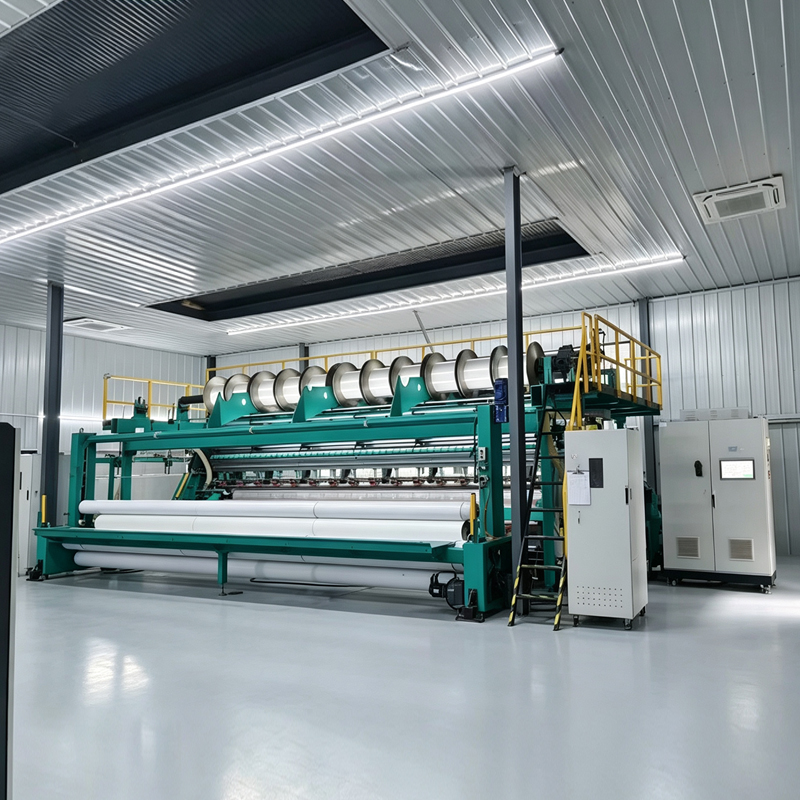
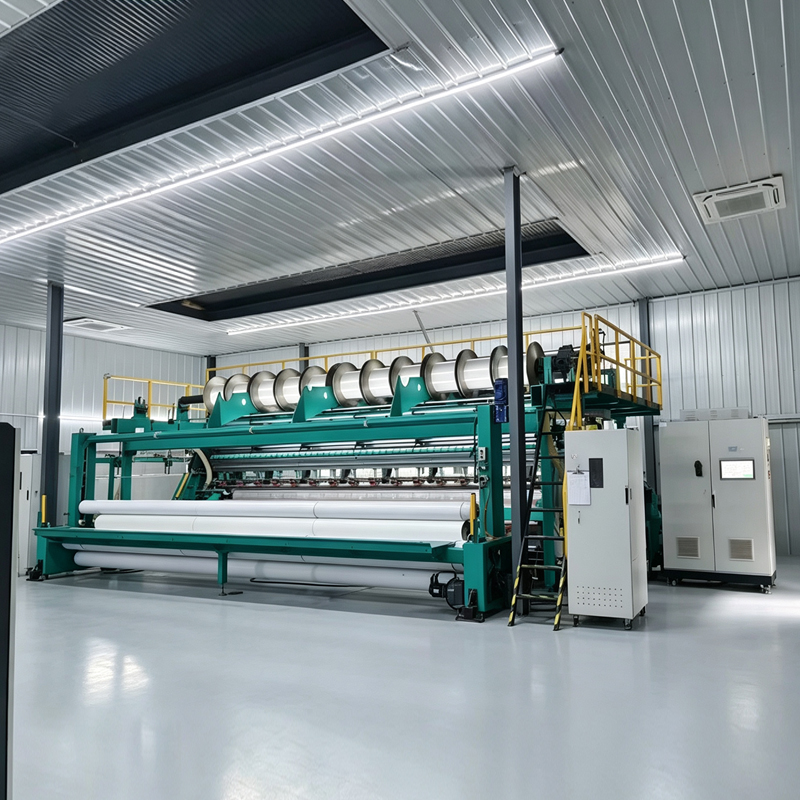
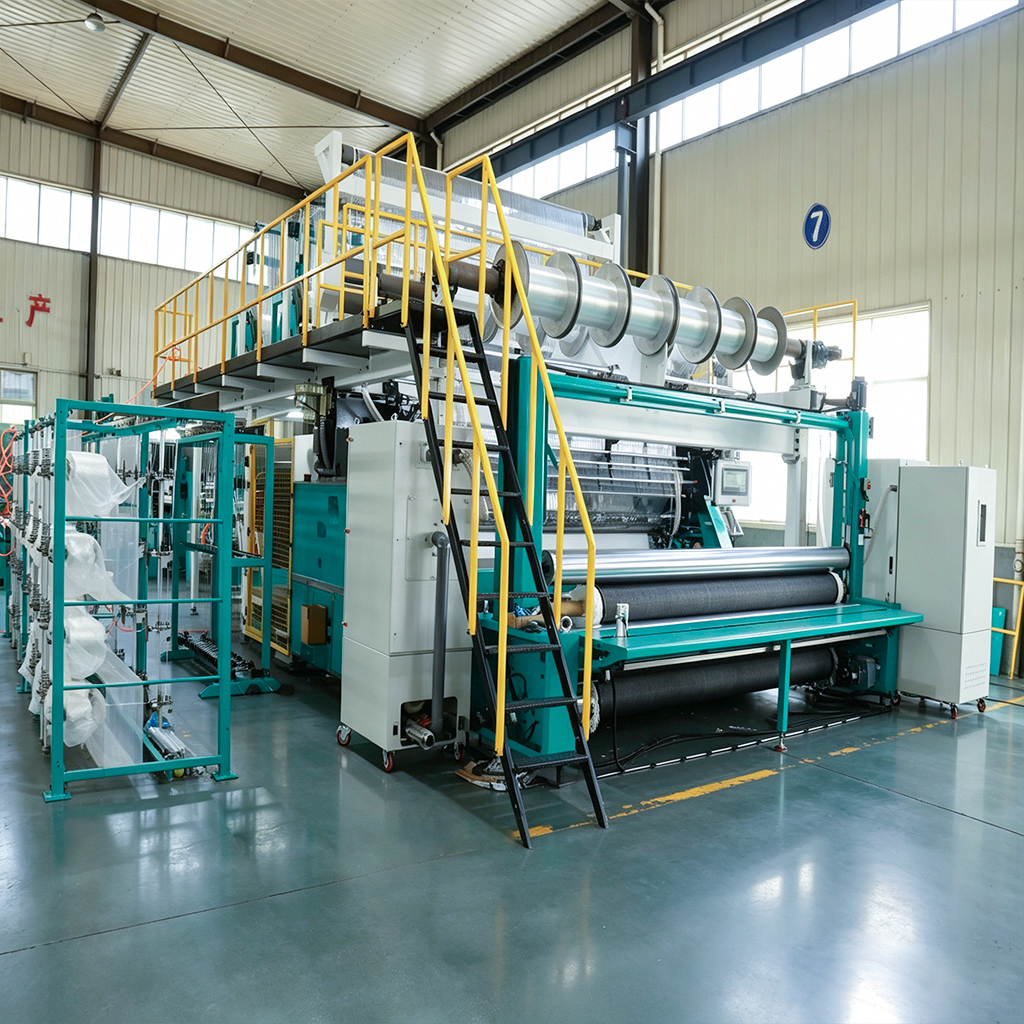
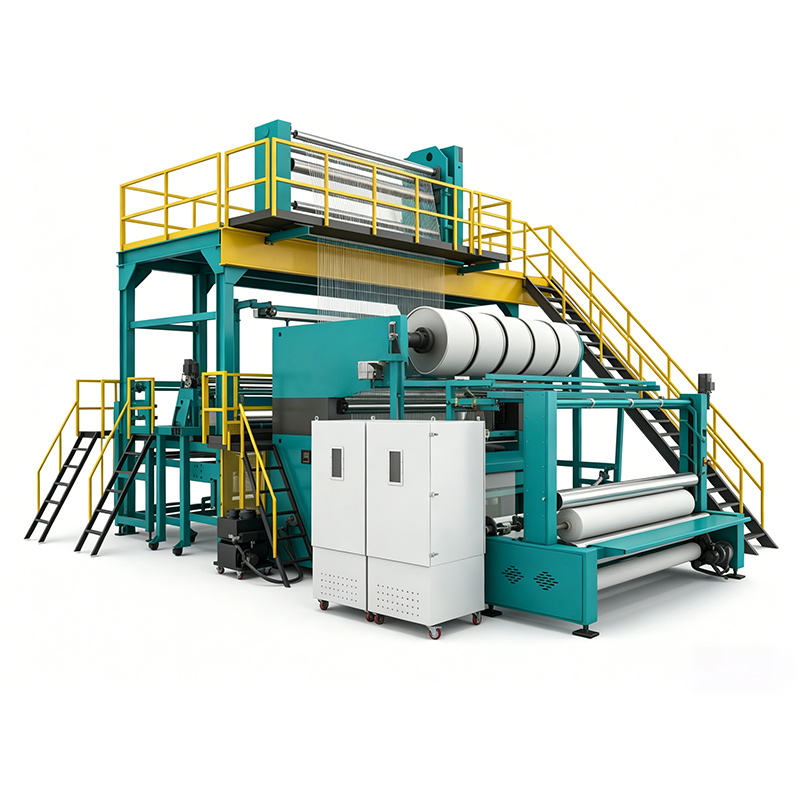
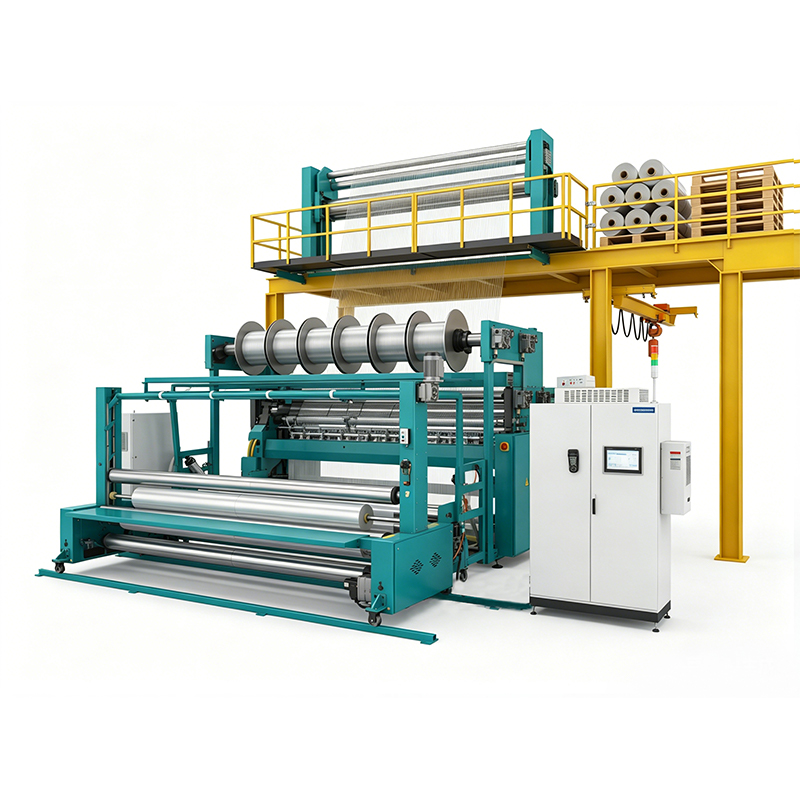
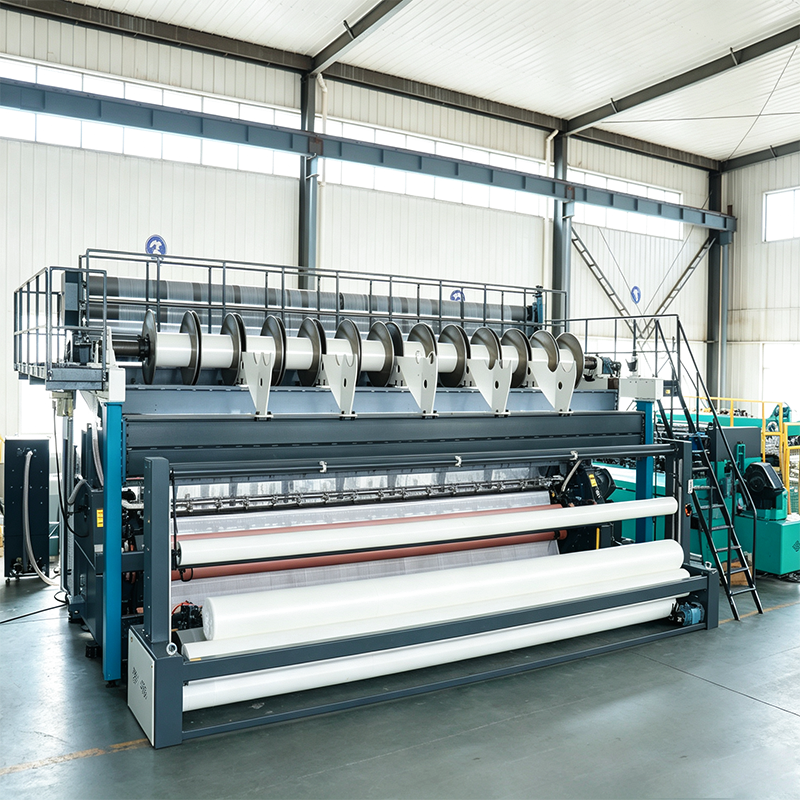
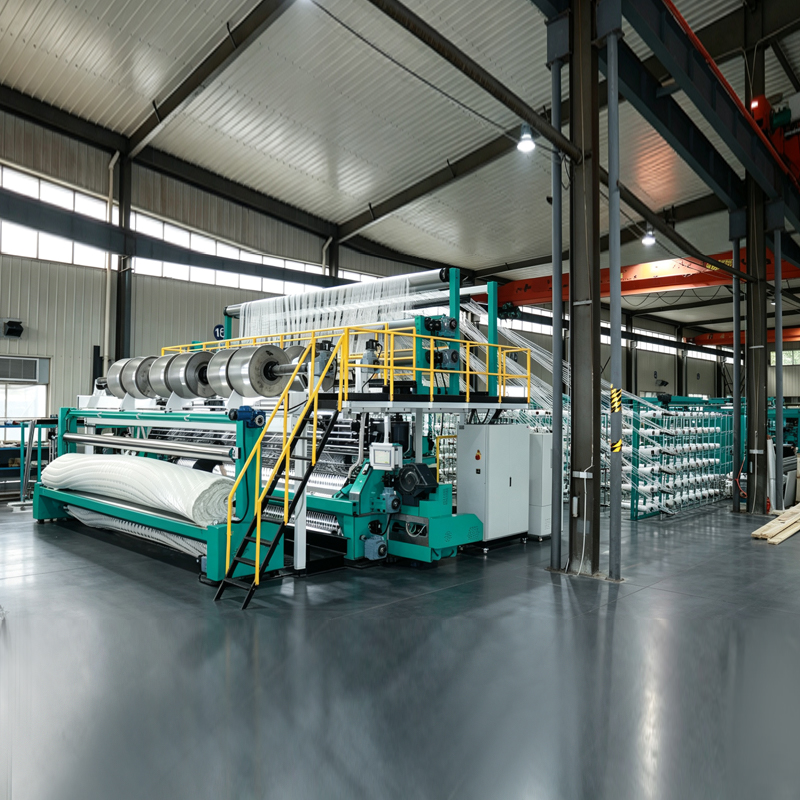
Changzhou Yuanyang Electromechanical Technology Co., Ltd. manufactures the YRS3-M-M Raschel mesh geo textile biaxial warp knitting machine for producers of alkali-resistant fiberglass wall mesh, plaster reinforcement mesh and related geotextile-grade scrim fabrics. The machine is engineered around glass fiber and polyester yarns, a 247" working width and a 5×5 mm mesh construction, and it sits inside our fiberglass textile equipment range alongside chopped-fiber, high-strength and geogrid biaxial platforms.
As a warp knitting machinery manufacturer based in Jiangsu, China, we build, assemble and test each machine in our own production base, then support installation, commissioning and operator training on site. The YRS3-M-M Raschel mesh geo textile biaxial warp knitting machine is configured to the fabric construction, yarn package format and downstream coating line our customer actually runs.
What the YRS3-M-M Produces
As a Yrs3mm Raschel Mesh Geo Textile Biaxial Warp Knitting Machine Manufacturer, we match product configuration to the application, operating limits, interfaces and acceptance criteria defined for each project.
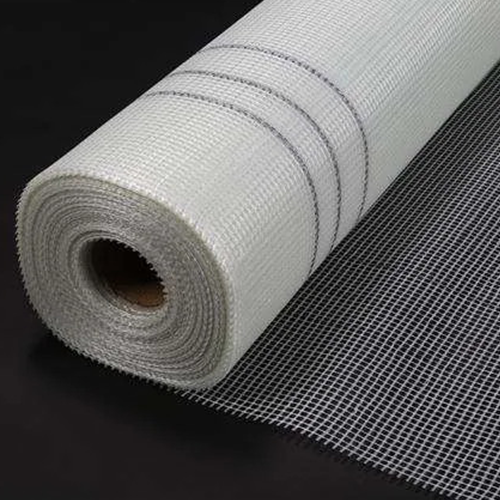
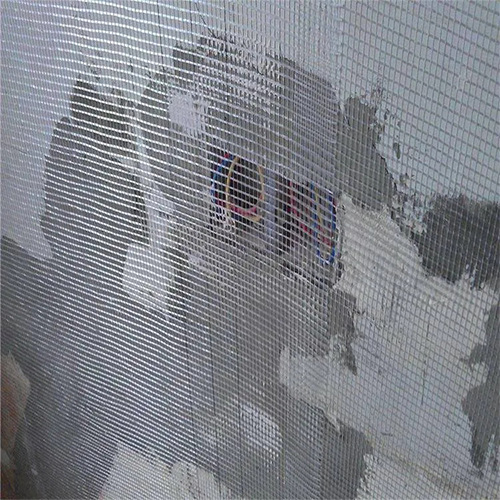
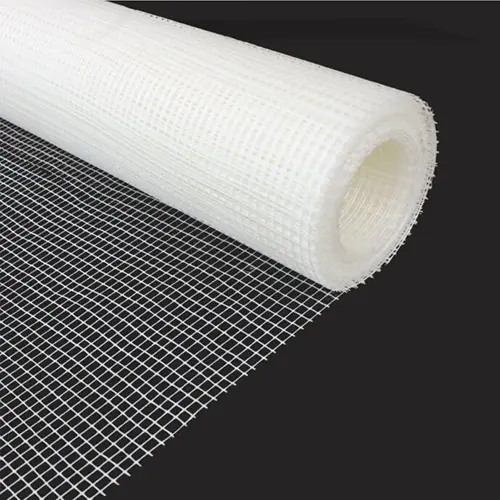
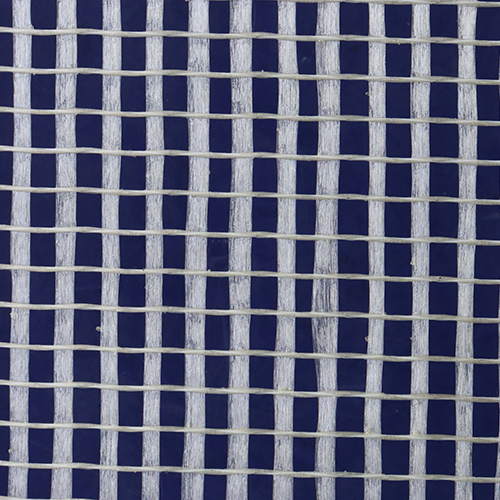
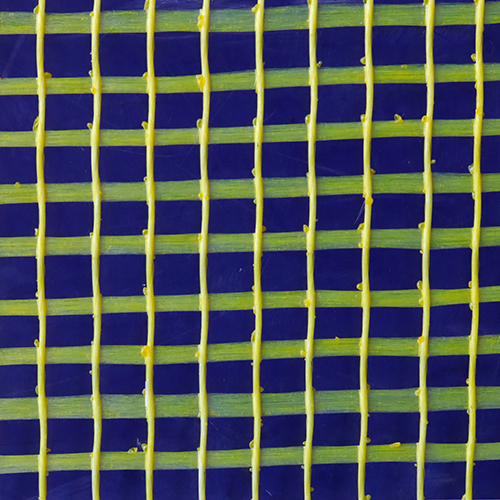
The YRS3-M-M is a biaxial Raschel machine that lays warp and weft glass fiber yarns in two directions and binds them with a stitch yarn to form an open, dimensionally stable mesh. The standard construction is a 5×5 mm aperture, which is the mesh geometry used for wall reinforcement and crack-resistance fabrics. The base fabric is then coated with acrylic copolymer and dried to give the finished alkali-resistant product its strength, corrosion resistance and crack-bridging behaviour.
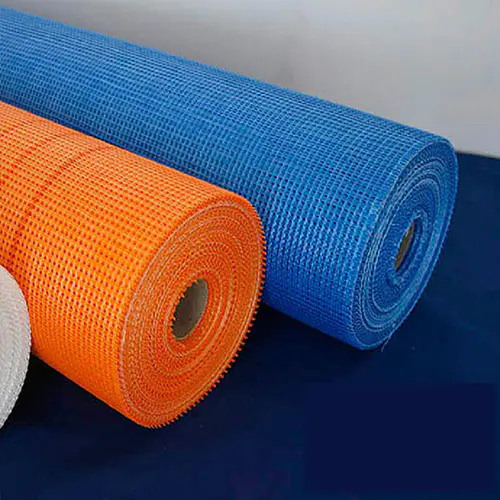
Typical output is wall mesh fabric and fiberglass mesh fabric, with polyester also supported as an input fiber. Because the mesh is produced as a continuous roll, downstream coating, drying and slitting lines can be fed directly from the machine.
Core specification envelope
| Parameter |
Value |
Project relevance |
| Applicable fibers |
Glass fiber, polyester |
Determines yarn path, tension control and guide selection |
| Machine speed |
20–1500 r/min |
Set against mesh density and yarn count, not run at maximum |
| Working width |
247" |
Matches roll width required by coating and finishing lines |
| Mesh specification |
5×5 mm |
Standard wall reinforcement aperture |
| Daily output |
Approx. 19,000 m² (reference) |
Varies with fabric construction and process settings |
| Application fields |
Wall reinforcement, crack resistance |
Defines acceptance criteria for tear strength |
Application Fit and Fabric Behaviour
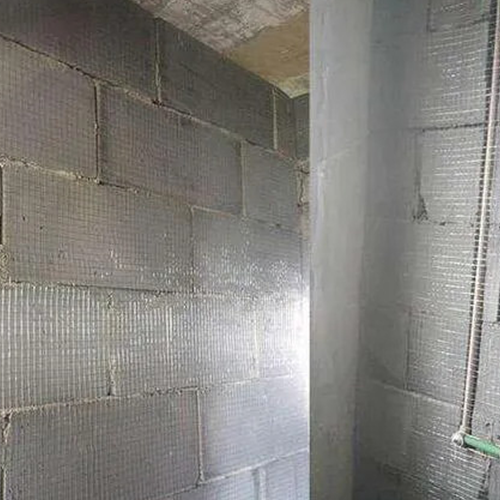
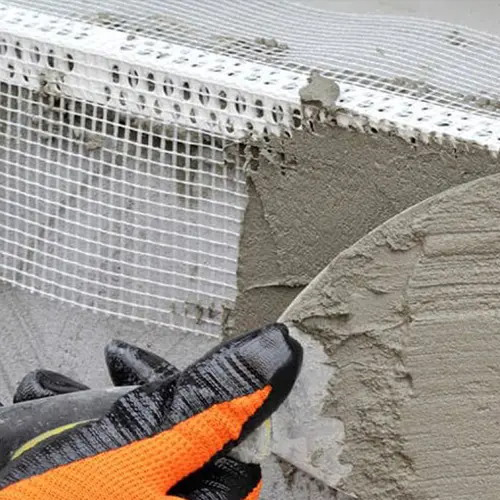
Wall reinforcement mesh has to resist tearing and stop a crack from propagating through a rendered or plastered surface. The biaxial lay-in structure gives the finished fabric high tear strength and strong resistance to tear propagation, which is what raises the stability of the reinforced wall system. The open 5×5 mm aperture lets the coating and the render key into the mesh rather than sitting on top of it.
Because the machine lays both yarn directions before stitching, the mesh geometry stays regular across the full 247" width. That consistency matters when the coated roll is later cut into narrower strips for facade systems, insulation boards or drywall jointing.
Where this platform fits in our fiberglass range
- YRS3-M-M — Raschel mesh geo textile biaxial machine for wall mesh and fiberglass mesh fabric.
- YRS3-M-G Raschel mesh-geogrid biaxial warp knitting machine — for geogrid-type mesh structures used in ground and civil reinforcement.
- YRS3-M-H high strength biaxial warp knitting machine — where higher yarn linear density and load-bearing capacity are the priority.
- YRS3-M-F-I Raschel chopped fiber biaxial warp knitting machine — adds chopped fiber lay-in for heavier composite reinforcement.
- YRS3-3M multiaxial warp knitting machine — for multi-directional reinforcement fabrics beyond two axes.
Configuration Options We Build Around
No two mesh lines are identical, so the YRS3-M-M is quoted as a configured machine rather than a fixed catalogue item. We adjust the following according to the fabric design and the workshop layout.
- Yarn package format — creel and beam arrangements sized to the glass fiber or polyester package the customer receives from their yarn supplier.
- Mesh geometry — the 5×5 mm construction is standard, with the stitch and lay-in pattern set to the required aperture and weight.
- Working width — 247" as the reference width, aligned to the coating line and slitting plan.
- Control and drive package — speed regulation, tension monitoring and stop functions matched to the operator interface the plant prefers.
- Fabric take-up and batching — roll diameter and core format chosen for the downstream coating and drying process.
- Machine layout and colour — structural and layout changes where the available floor space or line sequence requires them.
Installation, Utilities and Line Integration
The machine is delivered as a complete unit and positioned on a level, vibration-isolated floor with the working width oriented to the take-up and coating direction. Power supply, compressed air where pneumatic functions are used, and a stable ambient temperature in the knitting hall all affect yarn behaviour and mesh regularity, so we confirm these conditions before shipment.
Where the mesh feeds directly into a coating and drying line, we agree the interface points — roll height, tension at the transfer, and the stop signal between machines — during the technical review so the two lines run as one process rather than two disconnected units.
Quality Control and Pre-Delivery Testing
Yuanyang operates a refined control process from component procurement through machining, assembly, testing and debugging. Every machine is tested before it leaves the factory, and the intelligent warehouse system tracks components and finished units through to dispatch. For the YRS3-M-M, the pre-delivery run covers stitch formation, lay-in yarn placement, tension stability across the full width and the take-up behaviour at the specified mesh construction.
Customers are welcome to attend the final inspection at our Danyang production base, or to review test results and inspection records before shipment is approved.
Training, Maintenance and Spare Parts
Our engineers travel to the customer's plant for installation, commissioning and training, and stay until the line is running to the agreed fabric specification. We also run structured training at our own fabrication workshop for knitters, maintainers and workshop management, typically over one to two months, covering hands-on operation, maintenance practice, process parameters and production planning.
Routine maintenance on a biaxial Raschel machine centres on guide and needle condition, yarn tension elements, stitch comb cleanliness and lubrication points. We supply the wear parts and knitting elements for the YRS3-M-M, and our after-sales engineers respond to production issues so that unplanned downtime is kept short.
Information We Use to Configure Your Solution
To prepare an accurate configuration and quotation for the YRS3-M-M, we work from the following project inputs. The more precisely these are defined, the closer the first proposal will be to the machine you actually need.
- Target fabric: mesh aperture, areal weight, warp and weft yarn specification, stitch yarn type.
- Yarn supply: glass fiber or polyester, yarn count, package format and supplier.
- Required roll width and roll diameter, and the downstream coating or finishing process.
- Production target per shift or per day, and the shift pattern the plant runs.
- Available floor space, power supply, compressed air and ambient conditions in the knitting hall.
- Operator experience level and the training scope required.
- Acceptance criteria for the finished mesh, including tear strength requirements.
Frequently Asked Questions
What fabric does the YRS3-M-M produce?
It produces wall mesh fabric and fiberglass mesh fabric from glass fiber or polyester yarns, in a 5×5 mm mesh construction. The base mesh is normally coated with acrylic copolymer and dried to create the alkali-resistant finished product used for wall reinforcement and crack resistance.
What is the working width and machine speed?
The reference working width is 247", and the machine runs from 20 to 1500 r/min. The actual production speed is set according to the mesh construction, yarn count and required fabric quality rather than run at the maximum figure.
What daily output can we expect?
Reference daily output is approximately 19,000 m². This figure depends on the fabric construction and process settings, so we confirm the expected output against your specific mesh design during the technical review.
Can the machine be adapted to a different mesh size or yarn?
Yes. We configure the stitch and lay-in pattern, yarn path and tension elements around the required aperture and yarn specification. Adaptation for special materials and process-oriented optimisation for stability and efficiency are part of our customization work.
Do you provide installation and operator training?
Our engineers carry out on-site installation, commissioning and training until the machine runs to the agreed specification. We also offer workshop-based training for knitters, maintainers and workshop management, covering operation, maintenance and process parameters.
How is the machine tested before delivery?
Each unit is assembled and tested in our production base before shipment, covering stitch formation, lay-in yarn placement, tension stability across the working width and take-up behaviour. Customers can attend the final inspection or review the inspection records before dispatch is approved.


 English
 中文简体
中文简体 русский
 Français
 Español
 Deutsch