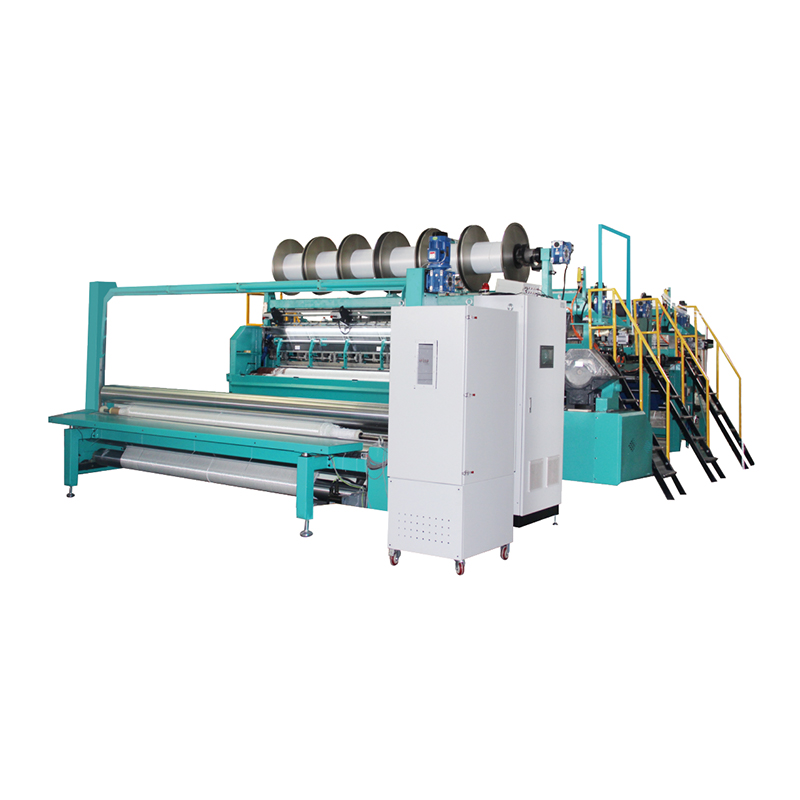
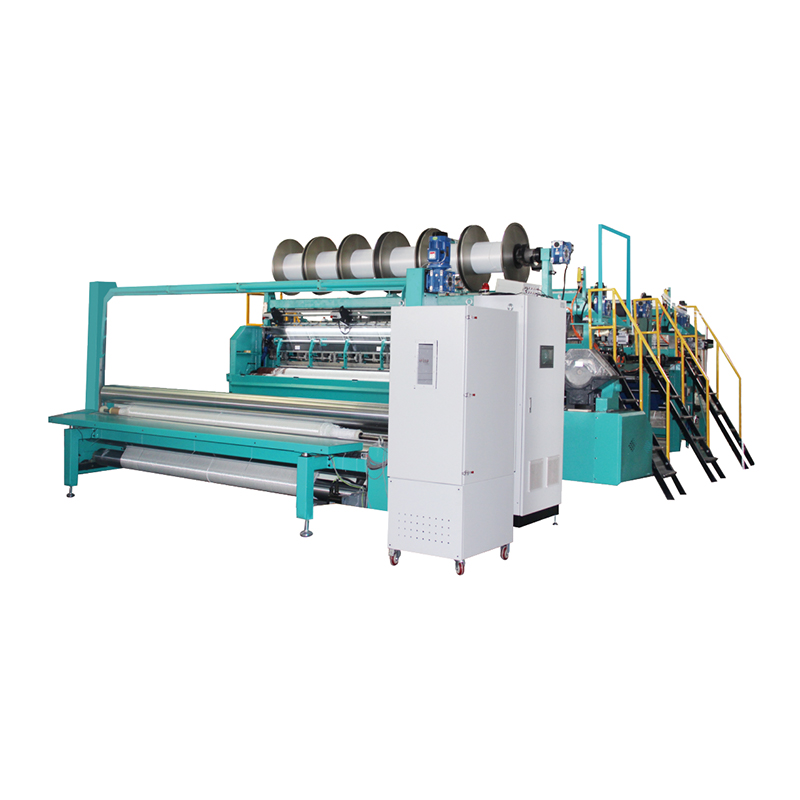
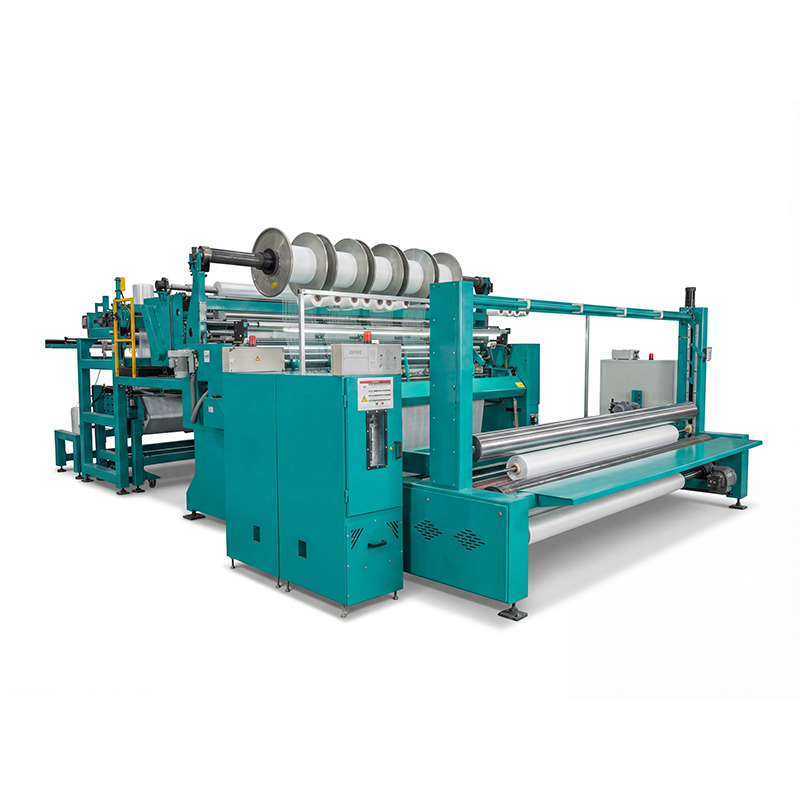
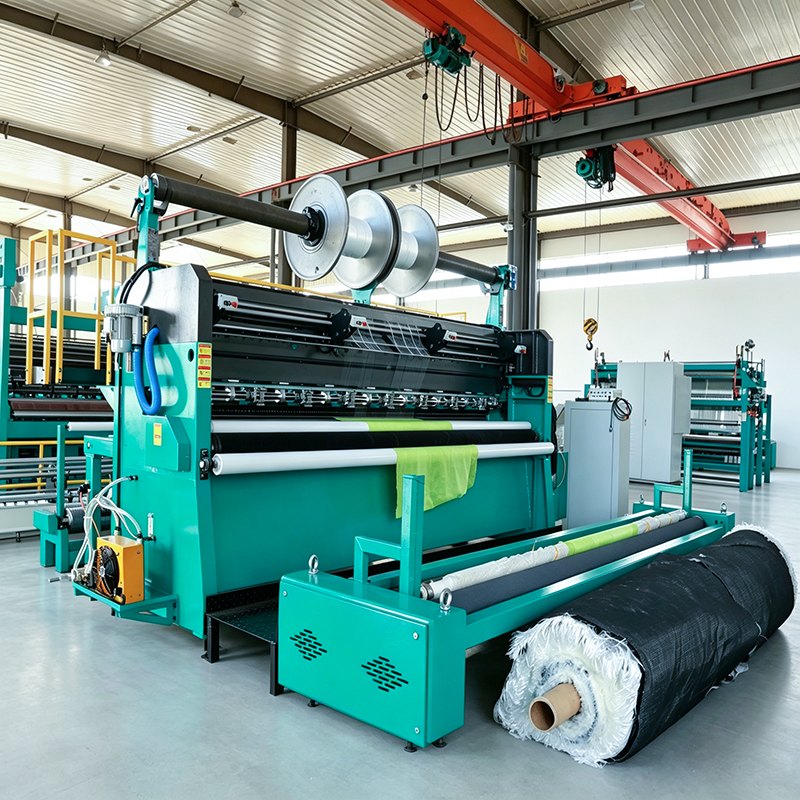
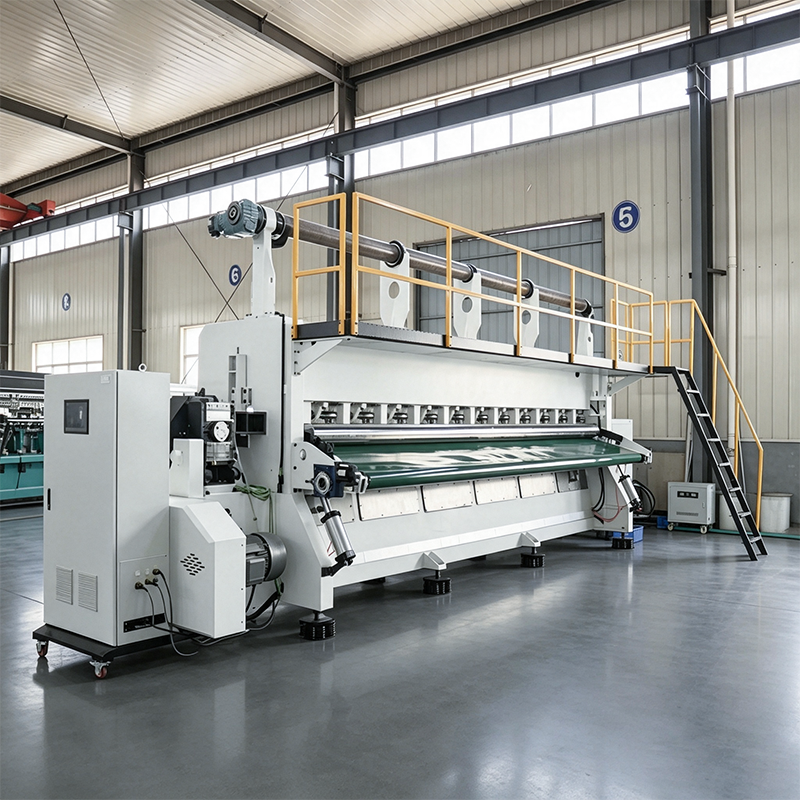
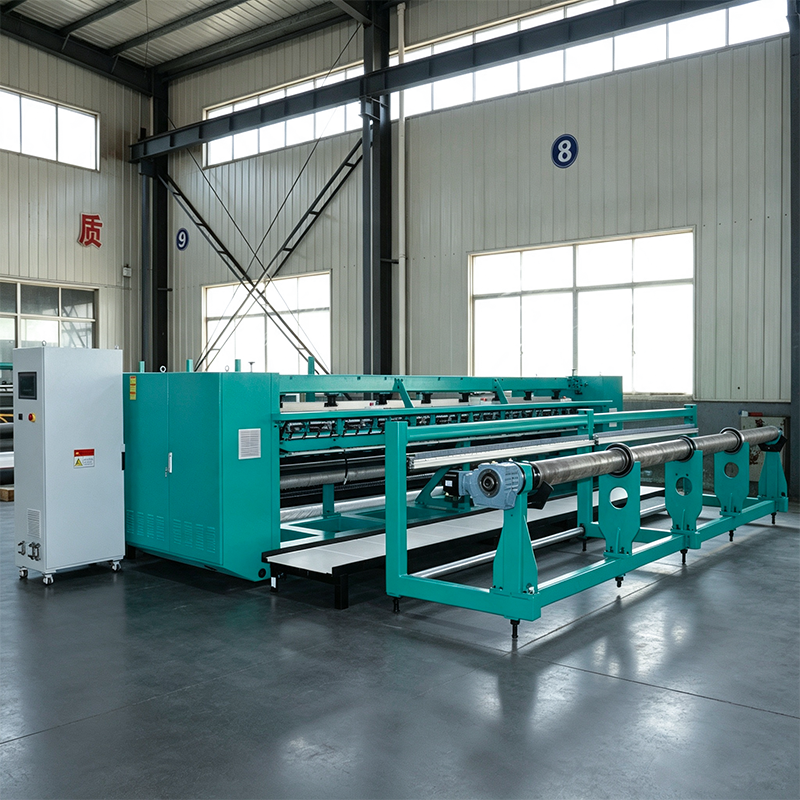
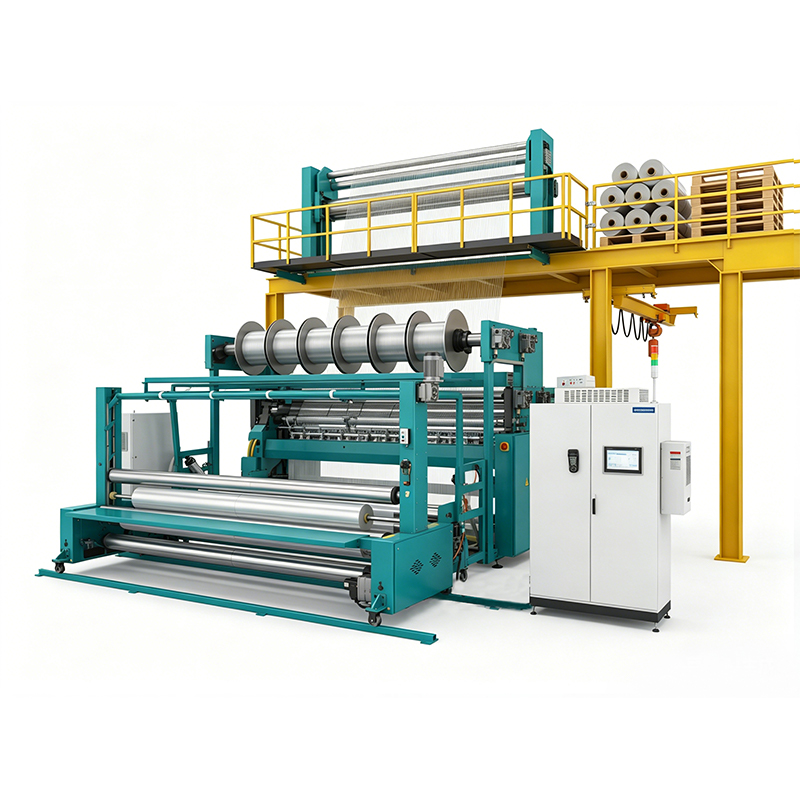
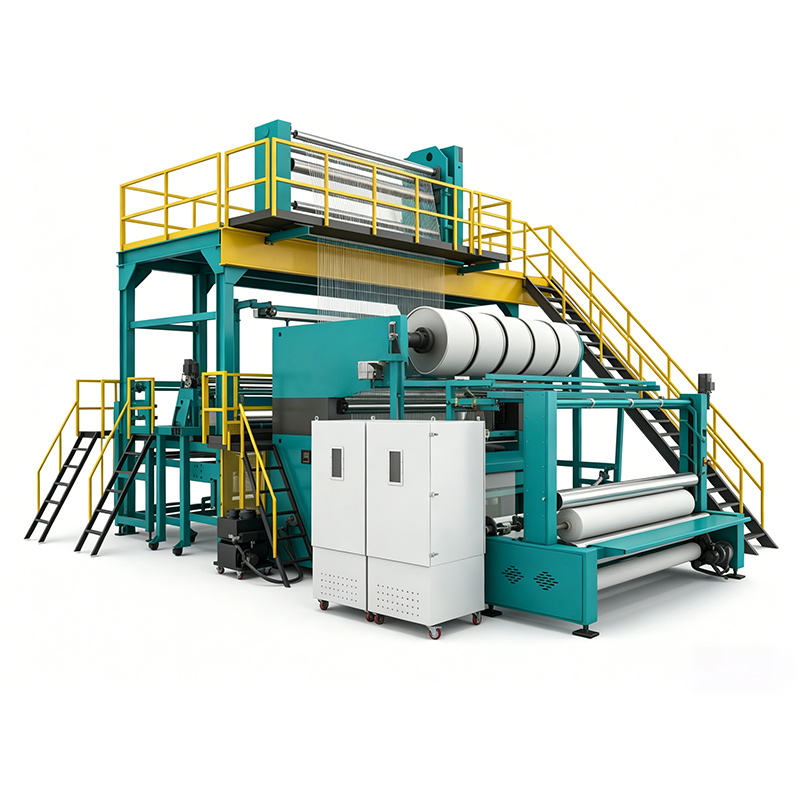
Changzhou Yuanyang Electromechanical Technology Co., Ltd. builds the FCD Double Chopped Stitch Bonding Machine for glass fiber reinforcement producers who need chopped strand mat, composite mat and sandwich mat in one continuous process. The machine combines two chopping units with online layer lamination, so a single line can deliver double-sided chopped mat and multi-layer composite structures without a separate bonding step.
What the FCD Machine Produces
The FCD is a stitch-bonding machine with two independent chopping units. Glass fiber roving is chopped to an adjustable cut length and deposited on both faces of a carrier layer, then mechanically bonded by the knitting elements. This architecture produces a mat with chopped fibers on both sides and a defined core, which is the basis for sandwich mats with PP or PET core layers.
Core products from this platform include chopped strand mat, composite mat, sandwich mat, stitch-bonded composite fiberglass fabric, double-sided chopped mat, and sandwich mats with PP/PET core layers. The online lamination capability means different material layers can be combined in one pass rather than glued or needled in a second operation.
Application Fields
- Shipbuilding — hull, deck and internal reinforcement laminates
- Lightweight automotive components — structural and semi-structural panels
- Rail transportation — interior and exterior composite parts
- Lining layers for containers and pipelines
Key Specifications
| Parameter |
Value |
Notes |
| Applicable fiber |
Glass fiber |
Chopped roving from creel |
| Machine speed |
50–900 r/min |
Set according to fabric construction |
| Working width |
2800 mm (110 in) |
Standard configuration |
| Daily output |
Approx. 5000 m² |
Reference only; varies with construction and process |
| Chopping unit |
Adjustable cut length |
Two units, one per face |
How the Double Chopping Process Works
Roving is fed from a creel into two chopping heads. Each head cuts to the required staple length and distributes the chopped fiber across the working width. A carrier layer — which may be a nonwoven, a scrim, or a pre-laid glass mat — passes through the bonding zone. The knitting elements stitch the chopped fibers and carrier together, locking the structure without chemical binder.
Because the two chopping units operate independently, the machine can run symmetrical or asymmetrical chopped layers. This is what allows a sandwich mat with a PP/PET core to be produced in a single pass: the core is fed between the two chopped layers and the stitch bond holds the assembly together.
Configuration Options
- Cut length adjustment on each chopping unit
- Carrier layer feeding for nonwoven, scrim or glass mat
- Core layer feeding for PP/PET sandwich structures
- Stitch pattern and bonding density selection
- Working width confirmed against the target panel size
- Line interface for downstream winding or cutting
Where the FCD Fits in the Yuanyang Range
Yuanyang manufactures a focused range of warp knitting and stitch-bonding equipment for glass fiber, chemical fiber and carbon fiber textiles. The FCD Double Chopped Stitch Bonding Machine is the double-sided chopping platform. For single-sided chopped mat production, the FC Chopped Stitch Bonding Machine uses one chopping unit and is suited to standard chopped strand mat. Where the reinforcement must carry directional load, the YRS3-M-H High Strength Biaxial Warp Knitting Machine builds 0°/90° or ±45° biaxial structures from continuous rovings.
All three platforms share the same engineering approach: material characteristics, fabric construction and production target determine the configuration. The FCD is the choice when the end product needs chopped fiber on both faces, a defined core, and the conformability that comes from a stitch-bonded rather than needled structure.
Engineering and Quality Control
Yuanyang operates a 12,000+ m² production base in Danyang, Jiangsu Province, with an annual production capacity of 200+ sets and 50+ skilled employees. The workshop is organized into standard production zones and a design trial production workstation, so a new configuration can be built and tested before it enters the main line.
Quality control follows a defined sequence from component procurement through assembly, testing and debugging. Every machine is tested before dispatch. The company maintains an intelligent warehouse with digital control of receiving, storage, picking and delivery, which supports stable supply and on-time shipment for export projects.
Project Support
- On-site installation, commissioning and operator training by assigned engineers
- Knitter and maintainer training at the Yuanyang factory, typically 1–2 months
- Workshop management training covering quality control, production planning and process parameters
- Assistance with quality system documentation
- Long-term technical support for production issues after handover
Information We Use to Configure Your Solution
To prepare a configuration and quotation for the FCD, we need the following project inputs. These determine chopping unit setup, carrier and core feeding arrangement, stitch pattern and line interface.
| Input |
Why It Matters |
| Target fabric construction |
Defines chopped layer weight, core type and stitch pattern |
| Fiber type and roving specification |
Sets chopping head parameters and creel layout |
| Required cut length |
Determines chopper blade configuration |
| Working width and roll diameter |
Confirms machine width and downstream winding |
| Production target (m²/day or m/min) |
Matches machine speed and capacity to the line |
| Workshop layout and utility supply |
Confirms installation footprint and power connection |
| Downstream equipment interface |
Aligns line speed and roll handling |
Installation, Operation and Maintenance
The FCD is installed as a standalone line or integrated with existing creel, feeding and winding equipment. Yuanyang engineers handle mechanical alignment, electrical connection, chopping unit calibration and stitch bonding trials before production handover. Operator safety covers the chopping zone, rotating knitting elements and drive areas through guarding and controlled access.
Routine maintenance focuses on chopper blade condition, knitting element wear, yarn tension and lubrication points. Spare parts and consumables are supplied through the Yuanyang service network, and the training program prepares the customer's maintainers to handle scheduled service and common fault diagnosis.
Frequently Asked Questions
What is the difference between the FCD and the FC machine?
The FC has one chopping unit and produces single-sided chopped strand mat. The FCD has two chopping units and can place chopped fiber on both faces of a carrier, which enables double-sided chopped mat and sandwich mats with a PP/PET core in one pass.
Can the FCD run with a PP or PET core layer?
Yes. The online lamination capability is designed for sandwich structures, and PP/PET core layers are a standard configuration for this machine. The core is fed between the two chopped layers and held by the stitch bond.
What working width is available?
The standard working width is 2800 mm (110 in). Width requirements outside this range are reviewed during configuration against the target panel or roll size.
What is the typical daily output?
Approximately 5000 m² per day is a reference figure. Actual output depends on fabric construction, chopped layer weight, machine speed setting and process conditions, so we confirm the expected output against your specific construction during quotation.
Does Yuanyang provide installation and training?
Yes. An engineer is assigned to the customer's factory for installation, commissioning and training until the equipment runs to the agreed condition. Knitter, maintainer and workshop management training are also available at the Yuanyang factory, typically 1–2 months per program.
Can the machine be customized for a specific fabric?
Yes. Customization can cover machine structure and layout, functional module integration, adaptation for special materials, and process optimization for stability and efficiency. We work from drawings or samples and confirm the 3D design before production.


 English
 中文简体
中文简体 русский
 Français
 Español
 Deutsch