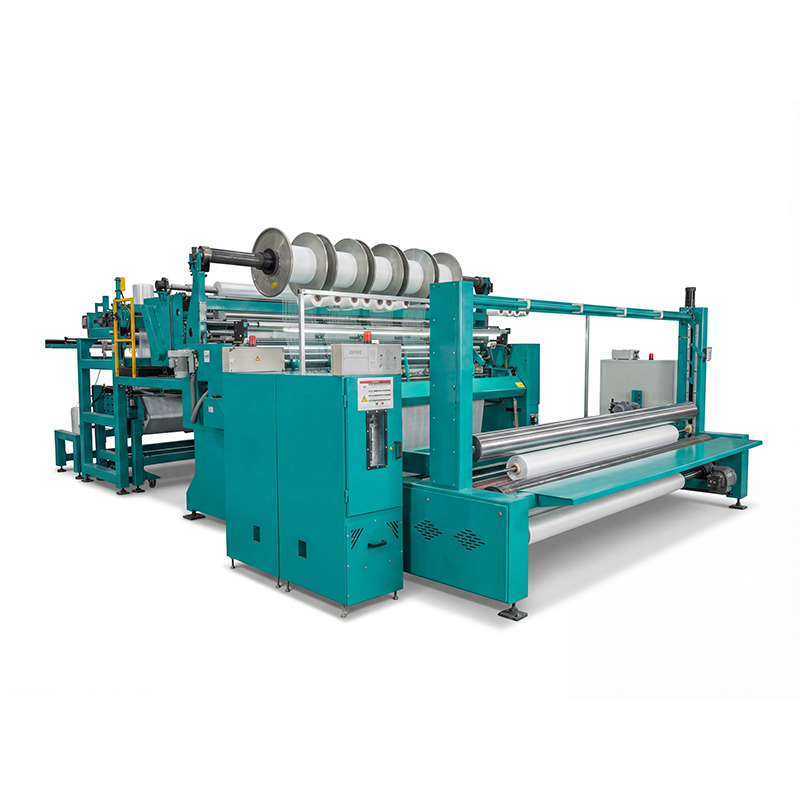
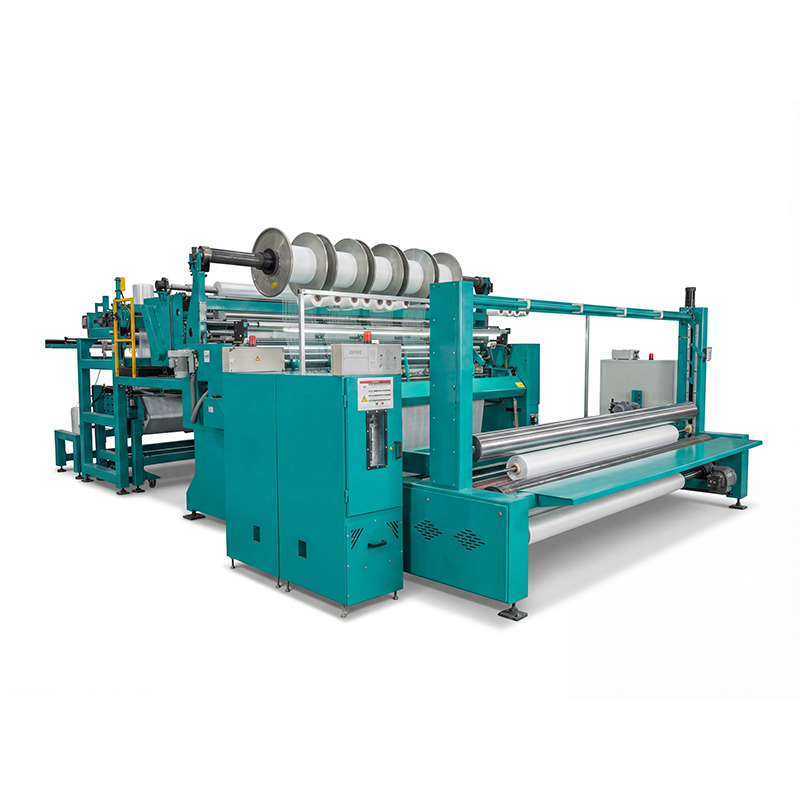
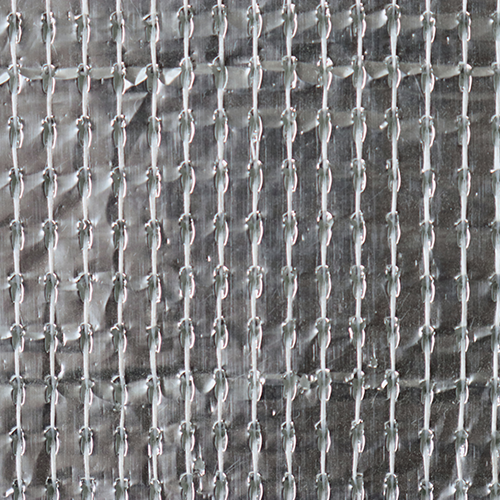
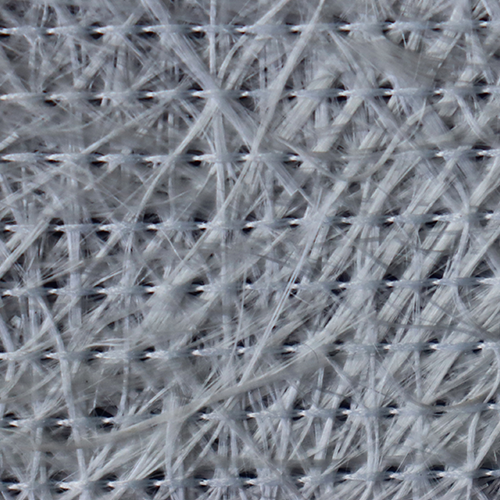
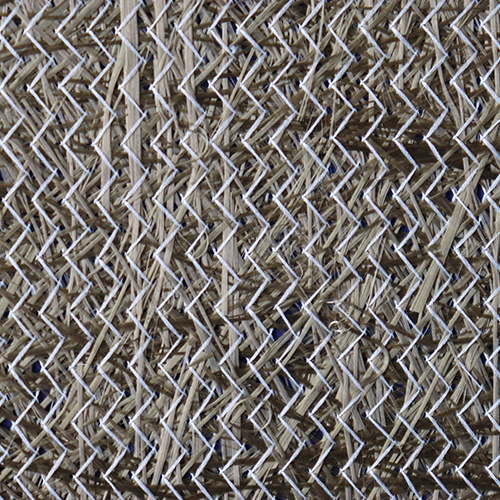
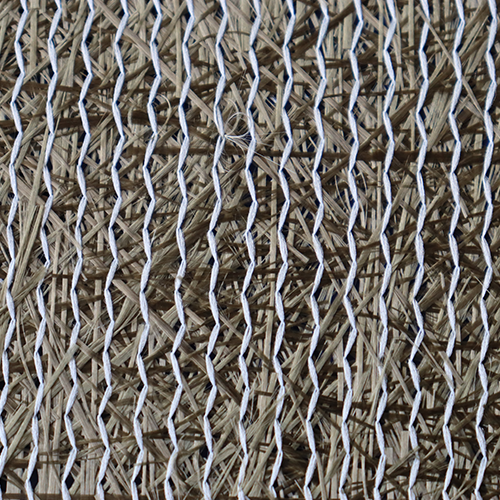
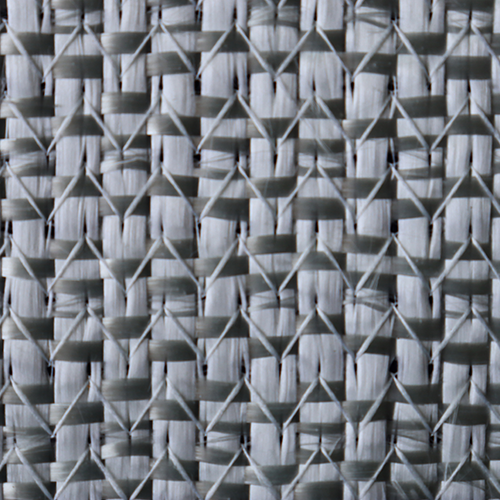
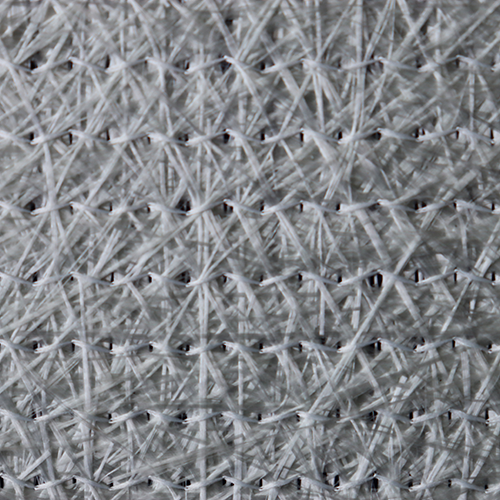
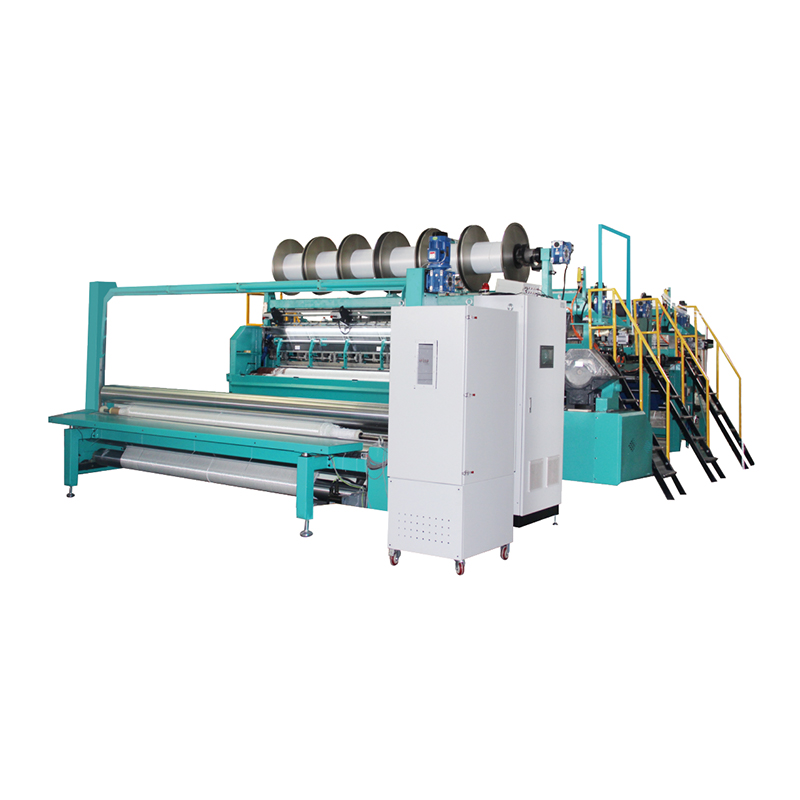
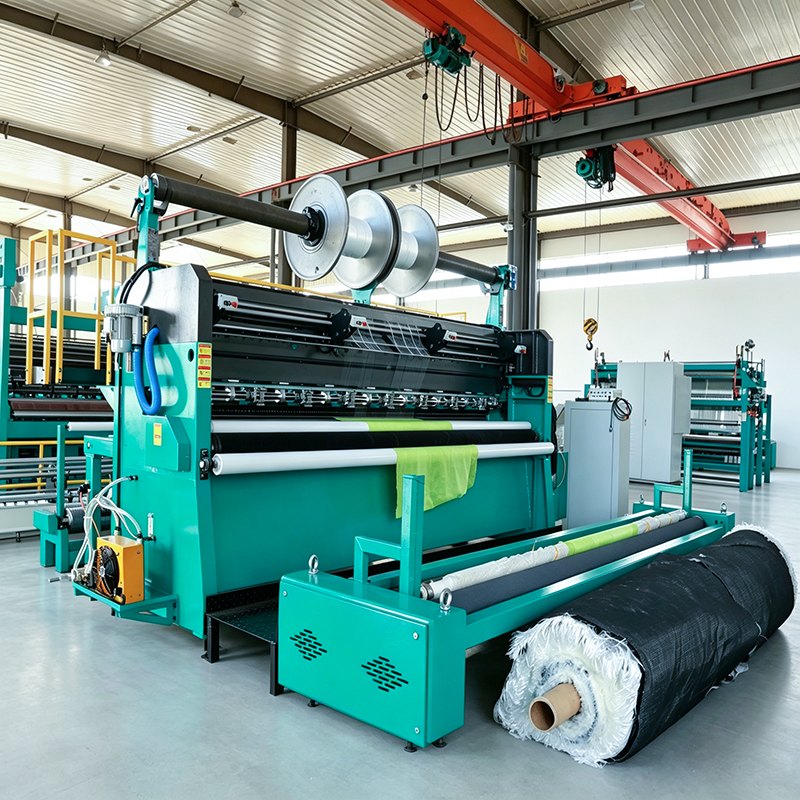
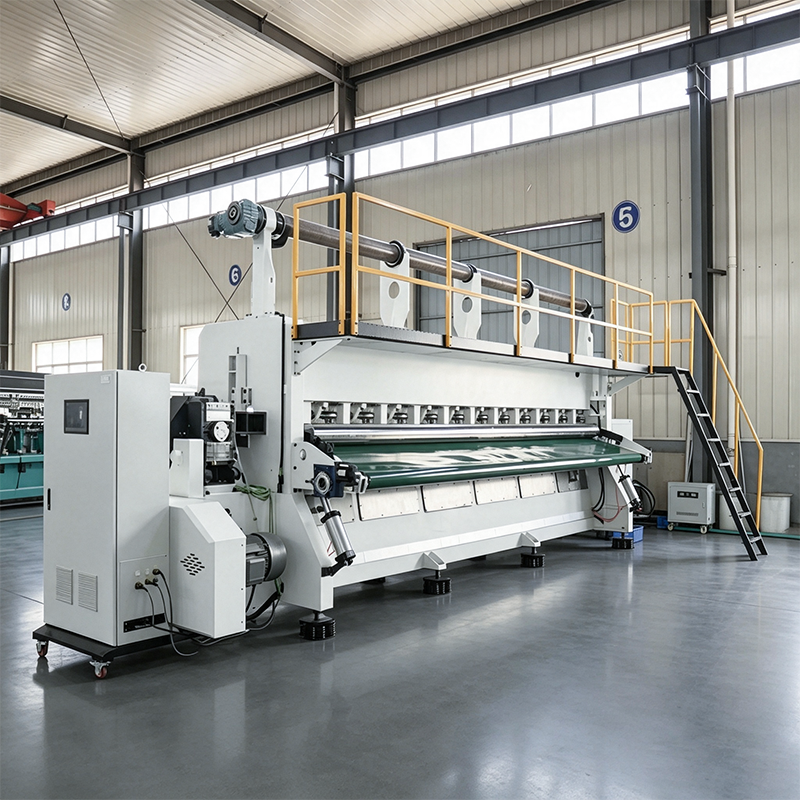
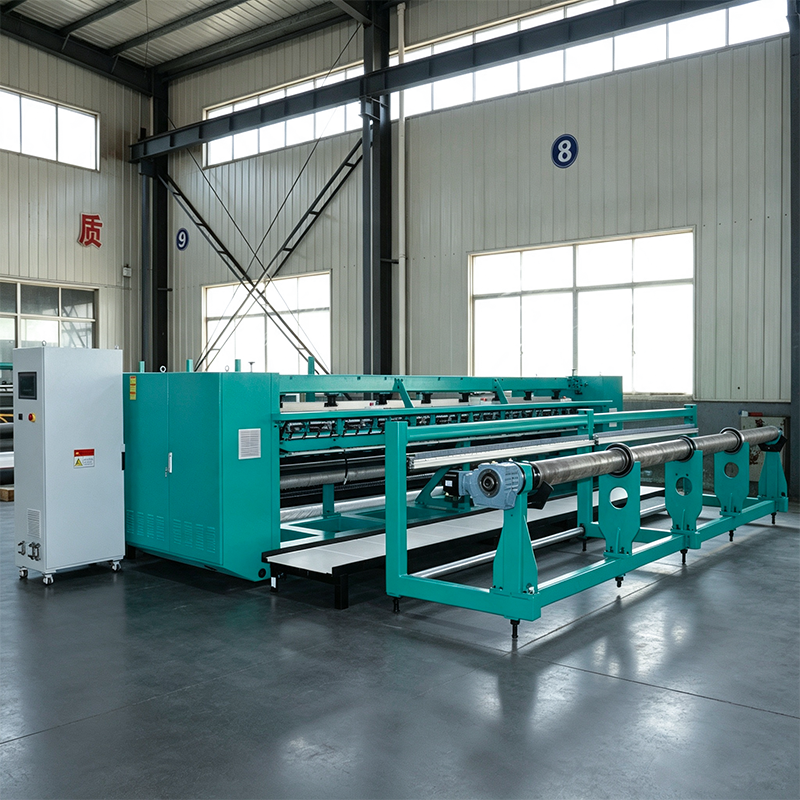
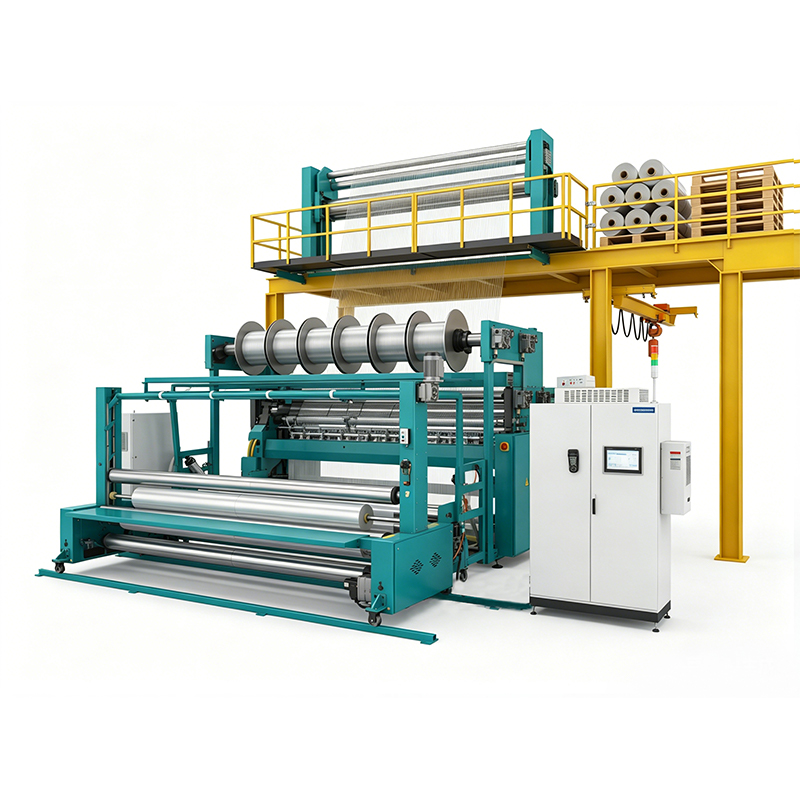
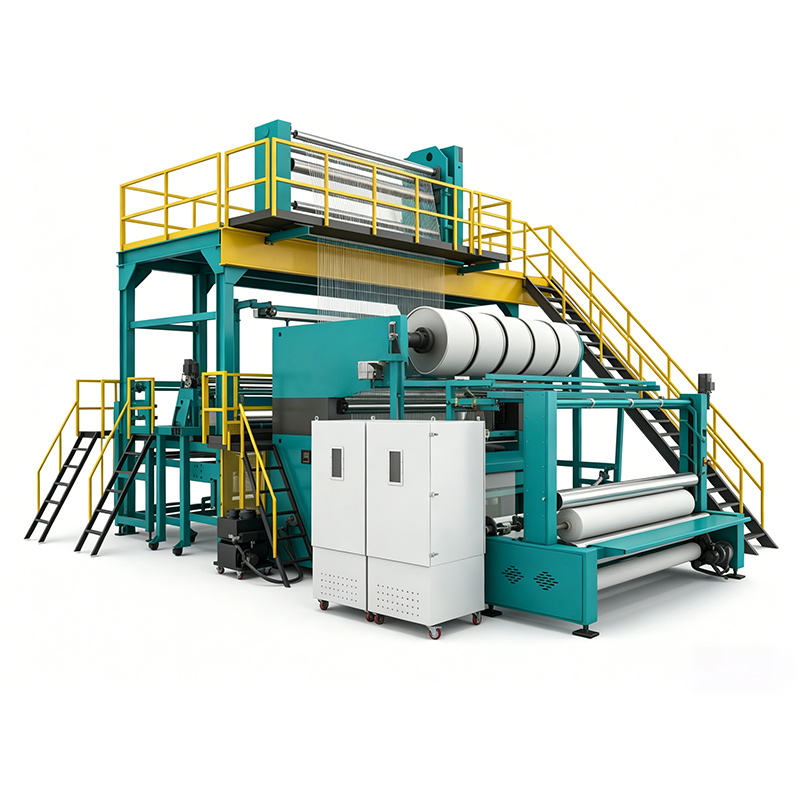
Changzhou Yuanyang Electromechanical Technology Co., Ltd. manufactures the FC Chopped Stitch Bonding Machine for glass fiber chopped strand mat and composite mat production. The machine combines chopping, web conveying and stitch bonding in one continuous line, converting glass fiber roving into a non-oriented mat that is reinforced by loop formation.
Our engineering base in Jiangsu, China covers 12,000+ m² with an annual production capacity of 200+ sets, and we build this machine around the working point, fiber input and fabric weight our customers actually run.
What the FC Machine Produces
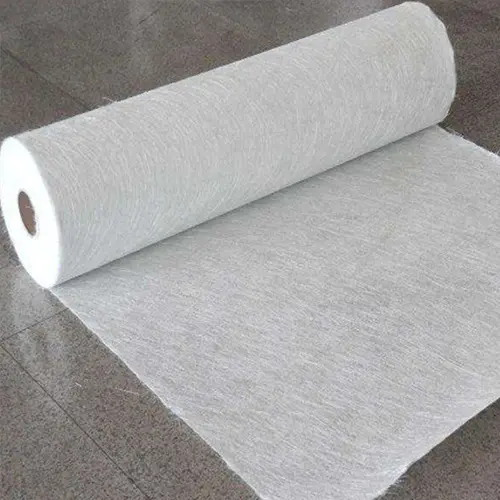
The FC Chopped Stitch Bonding Machine cuts glass fiber roving into 50 mm chopped lengths, distributes them without directional orientation, and stitch-bonds the web with knitting yarn. The result is a chopped strand mat with a fabric weight range of 50–900 g/m², used as a reinforcement layer rather than a woven or biaxial structure.
- Applicable fiber: glass fiber roving
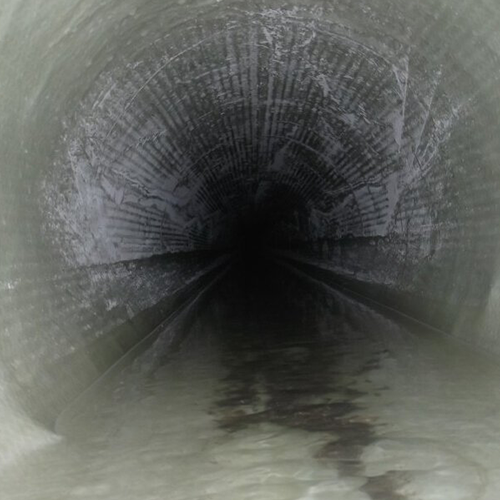
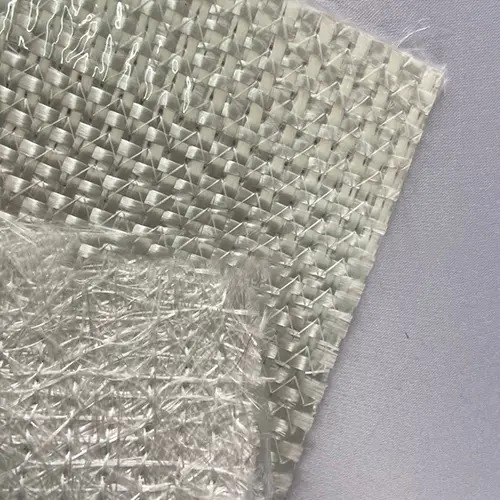
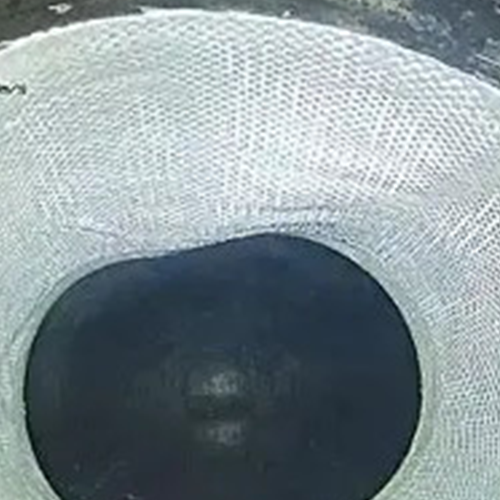
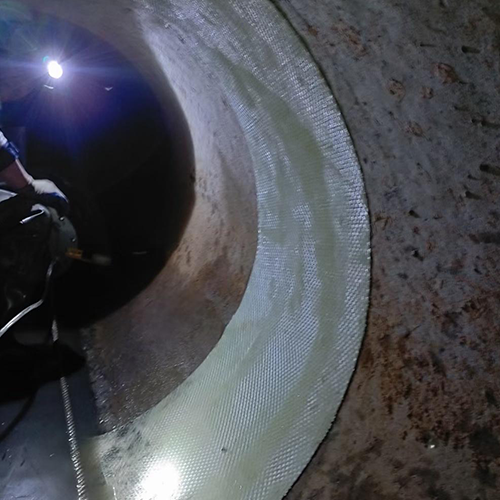
- Core products: chopped strand mat, grid composite mat, pipe rehabilitation fabric
- Application field: pipeline rehabilitation and composite reinforcement
- Fabric weight range: 50–900 g/m²
- Chopped length: 50 mm standard cutting
Working Widths, Speed and Output
Two working widths are available. Output figures below are reference values for a 300 g felt and a 300 g mat plus 400 g fabric build; actual output depends on fabric construction and process settings.
| Working Width |
Machine Speed |
300 g Felt Daily Output |
300 g Mat + 400 g Fabric Daily Output |
| 3300 mm (130") |
50–1300 r/min |
2000 kg |
4000 kg |
| 3800 mm (150") |
50–1300 r/min |
2250 kg |
4600 kg |
Daily output is a planning reference, not a guaranteed figure. Fiber tex, cutting quality, knitting yarn, stitch density and line uptime all shift the real number, so we size the machine against the target fabric rather than a single speed claim.
Three-in-One Process Architecture
The machine integrates chopping, conveying and stitch bonding. A single guide bar handles loop formation, while an independent chopping unit and a servo-controlled conveying system lay the chopped fiber into an even web before reinforcement.
Chopping Unit
Independent cutting head converts glass fiber roving into 50 mm chopped strands at a controlled rate.
Servo Conveying
Servo-controlled web transport keeps fiber distribution even across the full working width before bonding.
Stitch Bonding
Single guide bar loop formation locks the web with knitting yarn, giving the mat its handling strength.
Uniformity tolerance is held within ±5%, which matters most where the mat feeds a downstream resin or lining process and weight variation would show up as resin-rich or resin-starved zones.
Where This Machine Fits in Our Range
The FC is one machine in our fiberglass textile program. Where a project needs a different reinforcement architecture, we supply the adjacent models from the same platform.
Configuration Options and Line Integration
Machine structure, layout and functional modules are adapted to the workshop and the downstream process. Customization can involve frame and layout redesign, module integration, and adaptation for glass fiber, synthetic fiber or carbon fiber inputs.
- Working width: 3300 mm (130") or 3800 mm (150")
- Drive and control: servo-controlled conveying with independent chopping drive
- Guide bar configuration: single guide bar loop formation as the base build
- Fiber input: glass fiber roving, with adaptation for other fiber types on request
- Layout: adapted to available floor space, creel position and take-up direction
Because the machine sits inside a mat production line, we confirm the interface points during configuration: roving creel capacity, fiber path, take-up and winding arrangement, and how the finished mat is transferred to the next stage.
Installation, Commissioning and Acceptance
Equipment is assembled, tested and verified before delivery from our production base. After arrival, our engineer attends the customer's factory for on-site installation, commissioning and training until the line runs to the agreed condition.
- Foundation and leveling check against the layout drawing
- Mechanical assembly, alignment and drive connection
- Electrical and control wiring, then no-load run
- Fiber threading, chopping calibration and web uniformity check
- Fabric trial at the target weight, with weight and uniformity verification
- Operator handover and parameter documentation
Acceptance is normally tied to the target fabric: mat weight against the specified g/m², uniformity within the stated tolerance, and stable running at the production speed the customer intends to use.
Quality Control Through the Build
We work to quality management system standards with refined control across the whole process, from component procurement and machining through assembly, testing and debugging. Each machine is tested before it leaves the factory.
- Incoming component and material inspection
- In-process control during machining and assembly
- No-load and load running tests before dispatch
- Fabric trial and uniformity measurement
- Intelligent warehouse management for parts storage and dispatch accuracy
Maintenance, Spare Parts and Training
Chopping blades, knitting elements and web transport components are the parts that see the most wear, and they are the focus of the maintenance routine. We supply spare parts and provide long-term production support after handover.
Maintainer Training
On-site training at our factory, covering installation participation and practical maintenance in the workshop. Duration 1–2 months.
Knitter Training
Hands-on operation training in the fabrication workshop so operators can set and hold the target fabric weight. Duration 1–2 months.
Workshop Management
Quality control, production planning and process parameter training for supervisors. Duration 1–2 months.
We can also assist customers in establishing and compiling quality system documentation, and our after-sales engineers respond to production problems throughout the equipment's working life.
Information We Use to Configure Your Solution
A proposal is prepared from the working point, material and production target. The following inputs let us size the machine, set the configuration and quote accurately.
| Input |
What It Determines |
| Target fabric and weight range (g/m²) |
Chopping rate, web density, stitch parameters |
| Fiber type and roving tex |
Cutting head setup and fiber path design |
| Required working width |
3300 mm or 3800 mm build |
| Daily or annual output target |
Speed setting and line balancing |
| Knitting yarn specification |
Guide bar and loop formation setup |
| Workshop layout and available floor space |
Frame layout, creel position, take-up direction |
| Downstream process and interface |
Take-up, winding and transfer arrangement |
| Utilities and site conditions |
Power supply, compressed air, foundation requirements |
Where a project involves non-standard configuration, complex fabric design or a difficult material, we handle it as an engineering project rather than a catalogue selection. Our customization process runs from drawings or samples through 3D drawing confirmation, quotation, mold or pattern work, sample approval, production, inspection and delivery.
Frequently Asked Questions
What fabric weights can the FC Chopped Stitch Bonding Machine produce?
The machine covers a fabric weight range of 50–900 g/m² using 50 mm chopped glass fiber roving stitch-bonded with knitting yarn. The exact achievable weight depends on the roving tex, chopping rate and stitch density selected for the build.
Which working width should we choose, 3300 mm or 3800 mm?
The choice follows the finished mat width required by the downstream process and the available floor space. Both widths run at 50–1300 r/min; the 3800 mm build gives higher daily output at the same speed, with reference figures of 2250 kg for 300 g felt and 4600 kg for 300 g mat plus 400 g fabric.
How is uniformity controlled on the chopped web?
An independent chopping unit feeds a servo-controlled conveying system that lays the chopped fiber evenly before loop formation. Uniformity tolerance is held within ±5%, which is verified during the fabric trial at commissioning.
Can the machine be adapted for a different fiber or a non-standard layout?
Yes. Customization can cover machine structure and layout redesign, functional module development or integration, and adaptation for glass fiber, synthetic fiber or carbon fiber inputs. We work from customer drawings or samples and confirm 3D drawings before quotation.
What support is provided after the machine is delivered?
An engineer attends the customer's factory for on-site installation, commissioning and training until the equipment runs to condition. We also provide maintainer, knitter and workshop management training at our factory, spare parts supply, system documentation assistance and long-term production support.
Is the FC machine suitable for pipeline rehabilitation fabric?
Yes. Pipeline rehabilitation fabric is one of the core products this machine is built for, alongside chopped strand mat and grid composite mat. The non-oriented chopped structure gives even resin uptake, which suits lining and rehabilitation applications.


 English
 中文简体
中文简体 русский
 Français
 Español
 Deutsch