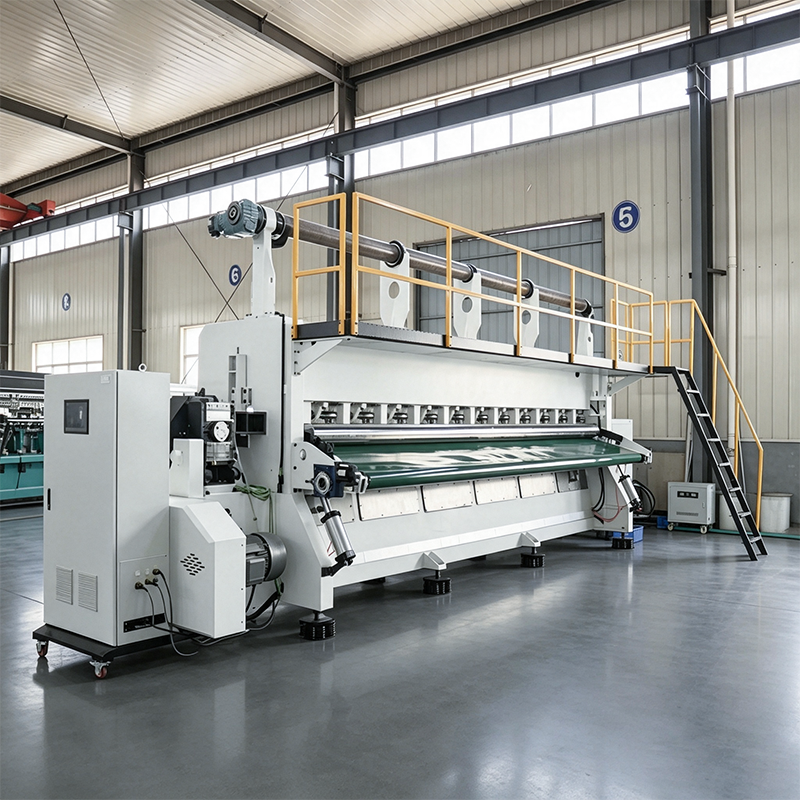
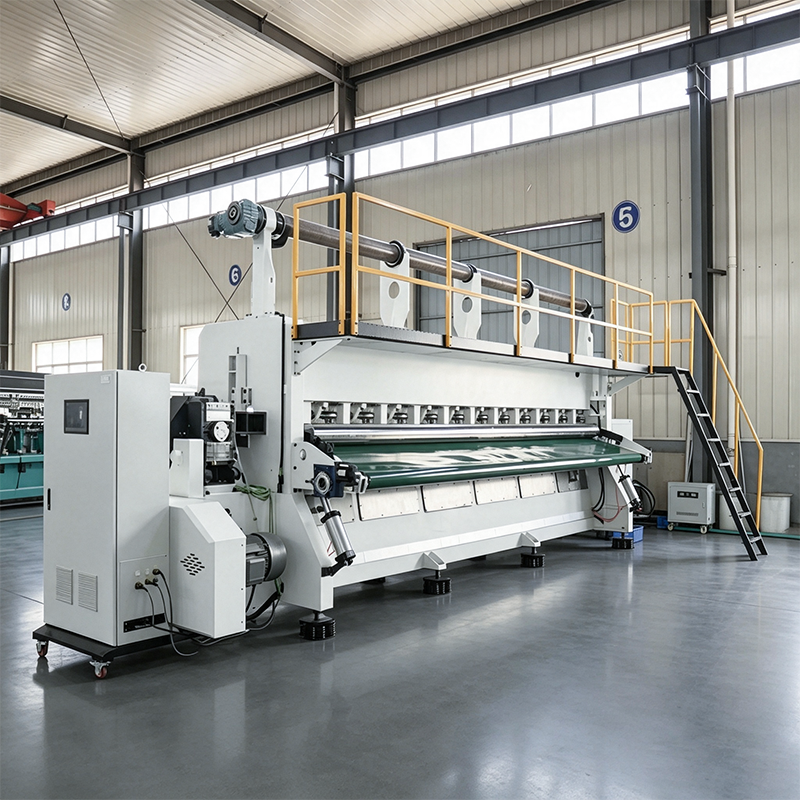
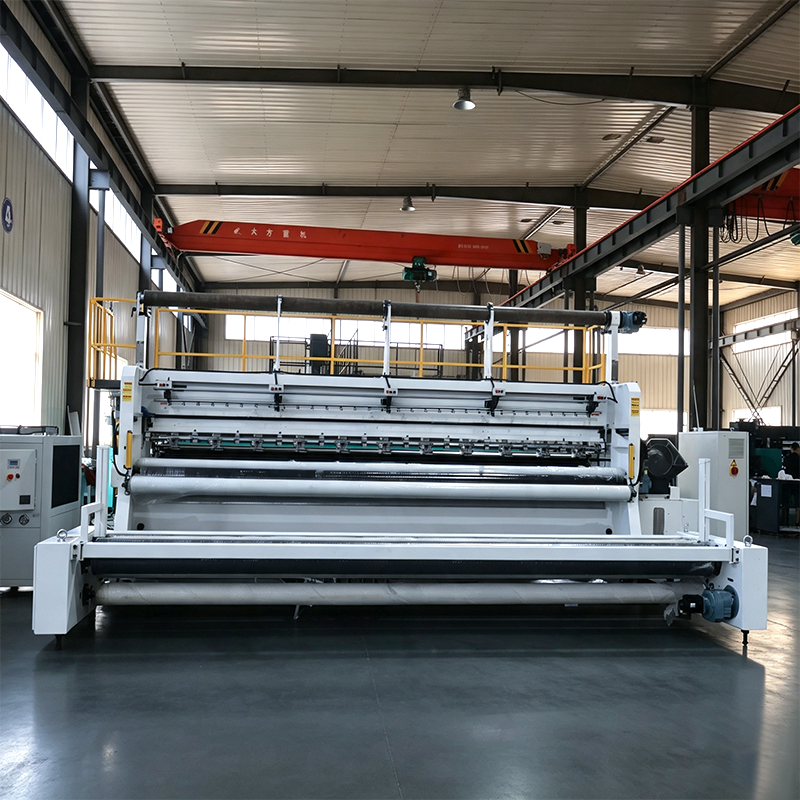
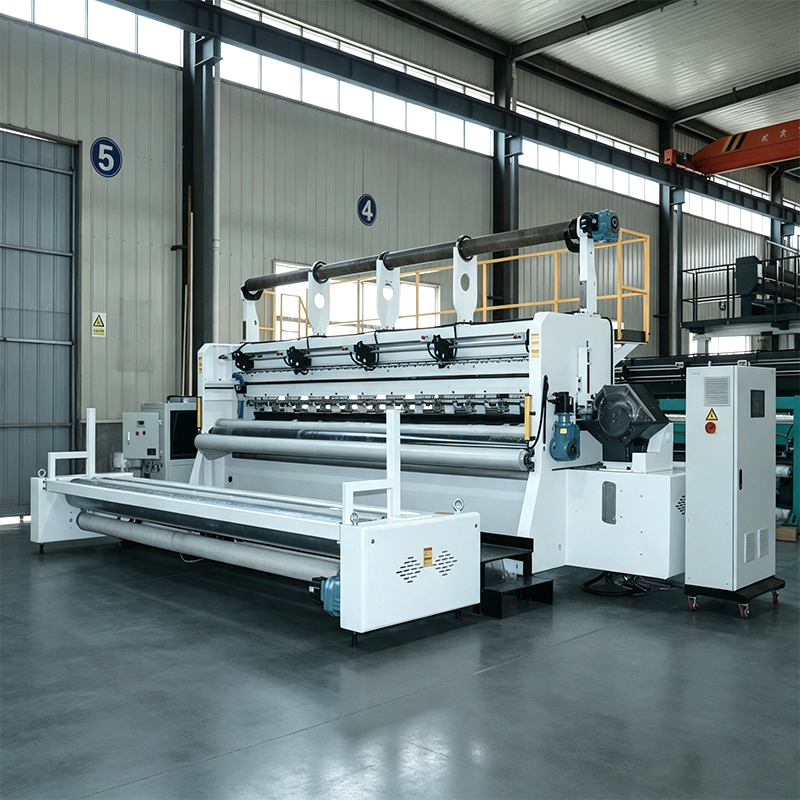
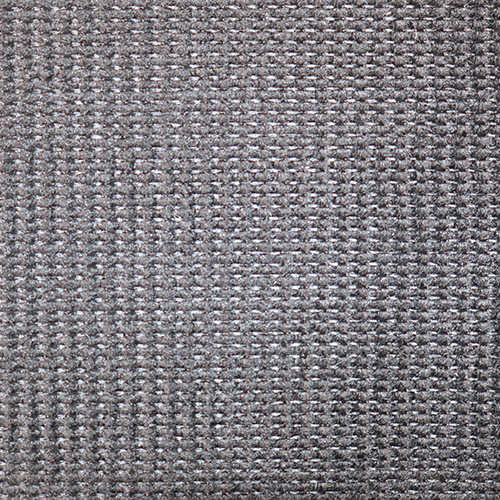
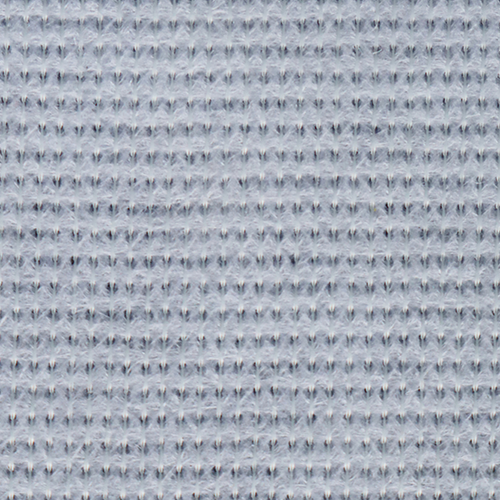
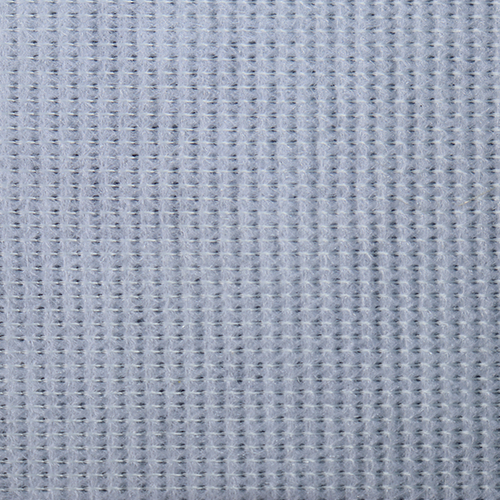
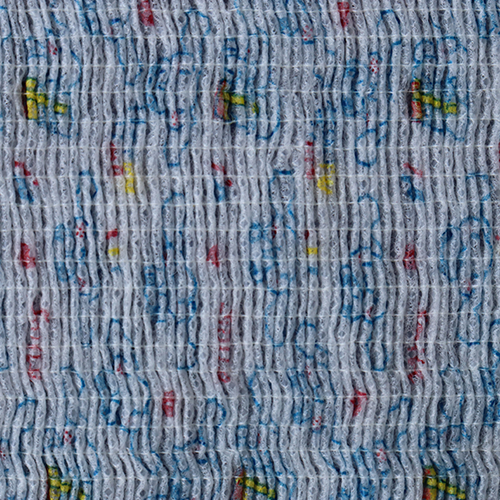
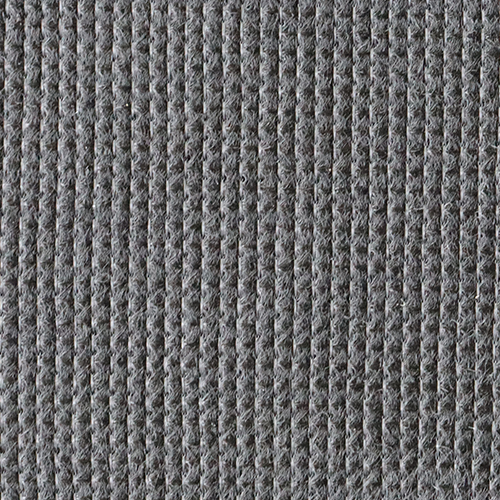
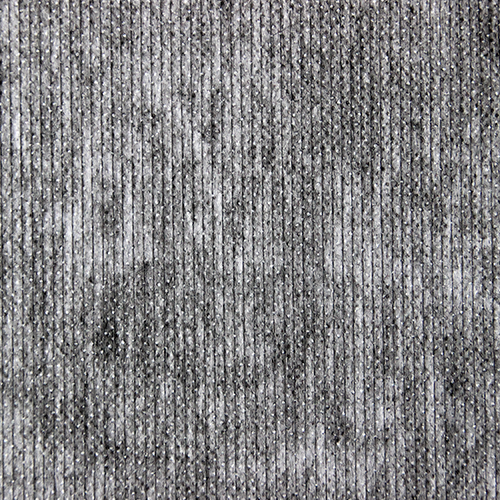
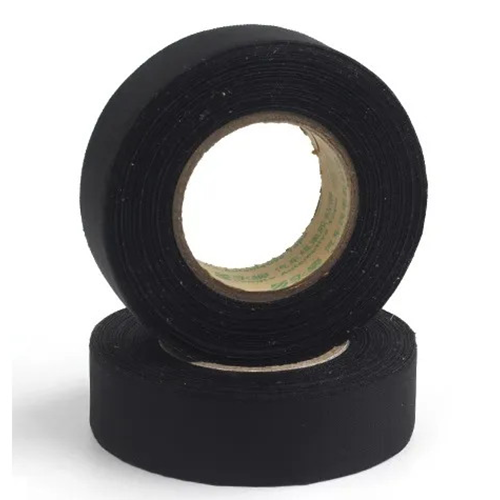
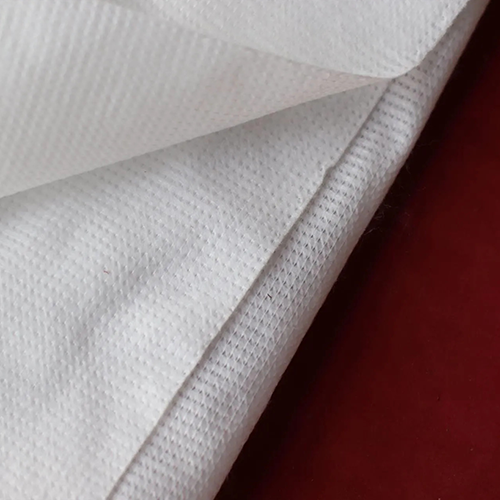
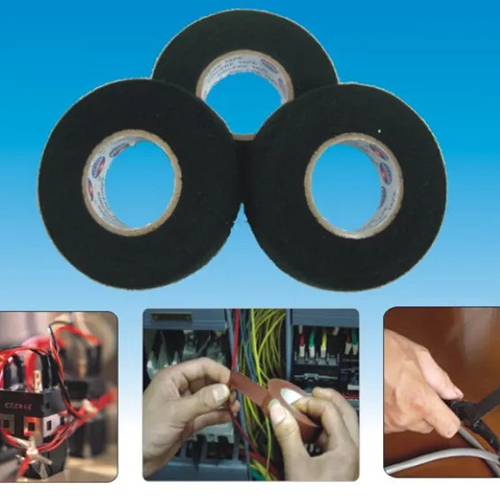
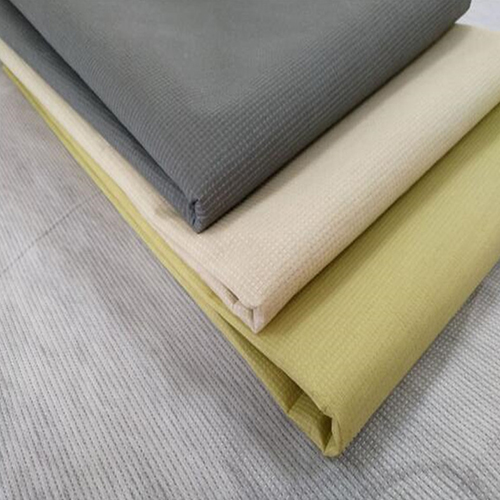
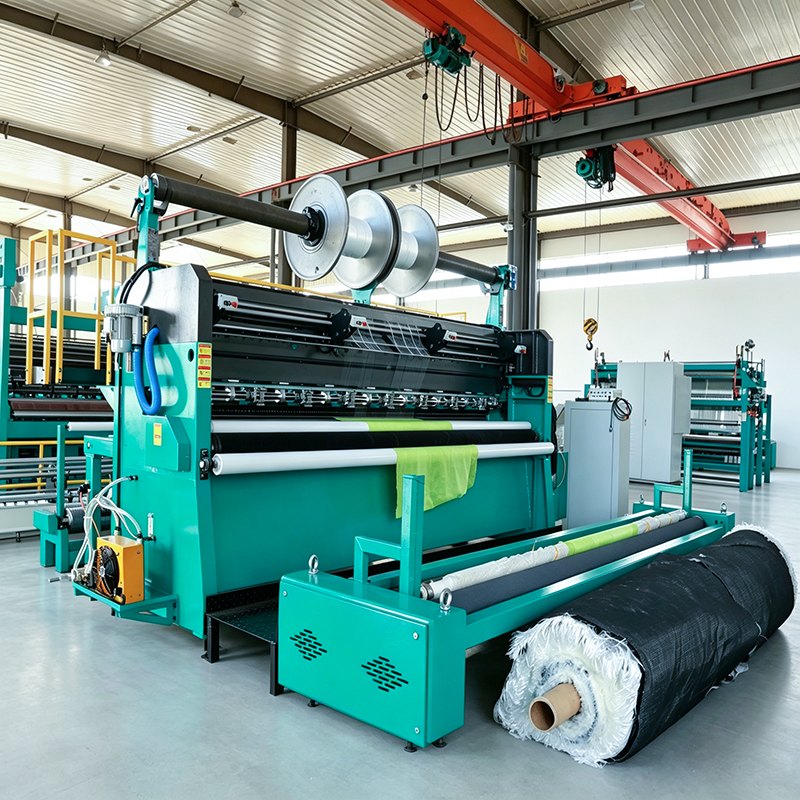
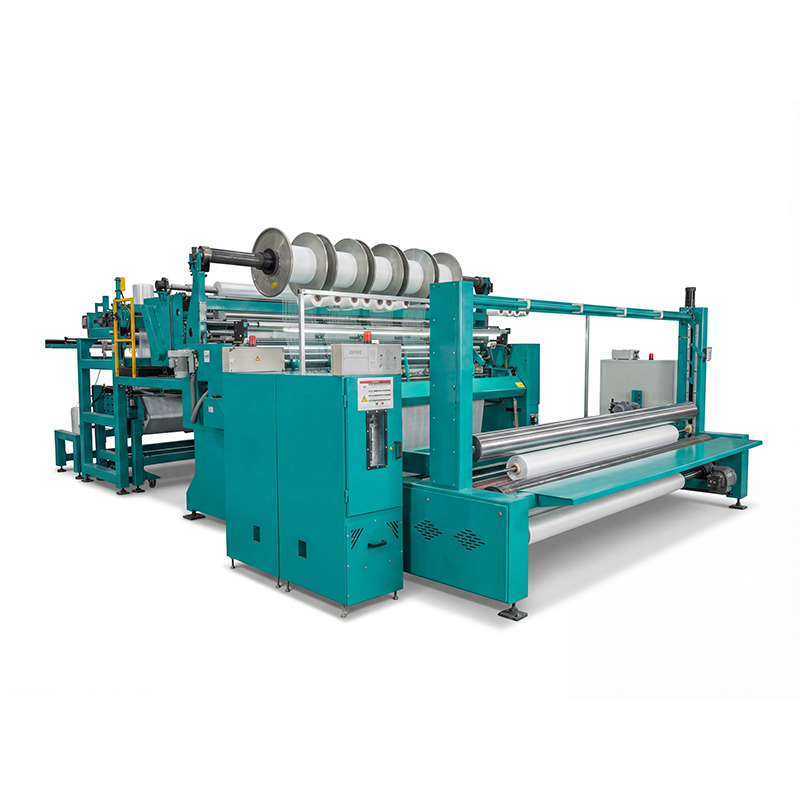
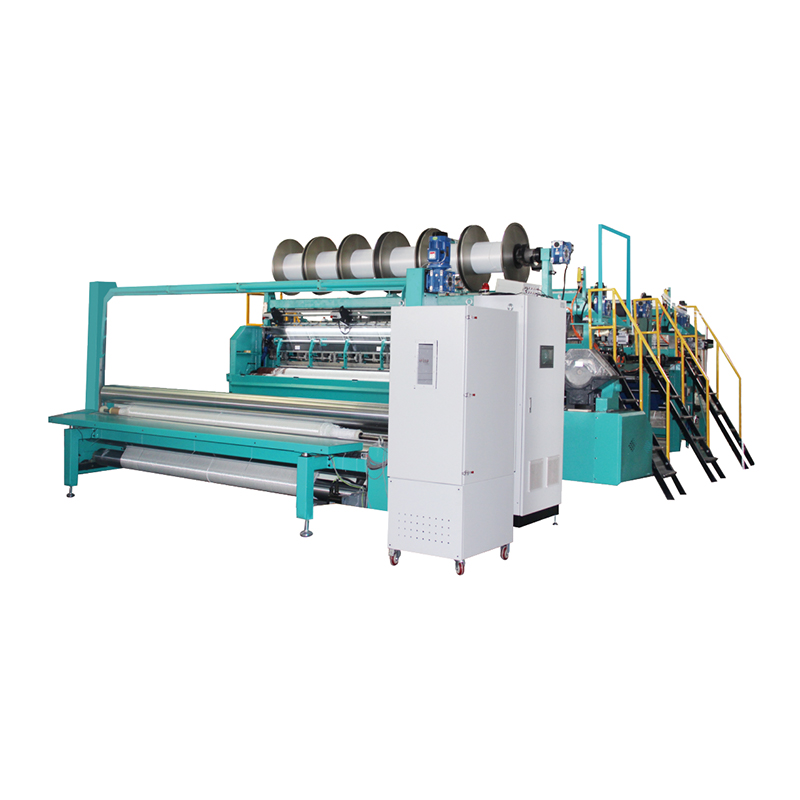
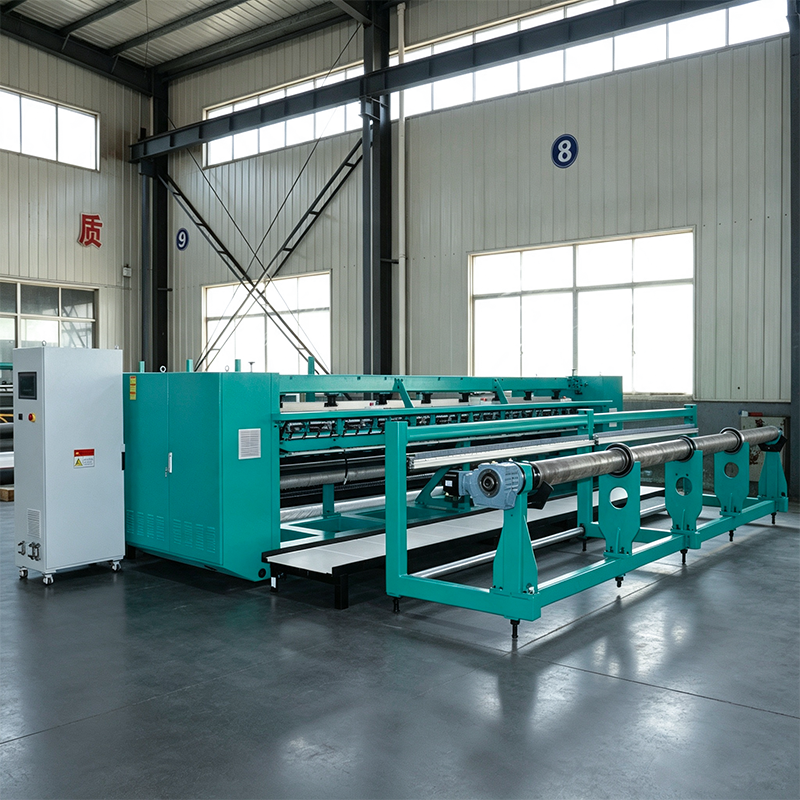
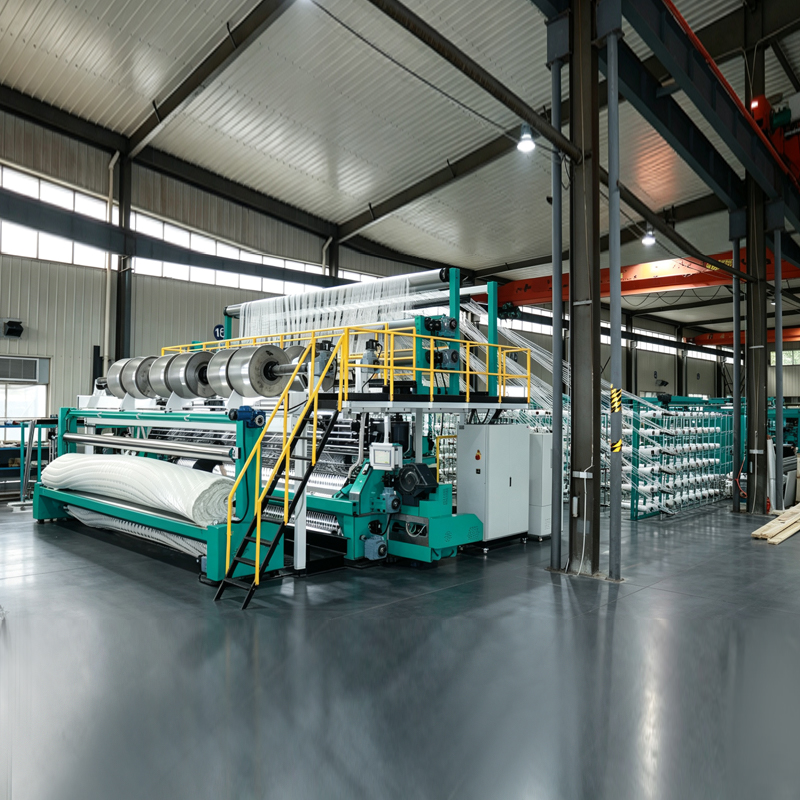
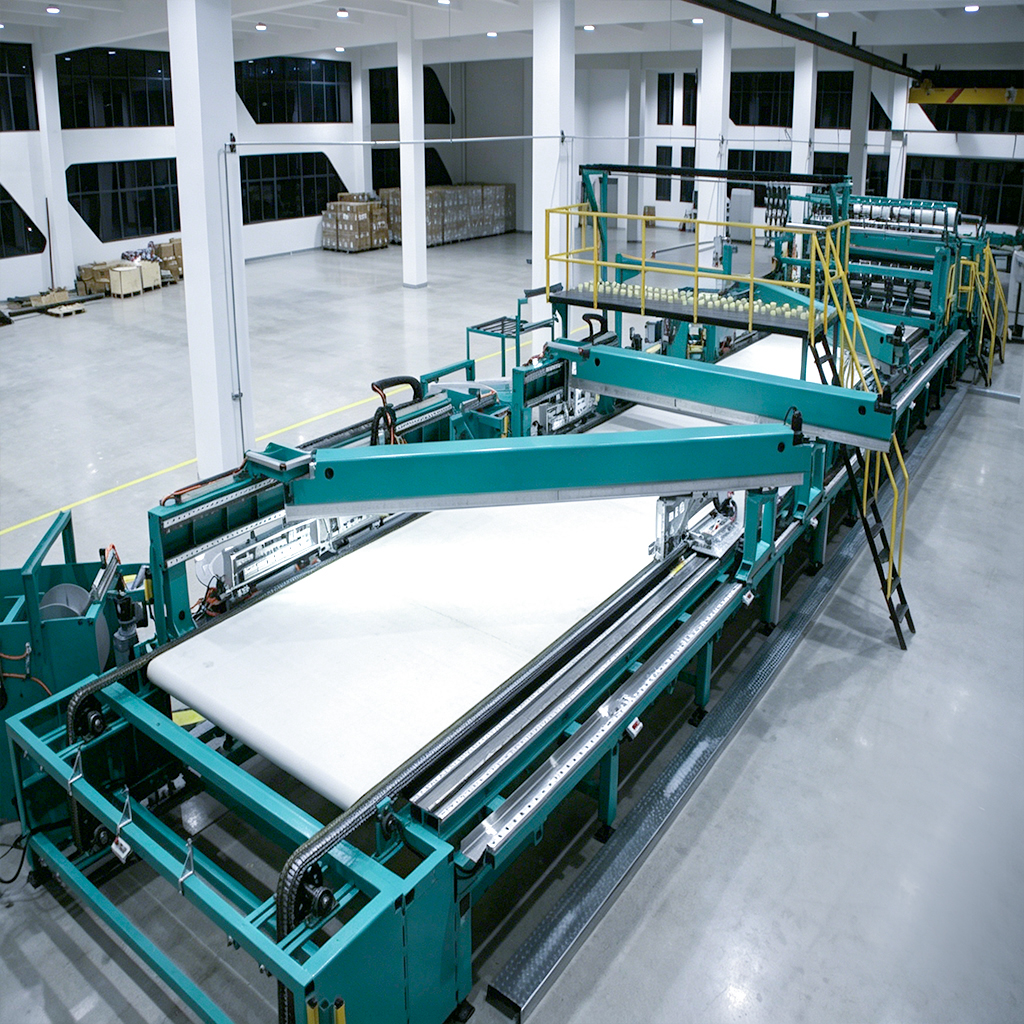
Changzhou Yuanyang Electromechanical Technology Co., Ltd. builds the YHS High Speed Stitch Bonding Machine for mills that need to consolidate loose or pre-stitched chemical fiber webs at production speed. The YHS is the high-output member of our stitch-bonding range, engineered around the Malimo/Maliwatt stitch-bonding principle and configured for continuous operation on shoe material, wire harness tape, curtain fabric, home textile nonwoven, waterproof membrane and similar roll goods.
As a warp knitting machinery manufacturer based in Jiangsu, China, we supply the YHS together with the supporting stitch-bonding and warp knitting equipment that surrounds it on a production floor, and we configure each machine against the fiber, fabric weight and daily output target of the project.
What the YHS Machine Does
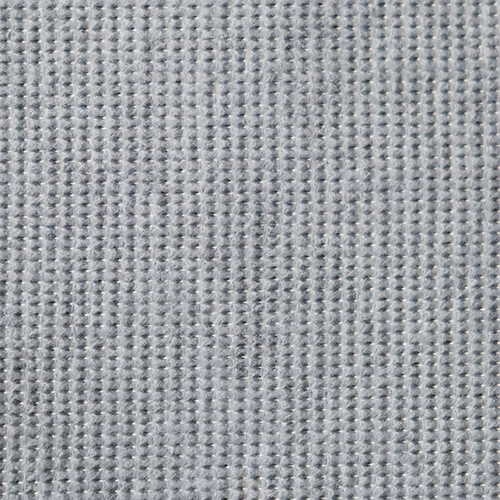
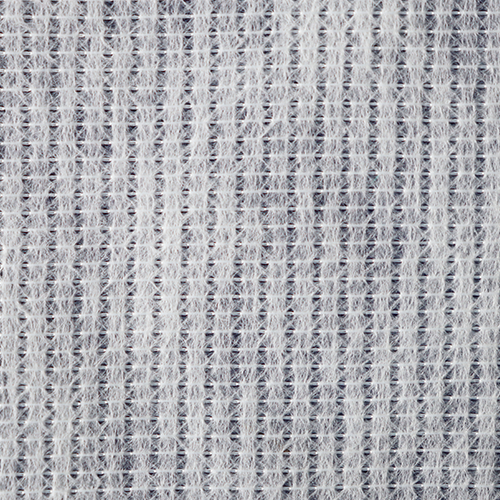
Stitch bonding joins a fiber web by looping yarn through it rather than by chemical binder or thermal calendar. The YHS feeds the web into the stitching zone, where compound needles and guide bars form a stitch structure that locks the fibers in place. Because the web is mechanically bonded, the finished fabric keeps the drape and hand of the original fiber while gaining tensile strength, dimensional stability and resistance to fiber migration.
The machine handles both loose webs straight from the card or cross-lapper and pre-stitched webs that need a second consolidation pass. That flexibility is why the same platform appears in shoe material lines, cable harness tape production and home textile finishing.
Core Specifications
| Parameter |
Value |
Notes |
| Machine speed |
50–2000 r/min |
Speed is set against web weight and stitch density |
| Working width |
4400 mm (173 in) |
Standard working width for the YHS platform |
| Applicable fibers |
Chemical fibers |
Polyester, polyamide, polypropylene and blends |
| Reference output |
7500 m²/day |
Shoe material at 150 g; actual output varies with fabric construction |
| Bonding principle |
Malimo / Maliwatt type |
Stitch bonding of loose or pre-stitched webs |
The 7500 m²/day figure is a reference point for a defined shoe-material construction. Real throughput moves with web weight, stitch length, yarn count and the number of guide bars in use, so we calculate the working point for each project rather than quoting a single headline number.
Application Fit
Shoe Material
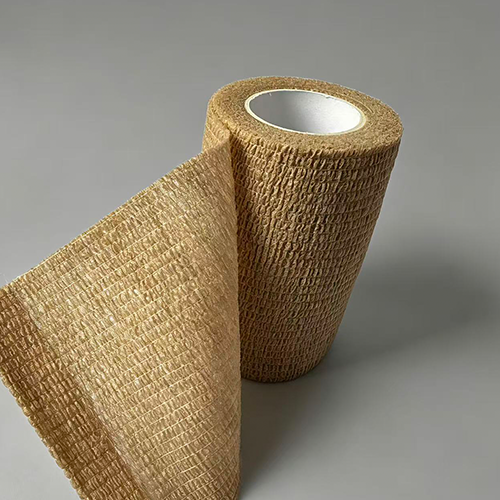
Stitch-bonded reinforcement layers and lining substrates where consistent weight per square metre and edge stability matter.
Wire Harness Tape
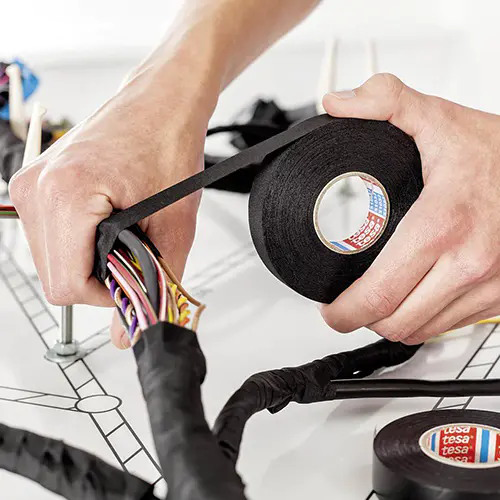
Nonwoven base fabric for automotive harness wrapping, requiring clean slit edges and controlled tensile behaviour.
Curtain and Home Textile
Lixin fabric, curtain fabric and decorative stitch-bonded nonwovens where pattern definition and hand feel drive the specification.
Waterproof Membrane
Carrier and reinforcement webs bonded without thermal or chemical treatment that would affect membrane performance.
Where the YHS Sits in Our Range
We build several stitch-bonding platforms because web weight, fiber type and output target pull the specification in different directions. The YHS is the high-speed option for chemical fiber webs; the other platforms cover different material families and bonding duties.
The full Machine for Chemical Fiber Textile range covers stitch bonding, biaxial and multiaxial warp knitting, web laying and powder scattering, so a line can be assembled from platforms that share service and spare-part logic.
Configuration Options
- Working width and layout — the 4400 mm standard width can be reviewed against your existing web-forming and winding equipment, with structure and layout adjustments where the workshop demands them.
- Guide bar and needle configuration — the stitch structure is defined by the guide bar arrangement, which sets the pattern, stitch density and the mechanical properties of the finished fabric.
- Yarn path and tension control — warp beams, creel arrangement and tensioning are matched to the yarn count and elasticity of the fiber being processed.
- Drive and control — variable speed drive with the 50–2000 r/min range, plus the operator interface and line signals needed to integrate with upstream carding or cross-lapping and downstream winding.
- Fabric take-off and winding — batching or winding configuration selected against roll diameter, fabric weight and downstream converting equipment.
- Colour and guarding — machine colour and guarding arrangements adapted to plant standards and operator safety requirements.
Materials and Process Boundaries
The YHS is specified for chemical fiber webs. Polyester, polyamide and polypropylene webs are the common inputs, and the machine also accepts pre-stitched webs that need a second bonding pass. Web weight, fiber denier, fiber length and the presence of blends all influence stitch density and running speed.
Where a project involves glass fiber, carbon fiber or chopped-fiber reinforcement, we route the specification to the appropriate platform rather than forcing the YHS beyond its material envelope. That decision is made during configuration, not after the machine is on the floor.
Quality Control and Pre-Delivery Verification
Yuanyang operates a 12,000 m² production base with standardized workshops, dedicated customization zones and design trial-production workstations. Component procurement, machining, assembly, testing and debugging are controlled stage by stage, and every machine is tested before it leaves the factory.
- Assembly and running verification on the completed machine before shipment
- Stitch formation and fabric sampling checks against the agreed construction
- Speed and tension behaviour confirmed across the working range
- Customer inspection supported at the factory before dispatch
Installation, Commissioning and Training
Once the machine arrives, our engineers attend the customer's plant for on-site installation, commissioning and training until the line runs to the agreed specification. Training covers knitter operation, maintainer routines and workshop management topics such as quality control, production planning and process parameters.
Hands-on training at our fabrication workshop is also available for operators and maintenance staff, with participants joining the installation process and working in the production hall. We assist customers in compiling quality system documentation and provide long-term support for problems that arise during production.
Maintenance and Serviceability
- Needle, sinker and guide bar wear checks at defined intervals
- Yarn tension and stitch density verification after any change of fiber or fabric construction
- Lubrication and drive inspection aligned with the operating hours of the line
- Spare-part identification documented at handover so consumables can be planned ahead
Information We Use to Configure Your Solution
A stitch-bonding specification is only as good as the process data behind it. We prepare the configuration and quotation from the following project inputs.
| Input |
What It Determines |
| Fiber type and blend ratio |
Needle selection, yarn path, tension settings |
| Web weight (g/m²) and thickness |
Stitch density, running speed, working point |
| Target fabric construction or sample |
Guide bar arrangement and pattern |
| Required daily output |
Machine speed and line balancing |
| Upstream and downstream equipment |
Interface, layout and material handling |
| Workshop space, power and utilities |
Foundation, installation plan and commissioning schedule |
| Roll diameter and converting method |
Take-off and winding configuration |
Where the fabric is new or the material is difficult to process, we work from drawings or samples, confirm the design, produce trial samples and only then move to production. That sequence keeps the machine specification tied to a verified fabric rather than an assumption.
Frequently Asked Questions
What is the maximum working width of the YHS machine?
The YHS is built with a 4400 mm (173 in) working width as standard. If your web-forming or winding equipment runs a different width, we review the structure and layout during configuration.
What output can I expect in square metres per day?
For shoe material at 150 g, the reference figure is 7500 m² per day. Actual output depends on fabric construction, web weight, stitch density and the speed at which the line runs stably, so we calculate the figure against your specific fabric.
Can the YHS process pre-stitched webs as well as loose webs?
Yes. The machine is designed to stitch-bond loose fiber webs and pre-stitched webs, as well as various materials and base fabrics of different thicknesses and weights.
Which fibers are suitable for this machine?
The YHS is specified for chemical fibers, including polyester, polyamide and polypropylene webs and their blends. Glass fiber, carbon fiber and chopped-fiber reinforcement work is handled by other platforms in our range.
Do you provide installation and operator training?
Our engineers attend the customer's factory for on-site installation, commissioning and training until the equipment runs to specification. We also offer hands-on knitter, maintainer and workshop management training at our fabrication workshop.
How is a non-standard YHS configuration handled?
Customization can involve machine structure and layout redesign, functional module development or integration, adaptation for special materials, and process-oriented optimization for stability and efficiency. We work from your drawings or samples, confirm the design, produce trial samples and proceed to production after your approval.


 English
 中文简体
中文简体 русский
 Français
 Español
 Deutsch