

 English
 中文简体
中文简体 русский
 Français
 Español
 Deutsch
LS Rotary Type Laid Scrim Machine for Lightweight Reinforced Mesh Production
2026-09-27
Content
- 1 Product Overview
- 2 How the Rotary Laying Process Works
- 3 Principal Advantages of the LS Machine
- 4 Advantages Compared with Alternative Scrim Production Approaches
- 5 Application Fields
- 6 Manufacturing Strengths and Engineering Approach
- 7 Machine Configuration Options
- 8 Quality Control and Acceptance Criteria
- 9 Installation, Commissioning, and Training
- 10 Maintenance and Long-Term Reliability
- 11 Information Required for a Technical Proposal
- 12 Commercial and Technical Value for Producers
- 13 Frequently Asked Questions
- 13.1 What materials can the LS Rotary Type Laid Scrim Machine process?
- 13.2 What type of fabric does the machine produce?
- 13.3 What is the standard working width?
- 13.4 What is the reference production output?
- 13.5 How does the rotary type differ from a weft insertion type?
- 13.6 Can the machine be customized?
- 13.7 Can the machine be integrated with a coating or laminating line?
- 13.8 What products can be made with the resulting scrim?
- 13.9 How is the machine tested before shipment?
- 13.10 What support is provided after delivery?
- 13.11 What information should be supplied when requesting a quotation?
- 14 Conclusion
- 15 References
- 16 Product: LS Rotary Type Laid Scrim Machine
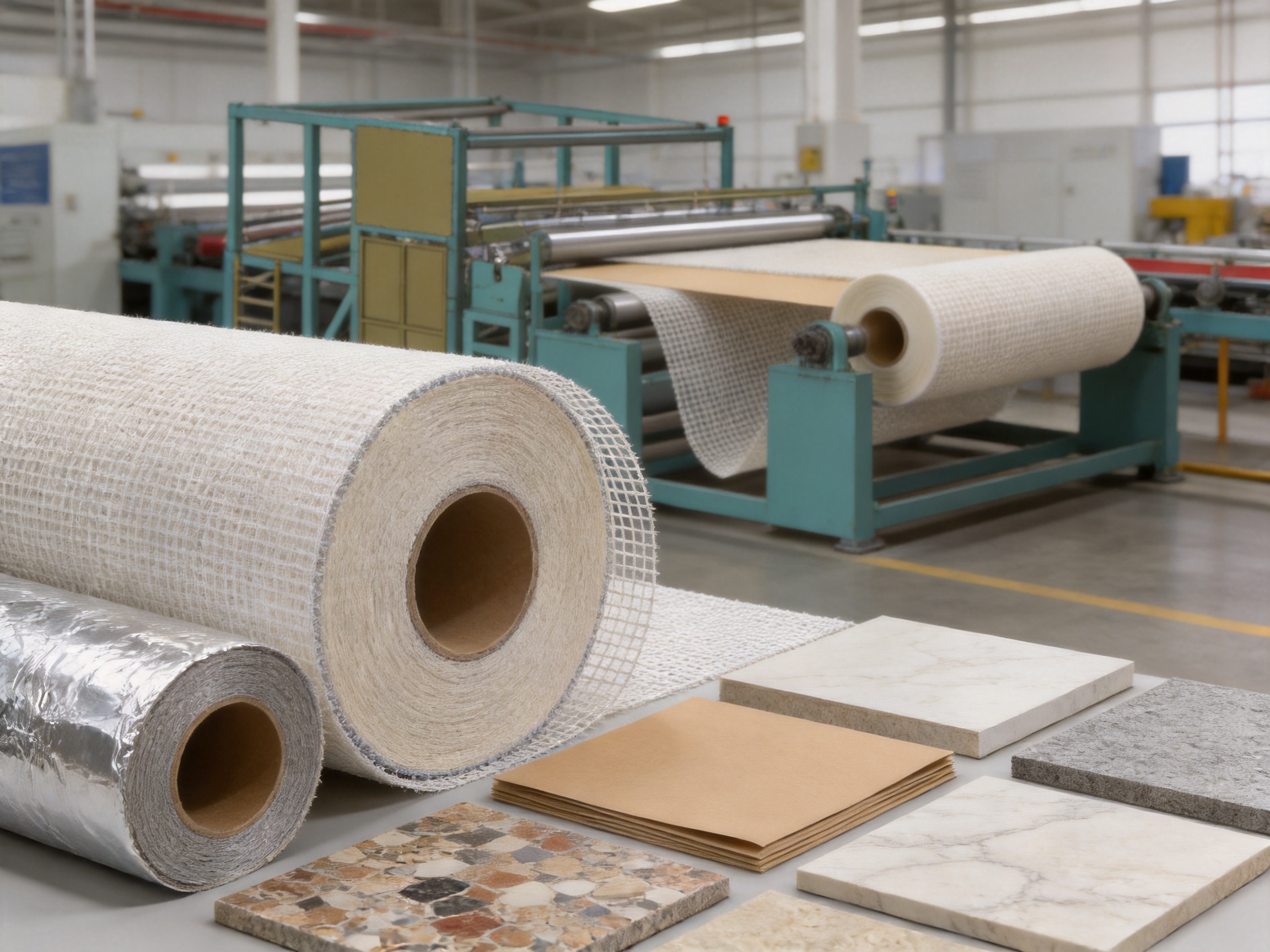
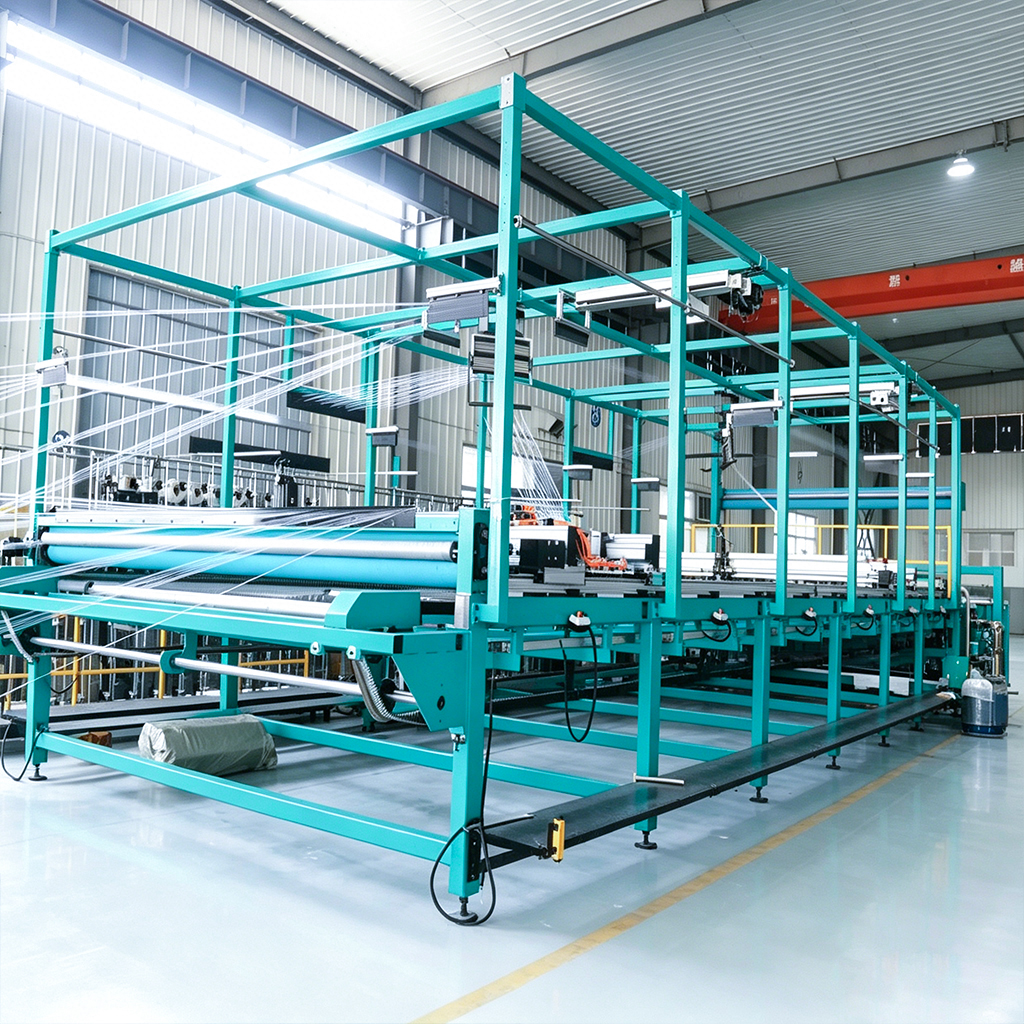
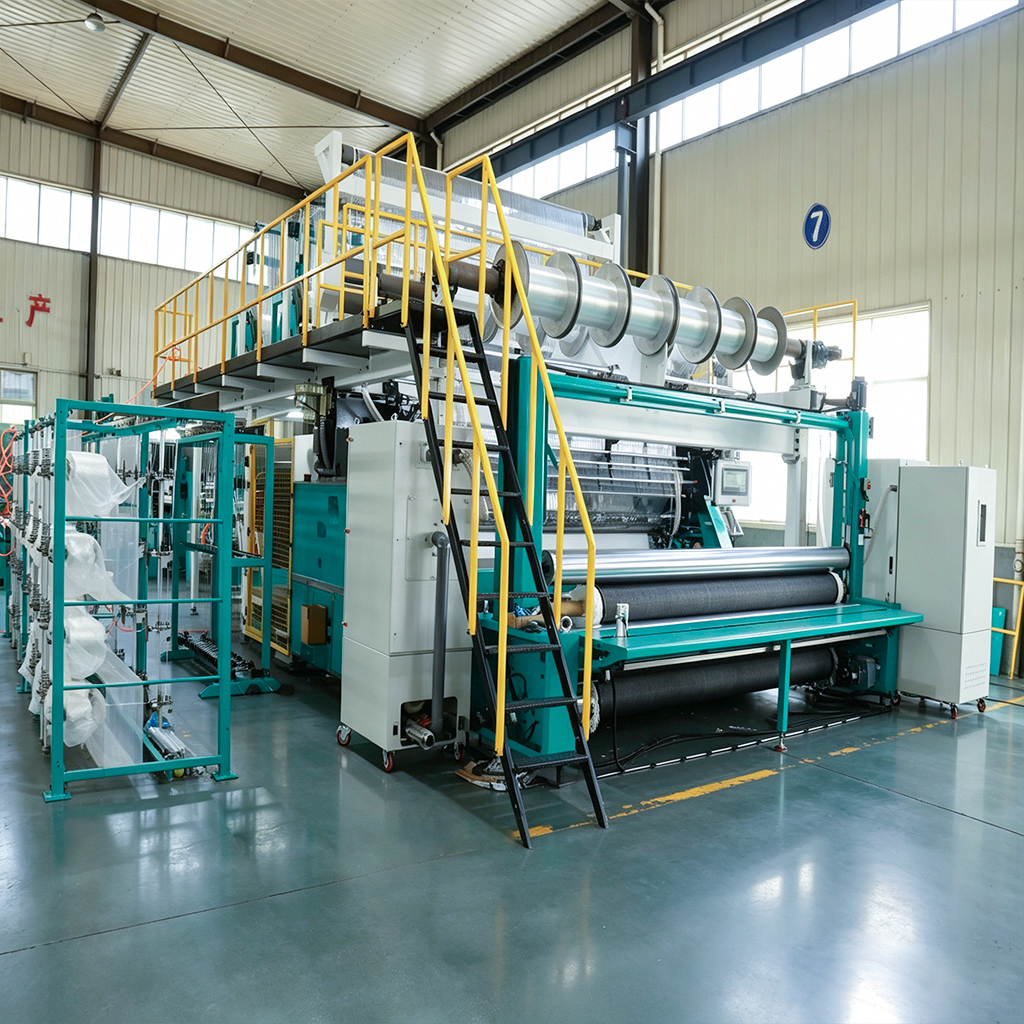
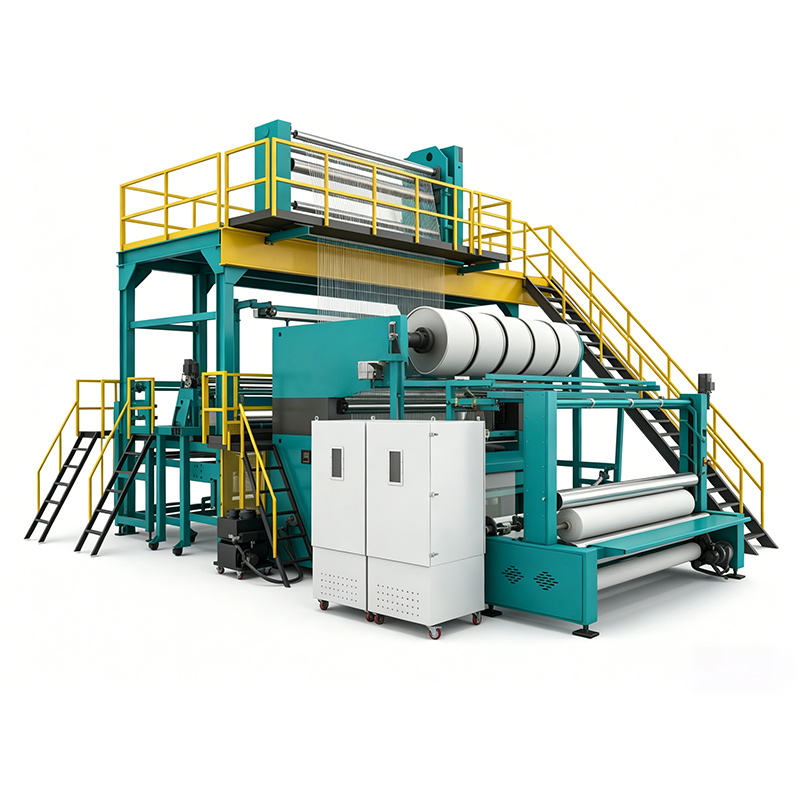
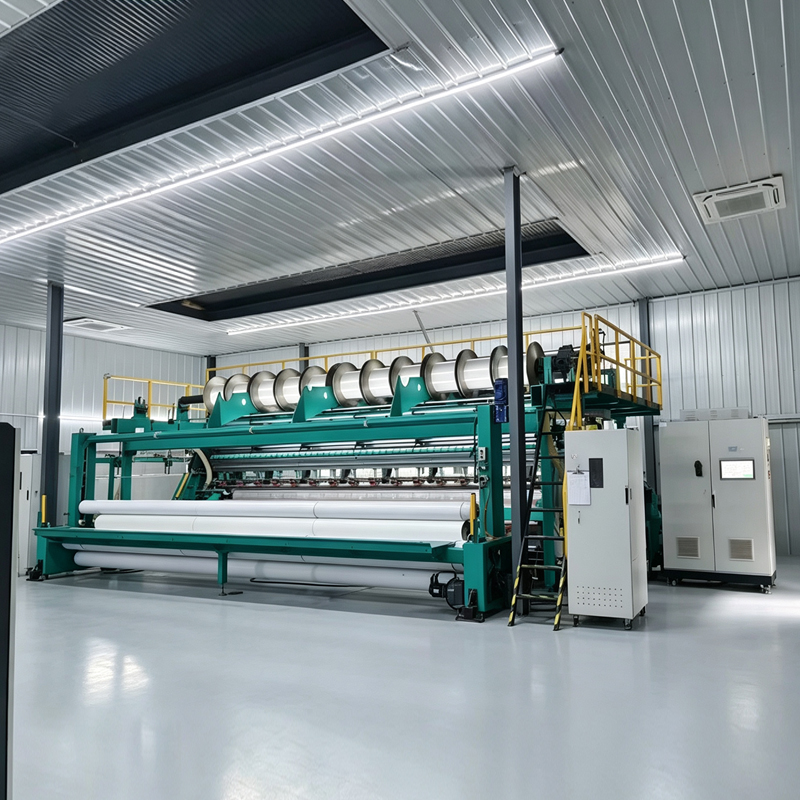
The LS Rotary Type Laid Scrim Machine is designed for manufacturers producing lightweight, directionally oriented grid fabrics from glass fiber or polyester yarn. By combining rotary web laying, chemical bonding, and setting in a coordinated production process, the machine forms an open mesh structure in a single forming sequence. It is intended for applications where low fabric weight, accurate yarn positioning, stable mesh geometry, and compatibility with downstream coating or laminating operations are essential.
Laid scrim is used in many reinforcement products that must improve dimensional stability without adding unnecessary thickness or weight. Typical applications include insulation facings, packaging materials, release papers, reinforced aluminum foil, kraft paper, marble backing, mosaic reinforcement, fireproof boards, and other composite or laminated materials. The LS machine is configured around the required fiber type, yarn count, mesh pitch, fabric width, bonding system, roll format, and downstream process.
The equipment is manufactured by Changzhou Yuanyang Electromechanical Technology Co., Ltd., a Chinese textile machinery company specializing in warp knitting equipment, stitch-bonding machines, biaxial and multiaxial warp knitting machines, web laying systems, and customized textile production equipment. Its production capabilities support projects requiring non-standard configurations, special materials, complex fabric structures, and long-term operating stability.
Product Overview
The LS Rotary Type Laid Scrim Machine uses a rotary laying principle to arrange yarns into a controlled grid structure. The yarns are positioned according to the required orientation and spacing, after which a chemical binder is applied to the crossing points or fabric structure. The scrim is then set so that the yarn arrangement remains stable during winding and subsequent use.
This approach is suitable for lightweight grid fabrics in which the yarns must remain relatively straight and evenly distributed. Instead of relying on a conventional woven structure, the machine creates a laid arrangement that can provide an efficient balance between reinforcement performance, open area, low weight, and production economy.
The machine is particularly useful when the finished scrim will become part of a multilayer product. In these applications, the scrim may be coated, laminated, bonded to foil, integrated with paper, or combined with insulation materials. The open grid allows the reinforcing yarns to contribute strength and dimensional control while permitting the surrounding substrate or coating to pass through and form a stable composite.
The standard reference configuration includes a working width of 2000 millimeters, equivalent to approximately 79 inches. The reference machine speed is 50 to 300 revolutions per minute, while the indicative daily output is approximately 15,000 square meters. Actual production depends on yarn characteristics, mesh geometry, fabric weight, binder chemistry, drying or setting conditions, machine speed, and the operating schedule.
| Item | Reference Specification | Important Consideration |
|---|---|---|
| Machine type | Rotary type laid scrim machine | Designed for lightweight, directionally oriented grid fabric |
| Applicable fibers | Glass fiber and polyester | Creel, yarn path, and binder system are matched to the selected yarn |
| Machine speed | 50–300 r/min | Final speed depends on fabric construction and process stability |
| Working width | 2000 mm, approximately 79 in | Trim allowance and edge requirements are confirmed during configuration |
| Reference daily output | Approximately 15,000 m² | Actual output varies with construction, density, and operating conditions |
| Bonding method | Chemical bonding and setting | Binder selection is related to fiber type and downstream process |
| Forming method | Rotary laying and one-time forming | Yarn placement is controlled by rotary head geometry and machine settings |
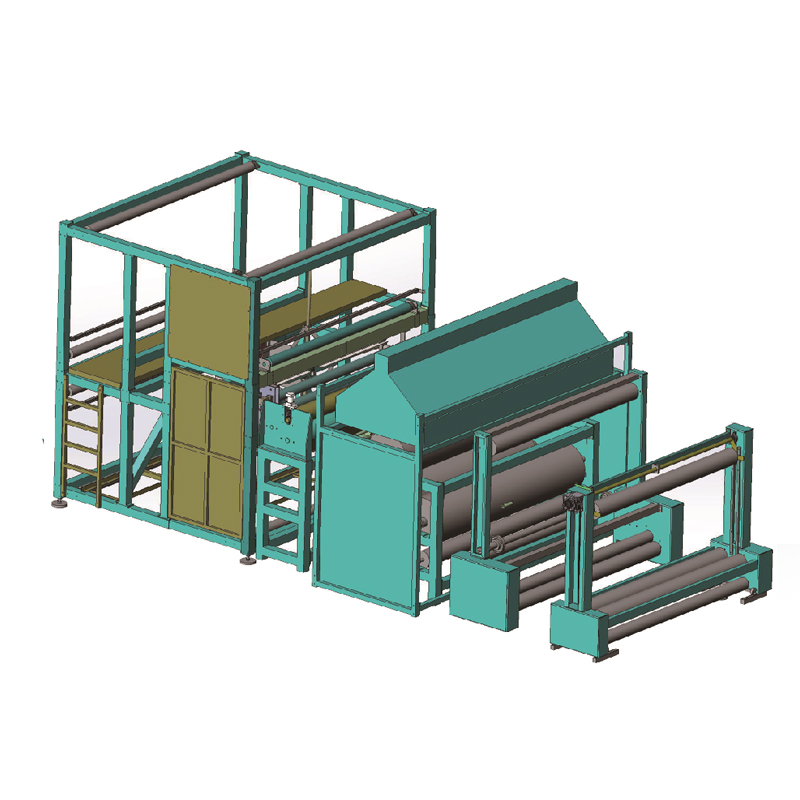
LS Rotary Type Laid Scrim Machine
How the Rotary Laying Process Works
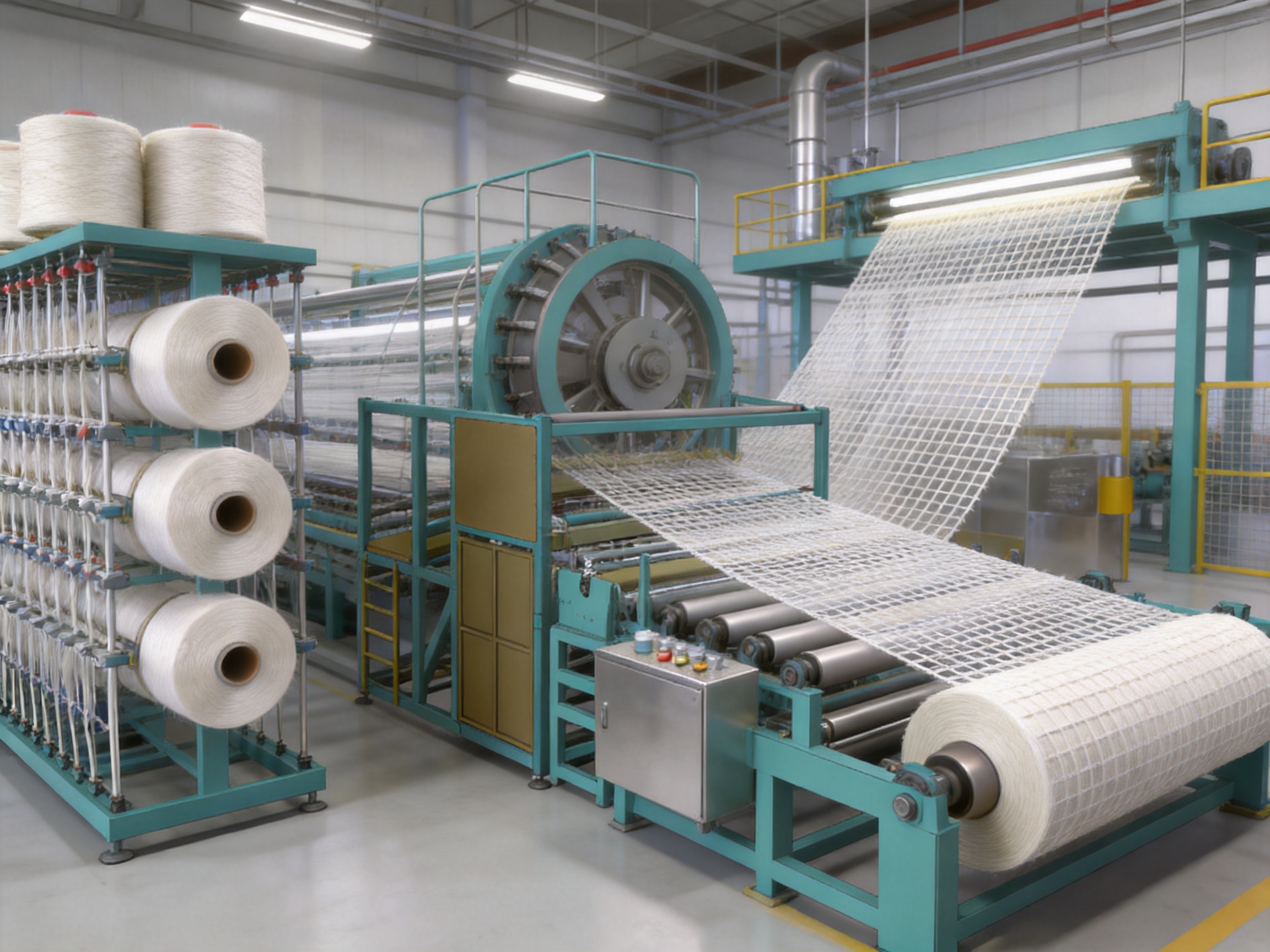
The production process begins with the preparation of glass fiber or polyester yarn packages. The yarn packages are installed on the creel or feeding system according to the required machine layout. The package arrangement, tension control, and yarn path are important because the quality of the final scrim depends on consistent delivery to the laying section.
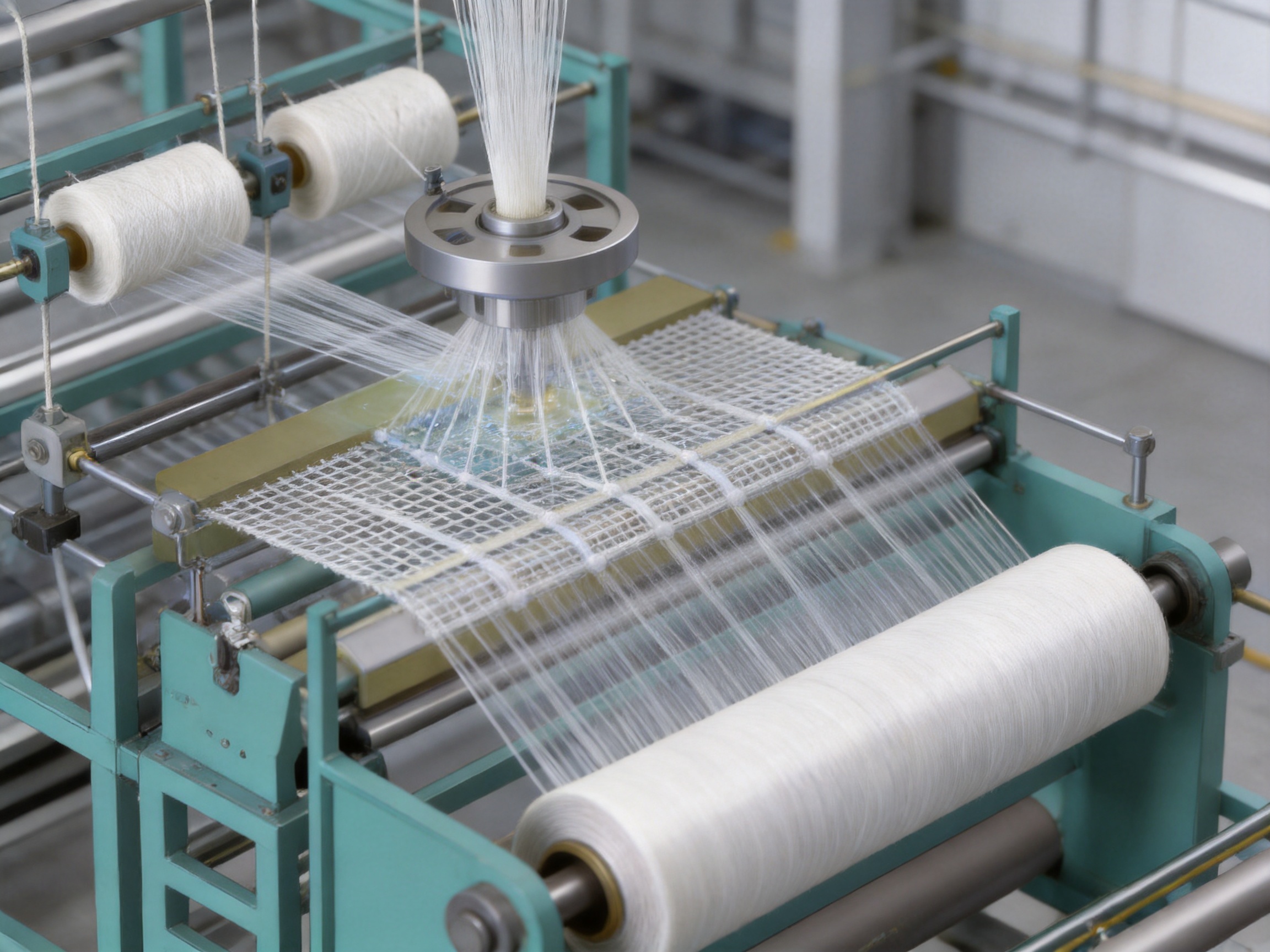
From the creel, the yarns move through guides and tension-control components before reaching the rotary laying mechanism. The rotary head distributes the yarns into the desired directional arrangement. Depending on the fabric design, yarn spacing and orientation can be established to produce the required grid pitch and reinforcement pattern.
After the yarns are laid, a chemical bonding system fixes the intersections and stabilizes the grid. The binder application system must deliver a controlled amount of chemical material. Excessive binder can increase fabric weight, affect flexibility, or interfere with later lamination. Insufficient binder may reduce node strength and allow yarn movement during handling. For this reason, binder pick-up and setting conditions are treated as important configuration factors.
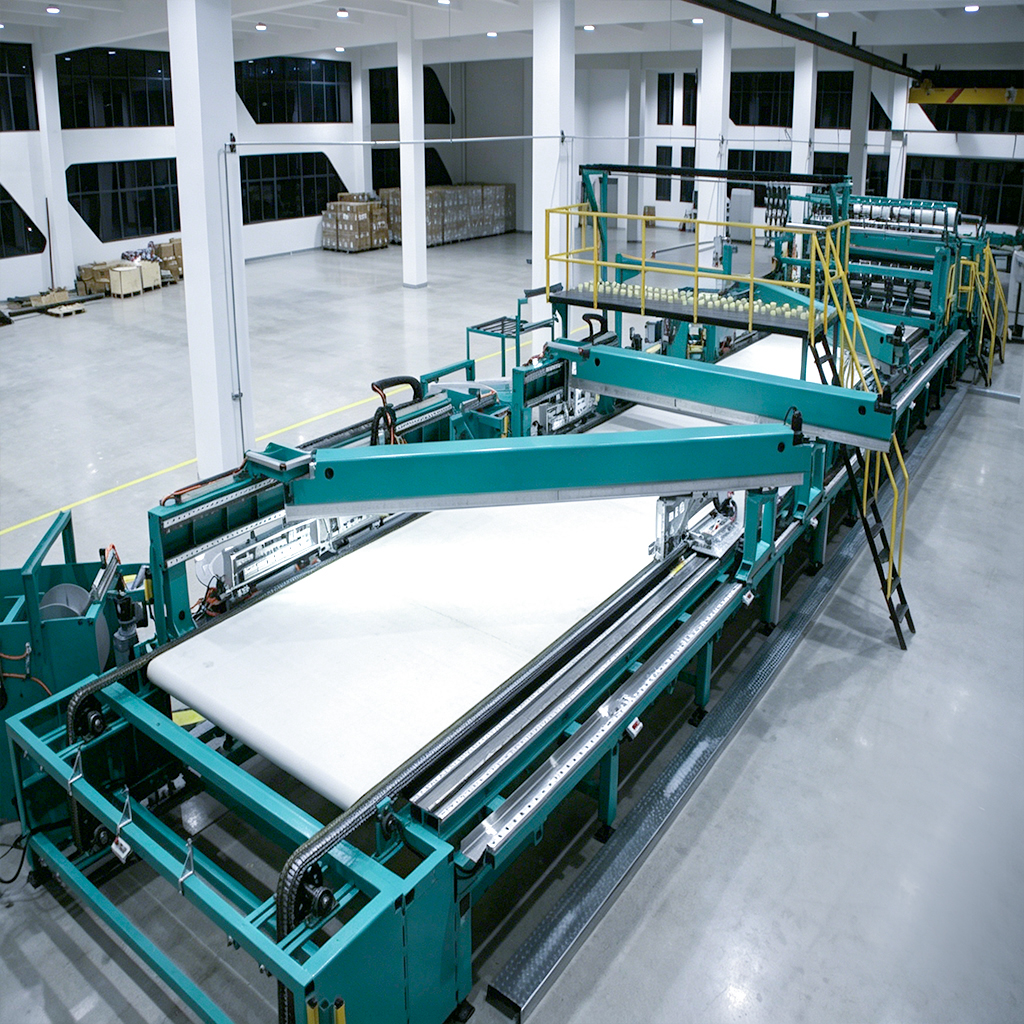
The formed and bonded scrim is guided toward the take-off and winding section. Tension must remain balanced throughout this stage. A stable winding system helps prevent telescoping, loose edges, wrinkles, uneven roll density, and distortion of the open grid. The finished roll can then be transferred to an insulation, paper, foil, coating, laminating, or composite production line.
The one-time forming concept can simplify the production chain compared with arrangements that require several independent forming and joining operations. Fewer separate forming steps may reduce handling requirements and help maintain better alignment between the yarn system and the bonding process. The exact benefit depends on the fabric design and the complete line configuration.
Principal Advantages of the LS Machine
Lightweight Reinforcement with Directional Control
A major advantage of the LS machine is its suitability for lightweight scrim. Many reinforcement products do not require a dense textile structure. Instead, they need a controlled network of yarns that improves tensile behavior, dimensional stability, tear resistance, or handling strength while maintaining a low overall weight.
The rotary laying process creates a directional grid rather than a bulky fabric. This enables manufacturers to select yarn spacing and orientation according to the mechanical requirements of the final product. When the reinforcement is embedded in paper, foil, insulation, or another substrate, the scrim can contribute useful strength without unnecessarily increasing material consumption.
Single-Pass Mesh Formation
The machine combines mesh formation with chemical bonding and setting. This integrated approach is valuable for producers seeking a coordinated process in which yarn placement and stabilization occur within one main forming sequence.
Single-pass forming can help reduce intermediate handling. It may also support better control of yarn registration because the grid is formed and stabilized as part of a connected process. In a conventional arrangement using separate equipment for laying, transfer, bonding, and stabilization, each transfer can introduce opportunities for distortion or misalignment. The LS machine is designed to reduce such process complexity where the selected fabric construction is suitable.
Open Grid Structure
The open structure of laid scrim makes it suitable for composite and laminated products. The grid can be integrated into a substrate without creating the dense barrier associated with some conventional textile structures. This is important for applications such as insulation facings, reinforced paper, aluminum foil laminates, and release materials.
An open grid can also help control material usage. Producers can adjust yarn count and spacing to create the necessary reinforcement level while preserving flexibility and maintaining a relatively low basis weight. The final result depends on the chosen yarn and binder system, but the machine provides a platform for this type of engineering.
Compatibility with Glass Fiber and Polyester
The LS model is intended for glass fiber and polyester yarn. These materials are widely used in industrial reinforcement because they provide different combinations of strength, dimensional stability, temperature resistance, chemical behavior, flexibility, and cost.
Glass fiber is commonly selected when higher stiffness, dimensional control, and reinforcement performance are required. Polyester may be selected where flexibility, handling characteristics, and compatibility with a particular coating or laminating process are more important. The machine configuration is adjusted to the selected yarn, including the creel arrangement, yarn guides, tension conditions, binder system, and setting process.
Adaptability to Downstream Lines
Many scrim producers do not sell the laid fabric as an isolated product. The scrim is often sent to a subsequent process where it is coated, laminated, bonded, or combined with another material. The LS machine is therefore treated as the forming section of a wider production line rather than as a standalone unit with no process interfaces.
Drive synchronization, fabric tension, roll dimensions, communication signals, electrical standards, and operator controls can be reviewed during project planning. This approach helps the machine fit into the customer's existing production environment and can reduce difficulties during commissioning.
Reference Production Capacity
The stated reference output of approximately 15,000 square meters per day gives manufacturers an initial basis for capacity planning. However, output is not treated as an absolute value because fabric construction has a direct influence on production performance. Mesh density, yarn count, binder pick-up, drying time, operating speed, roll changes, and shift pattern all affect actual capacity.
By evaluating output together with fabric quality, the manufacturer can avoid a common problem in textile machinery projects: selecting a nominal speed that cannot be maintained while meeting the required mesh regularity and bonding quality. A practical production target should be confirmed through technical discussion and, when necessary, sample or trial production.
Advantages Compared with Alternative Scrim Production Approaches
Different laid scrim machines use different methods to place and stabilize yarns. The LS rotary type is not intended to replace every alternative. Its advantages are most relevant when the product requires a lightweight, open, directionally oriented grid and when the rotary laying principle matches the target construction.
Compared with Conventional Woven Reinforcement
Woven fabrics interlace yarns through a loom process. They can provide excellent fabric integrity, but they may also introduce crimp, additional thickness, and a denser structure than required for some reinforcement applications. A laid scrim machine places the yarns in a grid without requiring the same interlacing arrangement.
For lightweight insulation, paper, foil, and composite reinforcement, a laid structure may provide a more efficient balance between open area and reinforcement. Reduced yarn crimp can also be beneficial when straight yarn alignment is important. The final selection still depends on the mechanical requirements, but the LS machine offers a specialized alternative for applications where a woven construction is unnecessarily heavy or complex.
Compared with Multi-Stage Manual or Semi-Manual Assembly
Manual or semi-manual placement may be suitable for small trials, but it is difficult to maintain consistent yarn spacing and production speed at industrial scale. The LS machine provides a controlled mechanical process for laying, bonding, setting, and winding the scrim.
Automated production supports repeatability across rolls and shifts. It also allows process parameters to be documented and adjusted more systematically. This is particularly important when the customer supplies reinforcement to a downstream manufacturer that expects stable width, grid pitch, basis weight, and roll quality.
Compared with Separate Laying and Bonding Operations
Separate operations can increase the number of transfers and intermediate storage steps. Every transfer requires the fabric to be aligned, tensioned, and protected from contamination or distortion. An integrated machine reduces the need for certain intermediate handling steps and keeps the laying and bonding stages closely coordinated.
The LS design is therefore advantageous for producers who want a compact and logically connected production route. The complete line still requires appropriate chemical application and setting arrangements, but the forming principle is organized around a continuous sequence rather than disconnected operations.
Compared with Other Laid Scrim Machine Principles
The company also supplies other laid scrim and textile machinery, including the LM Weft Insertion Type Laid Scrim Machine. The LS rotary type uses a rotary laying movement, while the LM model uses a different weft insertion principle. Neither machine is universally superior; the appropriate choice depends on mesh design, yarn path, fabric weight, orientation, required output, and downstream processing.
The LS model is especially suited to low-weight, directionally oriented grid fabrics formed through rotary laying. Its value lies in matching the machine principle to the product requirement. During technical discussions, the customer's sample, drawing, yarn information, and process objectives should be reviewed before selecting the final machine configuration.
Application Fields
Insulation Materials
Laid scrim is widely used as reinforcement in insulation products. The grid can help improve handling strength, dimensional stability, and resistance to tearing during installation or conversion. Glass fiber scrim is particularly relevant where the insulation product must retain its shape and withstand handling or temperature-related conditions.
The open structure allows the scrim to be incorporated into facing materials without creating an excessively dense layer. The correct binder and substrate combination must be selected according to the insulation product, coating method, required flexibility, and service environment.
Packaging Materials
Packaging manufacturers use reinforcement scrim when a paper, film, foil, or laminate requires additional tensile or tear resistance. A lightweight grid can increase the structural performance of the packaging material while preserving a relatively low total weight.
The machine's ability to produce controlled mesh geometry allows the scrim to be matched to the packaging design. The required yarn type and grid density depend on whether the final product is intended for heavy-duty wrapping, industrial packaging, protective sheets, or another application.
Release Papers
Release papers and related materials may require reinforcement to improve dimensional stability during coating, winding, storage, or conversion. The scrim can be integrated with the paper structure or used as part of a composite layer.
In this application, roll build and surface regularity are important. Uneven winding, excessive binder, or uncontrolled yarn displacement can influence the performance of the finished release material. A properly configured laying and winding system helps support consistent production.
Reinforced Aluminum Foil
Reinforced aluminum foil is used in insulation, packaging, building materials, and industrial products. The scrim provides a reinforcement layer that can improve resistance to tearing and handling damage while keeping the laminate relatively light.
For foil applications, the scrim must be compatible with the adhesive, coating, temperature, and lamination conditions. The LS machine can be configured to produce the required width and roll format, while the binder system is selected in relation to the downstream bonding process.
Marble and Mosaic Backing
Marble, mosaic, and related stone products may use reinforcement to improve handling and reduce the risk of cracking or separation during processing. Lightweight glass fiber scrim can be incorporated into backing or composite structures to provide additional stability without creating excessive thickness.
The required mesh size and yarn strength depend on the dimensions, weight, and handling conditions of the finished stone product. A technical trial is recommended when the scrim must conform to a particular adhesive or backing material.
Fireproof Boards and Kraft Paper
Fireproof boards and reinforced kraft paper can benefit from a grid layer that helps control tensile behavior and dimensional stability. The appropriate fiber, binder, and setting process must be selected according to the board formulation, paper grade, production temperature, and end-use requirements.
Manufacturing Strengths and Engineering Approach
Changzhou Yuanyang Electromechanical Technology Co., Ltd. combines research and development, manufacturing, sales, installation, and service within its textile machinery business. The company operates in Jiangsu, an important manufacturing region for Chinese textile equipment, and has a production base of more than 12,000 square meters in Danyang.
Its product range includes stitch-bonding machines, biaxial warp knitting machines, multiaxial warp knitting machines, carbon fiber multiaxial warp knitting machines, powder scattering machines, web laying machines, and customized textile equipment. This broader equipment background is relevant to laid scrim projects because the company can evaluate the machine as part of a larger reinforcement or composite textile process.
The engineering team focuses on both standard machine platforms and non-standard configurations. This is important because laid scrim projects often differ in yarn package format, working width, mesh pitch, binder chemistry, roll dimensions, electrical standards, and downstream interfaces. A machine that performs well for one fabric may require significant changes for another fabric, even when the general product category is the same.
Configuration Based on the Working Point
Rather than treating the LS machine as a fixed catalogue product, the configuration is developed around the customer's working point. The working point includes the target fabric construction, yarn behavior, process speed, binder system, required output, and factory conditions.
This method can help avoid over-specification and under-specification. Over-specification may increase investment without improving the final product, while under-specification may lead to unstable running, insufficient bonding, or limited future production capability. A project-specific engineering review helps balance performance, cost, maintainability, and expansion potential.
Component Procurement and Assembly Control
Machine reliability begins with component selection and continues through assembly. The company follows a control process that covers component procurement, manufacturing, machine assembly, debugging, and final testing. Mechanical components, drive systems, control elements, yarn guides, tension devices, bonding units, and winding assemblies must work together as one process.
For a scrim machine, assembly accuracy is especially important around the yarn path and rotary laying head. Small alignment errors can influence spacing, edge quality, yarn tension, and the regularity of the final grid. The machine is therefore tested before dispatch, with attention given to operating behavior as well as individual component function.
Research and Development Capability
The company's research and development team includes engineers with textile machinery experience. Its development work addresses product performance, structural design, non-standard equipment, difficult materials, and complex fabric requirements.
This experience supports projects involving special yarns, unusual mesh designs, or integration with existing production lines. It also provides a foundation for improving machine stability, operating convenience, component accessibility, and long-term production efficiency.
Process Testing Before Delivery
Testing before dispatch is an important part of the manufacturing process. The machine must be checked for drive response, control logic, yarn movement, laying action, bonding operation, winding performance, emergency stop behavior, and other functional requirements.
Where appropriate, acceptance criteria are agreed with the customer in advance. These criteria may include fabric width, mesh regularity, grid pitch, basis weight, bonding quality, roll build, and continuous operating performance. A clear acceptance process gives both parties a practical basis for evaluating the equipment.
Machine Configuration Options
Fiber and Yarn Package
The standard material scope includes glass fiber and polyester. The selected yarn affects the creel arrangement, guide design, tension range, laying behavior, binder compatibility, and winding conditions.
Yarn count, package size, package weight, unwinding behavior, surface treatment, and moisture sensitivity should be reviewed during configuration. Glass fiber may require careful control to reduce abrasion and filament damage, while polyester may have different tension and handling requirements. The machine is configured to reflect these differences.
Mesh Geometry
Mesh geometry includes yarn spacing, grid pitch, orientation, and the relationship between longitudinal and transverse reinforcement. The desired geometry influences the rotary laying head, guide arrangement, control parameters, and production speed.
The customer should provide a target drawing, sample, or technical specification whenever possible. If the design is not yet finalized, the engineering team can propose a starting configuration and refine it through sample development or trial production.
Bonding and Setting
The chemical bonding system is selected according to the fiber, substrate, application, and downstream process. Binder pick-up, viscosity, application method, drying or setting time, and final node strength are interconnected.
A suitable bonding process should stabilize the intersections without making the scrim excessively rigid or heavy. The binder must also remain compatible with later coating, laminating, paper bonding, or foil bonding operations. Trial production may be necessary when the chemical system is proprietary or when the finished composite has demanding performance requirements.
Winding and Take-Off
The winding section influences roll quality and downstream productivity. Important variables include roll width, core size, fabric tension, edge alignment, winding density, roll diameter, and changeover requirements.
A stable take-off system helps preserve the grid structure after bonding. It also supports smooth transfer of the finished roll to the next process. If the scrim is supplied to a high-speed coating or laminating line, roll consistency becomes particularly important because poor roll build can cause tracking problems and production interruptions.
Electrical and Control Standards
Electrical standards, supply voltage, frequency, control language, operator access levels, and communication interfaces should be defined before manufacturing. These details affect the control cabinet, sensors, drive system, safety circuits, and connection points.
The machine can be planned for coordination with upstream creels and downstream coating or laminating equipment. Signal exchange may include running status, speed references, fault signals, emergency stop conditions, and production synchronization requirements.
Quality Control and Acceptance Criteria
Quality control for a laid scrim machine should address both mechanical performance and fabric performance. A machine may run without visible faults while still producing inconsistent mesh spacing, uneven bonding, or poor roll edges. For this reason, acceptance should be based on agreed production results rather than only on empty-machine operation.
| Inspection Area | Typical Verification | Why It Matters |
|---|---|---|
| Yarn path | Straightness, tension stability, absence of unnecessary abrasion | Protects yarn integrity and supports uniform laying |
| Grid formation | Spacing, orientation, pitch, and missing-end control | Determines reinforcement consistency across the width |
| Bonding | Node formation, binder distribution, and setting condition | Prevents yarn displacement and supports final product strength |
| Fabric width | Usable width, edge condition, and trim allowance | Ensures compatibility with downstream production |
| Winding | Tension, roll hardness, edge alignment, and roll diameter | Improves storage, transport, and conversion performance |
| Machine safety | Guards, emergency stops, access points, and stop logic | Supports safe operation, cleaning, and maintenance |
| Control system | Drive response, parameter stability, alarms, and operator interface | Supports repeatable operation and troubleshooting |
Yarn path inspection verifies that the yarns travel through the machine without unnecessary crossing, snagging, or uncontrolled tension changes. The rotary laying section is checked for correct spacing and stable orientation. The bonding system is evaluated for consistent node formation and adequate setting.
Finished rolls should be inspected for width, edge condition, winding tightness, wrinkles, telescoping, and visible grid defects. If the customer has defined a fabric sample or drawing, the acceptance run should compare the machine output against that reference.
Installation, Commissioning, and Training
Installation is an important stage because the LS machine must be aligned, connected, and adjusted within the customer's factory environment. Floor conditions, line layout, utility availability, electrical supply, ventilation, chemical handling arrangements, and access for maintenance should be reviewed before delivery.
After installation, the machine is commissioned through a sequence of mechanical, electrical, control, and process checks. The engineer verifies the yarn path, drive direction, rotary laying motion, binder application, setting conditions, winding operation, safety functions, and operator interface.
Operator training covers threading, yarn package installation, start-up and shutdown procedures, speed adjustment, tension control, binder operation, roll change, cleaning, alarm handling, and routine inspection. Maintainer training can include lubrication, wear-part identification, sensor checks, drive troubleshooting, and replacement procedures.
Training may also address production planning and quality control. Operators should understand how changes in yarn count, mesh pitch, binder pick-up, and speed influence the finished scrim. This knowledge allows the production team to make controlled adjustments instead of treating every fabric defect as a mechanical failure.
Maintenance and Long-Term Reliability
Regular maintenance helps preserve laying accuracy and production stability. The maintenance schedule should be adapted to the shift pattern, yarn type, binder chemistry, machine speed, and operating environment.
The rotary laying head deserves particular attention because it controls the yarn placement process. Guides, tension components, bearings, drive elements, and alignment points should be inspected according to the recommended interval. Accumulated binder or fiber contamination can affect movement and should be removed using suitable cleaning methods.
The binder application unit should be checked for consistent delivery, blockage, leakage, and chemical buildup. The setting or drying section should be inspected for temperature or process uniformity where applicable. The winding section should be reviewed for tension response, edge control, core alignment, and roll hardness.
Electrical maintenance includes checking sensors, cables, control cabinets, drive systems, safety circuits, and communication connections. Keeping a record of alarms, replaced parts, and process changes can help identify recurring problems before they lead to extended downtime.
Yuanyang supports customers with spare parts identification, wear-part replacement guidance, troubleshooting, and long-term production questions. The objective is to help the machine remain serviceable throughout its operating life rather than treating delivery as the end of the supplier relationship.
Information Required for a Technical Proposal
A firm machine configuration and quotation require more information than a general product name. The following project data helps the engineering team select the appropriate creel, laying, bonding, setting, winding, control, and interface arrangements.
- Fiber type, including glass fiber or polyester.
- Yarn count, yarn structure, and package format.
- Target fabric weight and acceptable tolerance.
- Grid pitch, yarn spacing, and directional orientation.
- Required working width and finished roll width.
- Core size, roll diameter, and winding requirements.
- Binder type, viscosity, application method, and setting conditions.
- Downstream coating, laminating, foil bonding, paper, or insulation process.
- Target speed, daily output, and shift pattern.
- Factory floor space, line direction, and available utilities.
- Electrical supply, control standard, communication protocol, and operator language.
- Required sample, drawing, trial fabric, or acceptance standard.
When the product is still under development, the customer may provide a target application rather than a complete fabric specification. In that case, the supplier can help establish a preliminary machine configuration. Sample production and trial evaluation can then be used to refine the mesh, binder, speed, and winding conditions.
Commercial and Technical Value for Producers
The value of the LS Rotary Type Laid Scrim Machine is not limited to its nominal speed or working width. Its broader value comes from the combination of a suitable forming principle, integrated bonding, adaptable configuration, line integration, and technical support.
For manufacturers serving several markets, the ability to process both glass fiber and polyester can provide useful production flexibility. The same basic machine platform can be configured for different scrim constructions, subject to the limits of the yarn, binder, and process design.
For producers supplying industrial customers, repeatability is equally important. Stable grid spacing, consistent bonding, reliable winding, and documented acceptance criteria can help reduce quality variation between rolls. This supports more predictable downstream conversion and can reduce material waste.
The machine can also support product development. A producer may begin with one lightweight scrim specification and later develop variations for insulation, foil, packaging, paper, or board reinforcement. The final capability depends on the machine configuration, but the project-based engineering approach gives the producer a basis for future adaptation.
Frequently Asked Questions
What materials can the LS Rotary Type Laid Scrim Machine process?
The standard material scope includes glass fiber and polyester yarn. The final configuration depends on yarn count, package format, tension behavior, binder compatibility, and the required scrim structure. Material trials may be recommended when the yarn has unusual surface treatment or handling characteristics.
What type of fabric does the machine produce?
The machine produces lightweight, open, directionally oriented grid fabric. The yarns are laid according to the required spacing and orientation, chemically bonded, and set so that the grid remains stable for winding and downstream conversion.
What is the standard working width?
The reference working width is 2000 millimeters, or approximately 79 inches. The usable finished width, trim allowance, edge quality, and roll dimensions should be confirmed during project engineering.
What is the reference production output?
The reference daily output is approximately 15,000 square meters. This figure is for planning reference only. Actual output depends on mesh density, yarn count, fabric weight, binder pick-up, setting conditions, operating speed, roll changes, and production schedule.
How does the rotary type differ from a weft insertion type?
The rotary type uses a rotary laying motion to form a lightweight, directionally oriented grid in a one-time forming process. A weft insertion type uses a different yarn placement principle and may be better suited to other scrim constructions. The appropriate machine should be selected according to the fabric design, yarn arrangement, output target, and downstream process.
Can the machine be customized?
Yes. Configuration may cover machine layout, working width, yarn package arrangement, functional modules, bonding conditions, winding format, control system, electrical standard, special materials, and downstream line interfaces. The supplier can work from drawings, samples, technical specifications, or application requirements.
Can the machine be integrated with a coating or laminating line?
Yes. The LS machine is commonly treated as the forming section of a broader scrim production line. Speed coordination, tension control, roll format, signal exchange, operator controls, and safety interfaces can be reviewed during project planning.
What products can be made with the resulting scrim?
Typical applications include insulation materials, packaging reinforcement, release papers, reinforced aluminum foil, marble and mosaic backing, fireproof boards, and kraft paper reinforcement. The appropriate scrim specification depends on the final product and its mechanical, chemical, and thermal requirements.
How is the machine tested before shipment?
The machine is checked through component inspection, assembly verification, debugging, and operational testing. Tests may cover drive response, yarn path, laying accuracy, bonding operation, winding, control functions, guarding, emergency stops, and agreed fabric acceptance criteria.
What support is provided after delivery?
Support includes installation, commissioning, operator training, maintainer training, process adjustment, spare parts identification, troubleshooting, and long-term production assistance. The supplier's engineer can attend the customer's factory to help bring the line to the agreed operating condition.
What information should be supplied when requesting a quotation?
The most useful information includes fiber type, yarn count, package format, target mesh weight, grid pitch, working width, roll format, binder system, downstream process, factory layout, utilities, electrical standard, target output, and any available sample or drawing.
Conclusion
The LS Rotary Type Laid Scrim Machine provides a specialized solution for manufacturers that need lightweight, open, and directionally oriented reinforcement mesh. Its rotary laying principle, chemical bonding process, and one-time forming approach are suited to glass fiber and polyester scrim used in insulation, packaging, paper, foil, board, stone, and composite applications.
Compared with heavier woven structures or disconnected multi-stage forming methods, the machine can offer advantages in lightweight construction, open grid formation, process integration, and directional yarn control. These advantages are most meaningful when the machine is correctly matched to the yarn, mesh design, binder system, roll format, and downstream production line.
Changzhou Yuanyang Electromechanical Technology Co., Ltd. supports the product through project-based engineering, controlled manufacturing, pre-delivery testing, installation, training, and after-sales service. Its broader experience with warp knitting, stitch-bonding, multiaxial reinforcement, and web laying equipment provides a foundation for developing coordinated textile machinery solutions rather than supplying an isolated machine alone.
For producers planning a new scrim line or upgrading an existing reinforcement process, the most reliable approach is to begin with the target fabric and application. Once the fiber, yarn, mesh, binder, output, width, and line interfaces are defined, the LS machine can be configured around the actual production requirements and evaluated through agreed technical and acceptance criteria.
References
1. Changzhou Yuanyang Electromechanical Technology Co., Ltd., product information for the LS Rotary Type Laid Scrim Machine.
2. Changzhou Yuanyang Electromechanical Technology Co., Ltd., technical information on laid scrim, web laying, stitch-bonding, and warp knitting equipment.
3. Industrial textile machinery engineering principles for yarn tension control, web formation, chemical bonding, drying, and roll winding.
4. General manufacturing practices for composite reinforcement fabrics used in insulation, packaging, paper, aluminum foil, and board applications.
5. Technical guidance on textile machinery installation, commissioning, operator training, preventive maintenance, and production acceptance.
Product: LS Rotary Type Laid Scrim Machine

News
-
Which Machine Category Matches Each Technical Fiber and Fabric Goal A warp knitting machine is the primary production platform for technical fiber textiles across fiberglass, chemical fiber, and carbo...
READ MORE -
Have you ever wondered why some weaving looms operate flawlessly for decades, while others seem to suffer from constant breakdowns and quality issues? The secret isn’t luck; it’s a disciplined and str...
READ MORE -
Warp knitting is a combination of weaving methods in which the yarns meander along the length of the fabric; that is, they follow adjacent columns or wales, rather than a single row or course. For com...
READ MORE -
Luxurious plush fabrics have become synonymous with comfort and indulgence. Behind the scenes, terry warp knitting machines play a crucial role in bringing these fabrics to life. From the selection of...
READ MORE
-
Contact Info.
+86-198 5534 1617
+86-134 0158 3002yuanyang@yywarpknitting.com 699#, Shengzhi West Rd, Lvcheng Town, Danyang City, Zhenjiang City, Jiangsu Province, China
-
QR Code
-
Quick Links
Home About Products Manufacturing Customization News Contact -
Product List
Machine for Chemical Fiber Textile Machine for Fiberglass Textile Machine for Carbon Fiber Textile -
About Us
Company Profile Factory Gallery Value-added Service
Copyright © 2026 Changzhou Yuanyang Electromechanical Technology Co., Ltd. All Rights Reserved.
Custom Warp Knitting Machine Manufacturers
